How an Octopus Disappears: The Skin Cells Behind Its Camouflage
- Thousands of chromatophores, elastic sacs of pigment controlled by nerves and muscles, sit just under an octopus's skin.[1]
- Other cells reflect shimmering colors or mirror the surroundings, and raised bumps called papillae change the skin's texture to match rocks and corals.[1]
- A 2015 UC Santa Barbara study found that the skin of the California two-spot octopus can sense light on its own, using the same family of proteins found in its eyes.[2]
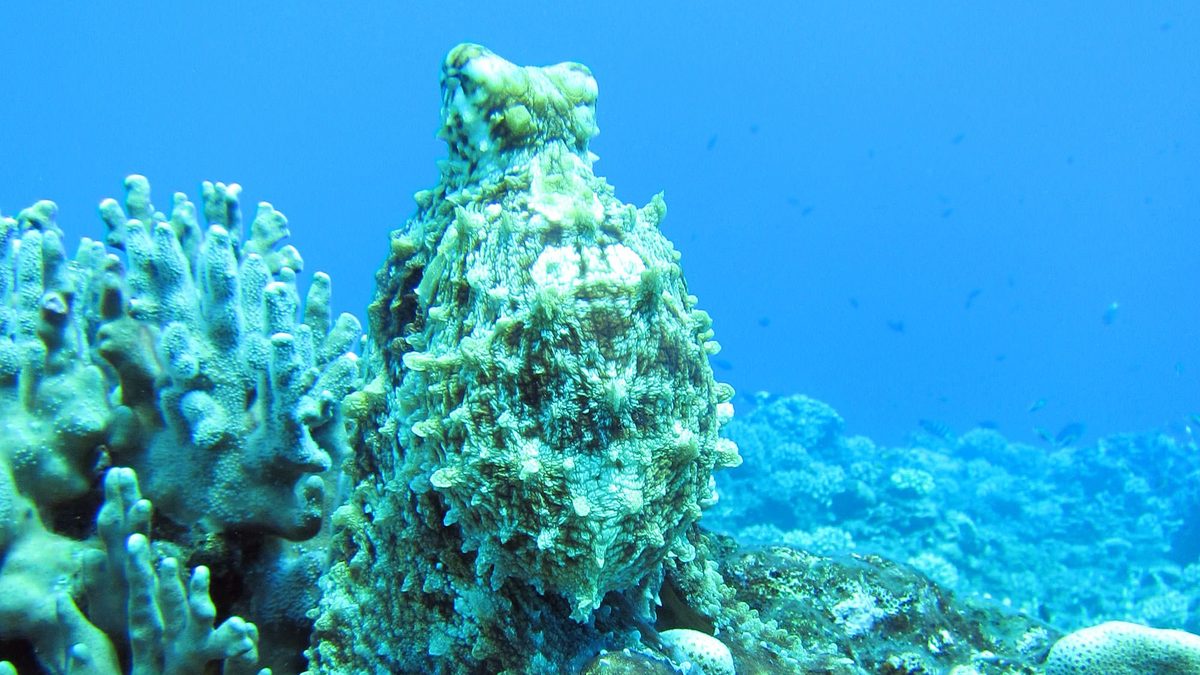
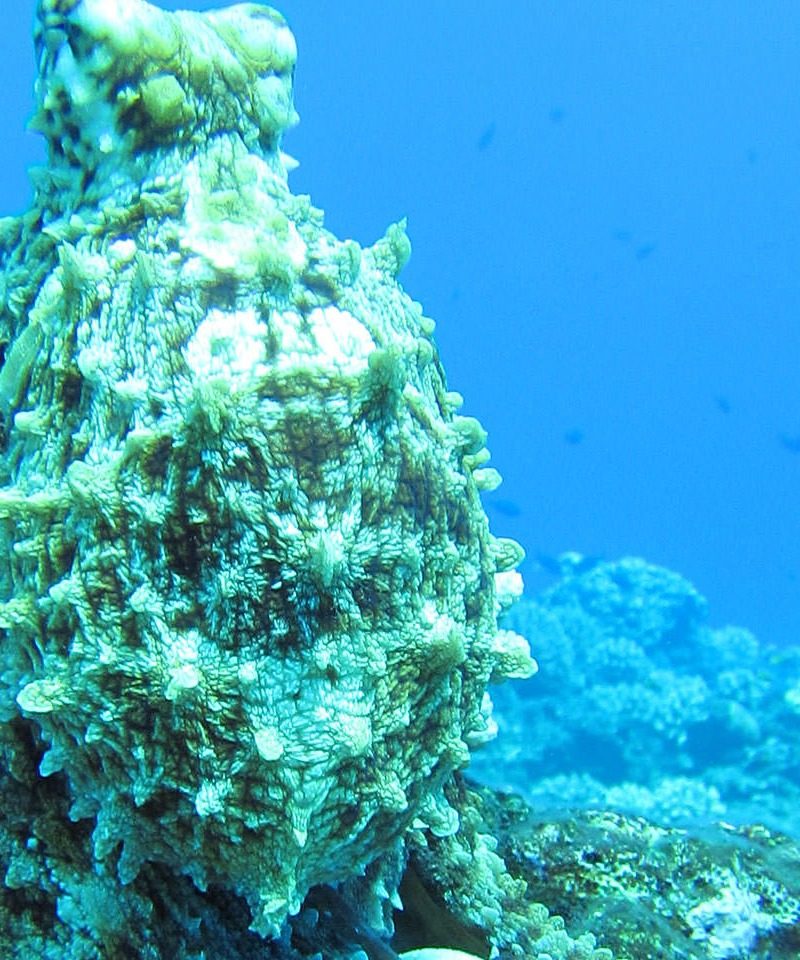
An octopus can change the color, pattern and even the texture of its skin, both to hide and to communicate.[2] In NOAA's photograph at the top of this page, taken in the Commonwealth of the Northern Mariana Islands, an octopus is blended so well into a reef that a viewer has to look closely to find it.[3]
A skin made of tiny color cells
According to the Smithsonian's Ocean portal, thousands of color-changing cells called chromatophores sit just beneath an octopus's skin.[1] Each one has an elastic sac of pigment in a color such as black, brown, orange, red or yellow.[1] A complex array of nerves and muscles controls whether the sac is expanded or contracted, and when it stretches, its color becomes more visible.[1]
Mirrors and shimmer
Chromatophores are only one layer. Iridophores contain stacked reflecting plates that produce iridescent greens, blues, silvers and golds.[1] Leucophores reflect the colors of the surroundings, which makes the animal less noticeable.[1]
Texture matters too
Octopuses can match nearby rocks and corals by changing both their color and their skin texture, raising or lowering projections on the skin called papillae.[1]
Skin that senses light
Octopuses use their eyes to send signals to the chromatophores, which expand and contract to change the animal's appearance.[2] In 2015, UC Santa Barbara researchers reported in the Journal of Experimental Biology that the skin of the California two-spot octopus (Octopus bimaculoides) can also sense light without any input from the central nervous system.[2] It does this with opsins, the same family of light-sensitive proteins found in the eyes, a process not previously described in cephalopods.[2]
In the experiment, white light shone on skin tissue made the chromatophores expand and change color, and when the light was turned off they relaxed and the skin returned to its original hue.[2] The researchers named the process Light-Activated Chromatophore Expansion, or LACE.[2] The response was quickest under blue light, and rhodopsin, a protein usually produced in the eye, was found in sensory neurons on the skin's surface.[2] Lead author Desmond Ramirez said the skin senses an increase or change in light, brightness rather than contrast and edges, and not in the detail the eyes and brain provide.[2]
Not only for hiding
Color change has other jobs. The blue-ringed octopus shows iridescent blue rings when provoked, a signal of danger.[1] Among squid, male Caribbean reef squid turn red to attract females and white to deter other males.[1]
What is still open
The Smithsonian page does not say whether octopuses and squids can see color, so how an octopus picks a match is not settled by these sources.[1] The UC Santa Barbara team presented skin light-sensing as a newly found component of a very complex behavior. In the words of co-author Todd Oakley, "We've discovered new components of this really complex behavior of octopus camouflage."[2]
The Smithsonian page is a general explainer, and the UC Santa Barbara work was done on one species, so details may differ in other cephalopods. Photographs credited to NOAA are U.S. government works in the public domain.
Sources3tap to view
- Smithsonian Ocean (Fox Meyer). How Octopuses and Squids Change Color. Accessed October 23, 2026.
- UC Santa Barbara Marine Science Institute. Seeing Without Eyes. May 20, 2015. Accessed October 23, 2026.
- U.S. Fish and Wildlife Service media library. An octopus camouflages, Commonwealth of Northern Mariana Islands. Photo credit NOAA; listed as public domain; dated October 27, 2022. Accessed October 23, 2026.