How Axolotls Regrow Limbs, and What Humans Can and Cannot Regrow
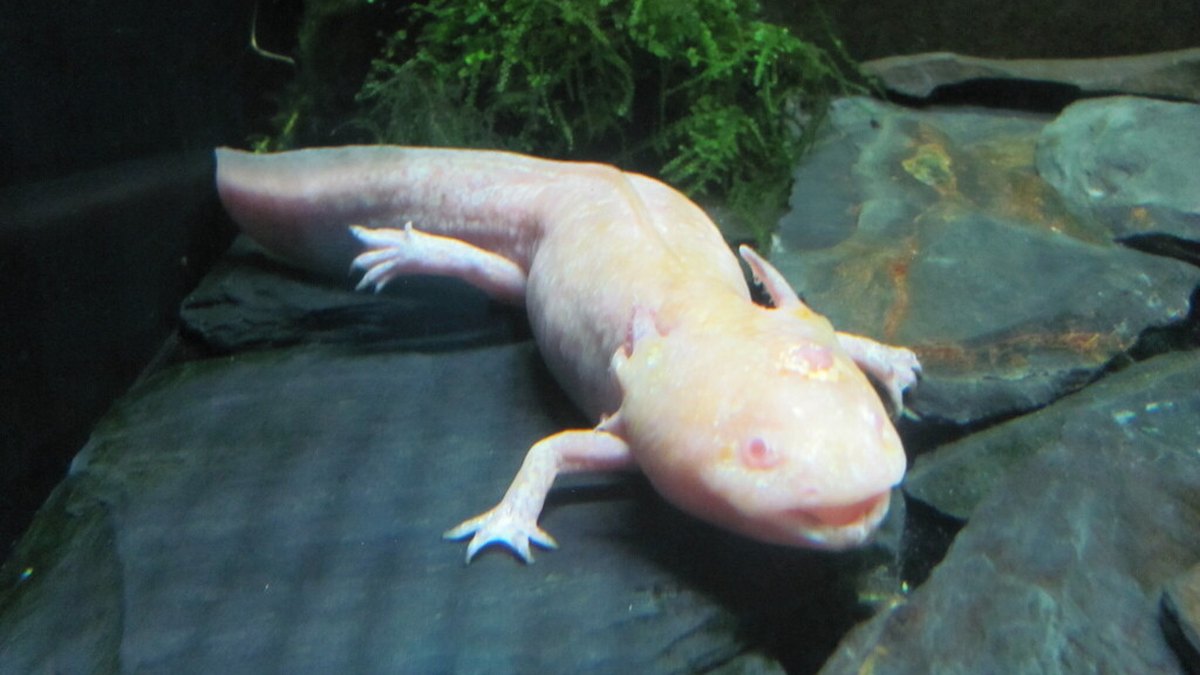
- Axolotls, a type of aquatic salamander, can regrow limbs, spinal cord, heart and other organs, and keep this ability for their whole lives.
- Cells under the wound turn into a cone-shaped blastema of stem-cell-like cells, which rebuilds the missing parts.
- Humans can regrow fingertips but not whole limbs, and applying axolotl findings to people is still a long way off.
A champion of regeneration
The axolotl (Ambystoma mexicanum) is an aquatic salamander that can regrow limbs, spinal cord, heart and other organs.[1] It keeps this ability for its whole life, which a Harvard review describes as unique among vertebrates.[1] Young frogs can regrow limbs too, but they lose the ability when they change from tadpoles into adults.[1] Among invertebrates, flatworms and hydra are strong regenerators, and can regrow whole bodies from small fragments.[1]
The steps of regrowth
- A clot of blood cells stops the bleeding at the cut.[1]
- A layer of cells, the wound epidermis, covers the amputation site and grows and divides rapidly over the next few days.[1]
- Cells beneath it divide to form a cone-shaped mass called a blastema.[1]
- Blastema cells come from bone, cartilage, muscle and other tissues, and they turn back into a stem-cell-like state.[1]
- These cells remain restricted in what they can become: a former muscle cell can form only muscle-type cells.[1]
- The cells re-differentiate into mature bone, skin and other tissues, and the structure flattens into a copy of the lost limb, with nerves and blood vessels reconnected.[1]
Clues about what is needed
Experiments show regrowth depends on more than the wound itself. When macrophages, a type of immune cell, were removed before amputation, scar tissue formed instead of a new limb, which suggests that these cells are important.[1] Scarring, in which collagen is laid down in a disordered way, is normal in human wound healing but unusual in axolotls.[1] Removing the nerves of a limb before amputation hinders regrowth, and the reason is not yet understood.[1] After a fifth amputation few limbs regrew to their earlier potential, and these limbs showed extensive scarring similar to human injuries.[1]
A separate report from Northeastern University describes work by James Monaghan, published in Nature Communications, on a question that the article says has puzzled the field for 200 years: how an axolotl knows what to regrow, for example a hand rather than a whole arm.[2]
What humans can do
No known mammal fully regenerates a missing appendage.[1] Mice can regrow the tips of their toes, while losses further up the foot heal with scarring.[1] Humans can regrow fingertips, including bone and skin, but the response weakens closer to the palm and falls well short of rebuilding a whole limb.[1]
How close is human limb regrowth?
The Harvard review states that regrowing human limbs remains a long way off, and that tools still need to be developed to find targets and transfer insights from axolotls to mammals such as mice.[1] The Northeastern article says the work could help with scar-free healing and, more ambitiously, regrowing a finger, and quotes Monaghan as saying it is not out of the realm of possibility that something larger could regrow. The article presents this as a future prospect rather than a demonstrated result.[2] Current treatment for limb loss remains largely prosthetic.[1]
Sources2tap to view
- Harvard University, Science in the News. Regeneration: what the axolotl can teach us about regrowing human limbs. 2018-01-12. Accessed October 15, 2026.
- Northeastern University. How do axolotls regenerate limbs and organs? This researcher has started to uncover the secret. Accessed October 15, 2026.
The Harvard article dates from 2018, so newer findings are not included. The Northeastern page is a short news item; only what its body text says is used, and it gives no detail on the mechanism. Its prospects for human regeneration are speculative.