Trillions Strong: Inside the Cell, the Smallest Unit of Life
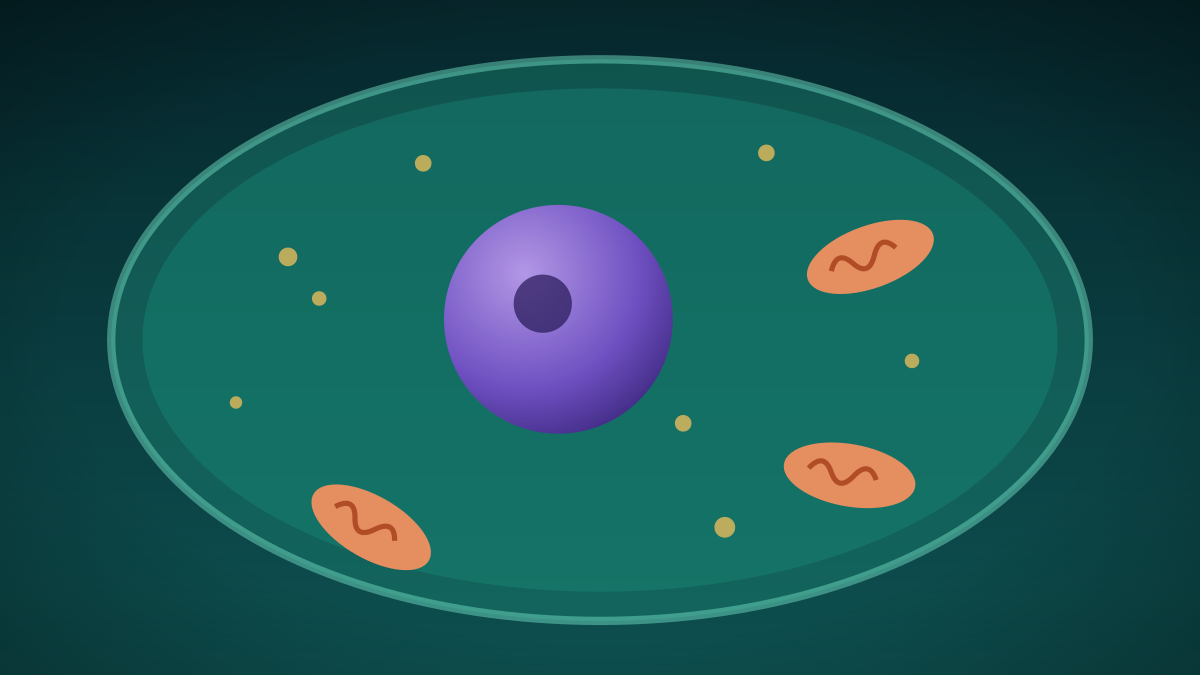
- Cells are the basic building blocks of all living things.
- Eukaryotic cells have a nucleus; prokaryotic cells, such as bacteria, do not.
- Organelles divide the work inside a cell, from storing DNA to making energy.
The basic unit of life
Every living thing, from a bacterium to a blue whale, is built from cells. MedlinePlus Genetics, a US National Library of Medicine resource, describes cells as the basic building blocks of living things. It says they give the body structure, take in nutrients, convert nutrients into energy, carry out specialized jobs, hold hereditary material and reproduce.[1]
Britannica defines a cell as the basic membrane-bound unit that contains the fundamental molecules of life. A single cell can be an entire organism, as with bacteria, or one specialized part of a larger multicellular body.[3]
The numbers are large. MedlinePlus Genetics says the human body contains trillions of cells,[1] while the National Human Genome Research Institute (NHGRI) puts the estimate for an adult human at between 10 and 100 trillion.[2] The two statements fit together, but the wide range shows that the total is an estimate rather than a count.
Two big categories
NHGRI sorts cells into two groups. Eukaryotes have a nucleus and membrane-bound organelles; prokaryotes lack them. Plants and animals consist of many eukaryotic cells, while many microorganisms, bacteria among them, are single-celled prokaryotes.[2] Britannica's overview likewise covers both types, treating bacteria as prokaryotic and describing eukaryotic cells as those with a nucleus and organelles.[3]
Cells also cooperate. NHGRI notes that they can work together to form tissues and organs, and it points to slime molds as organisms in which individual cells coordinate to act as a unified whole.[2]
A tour of the organelles
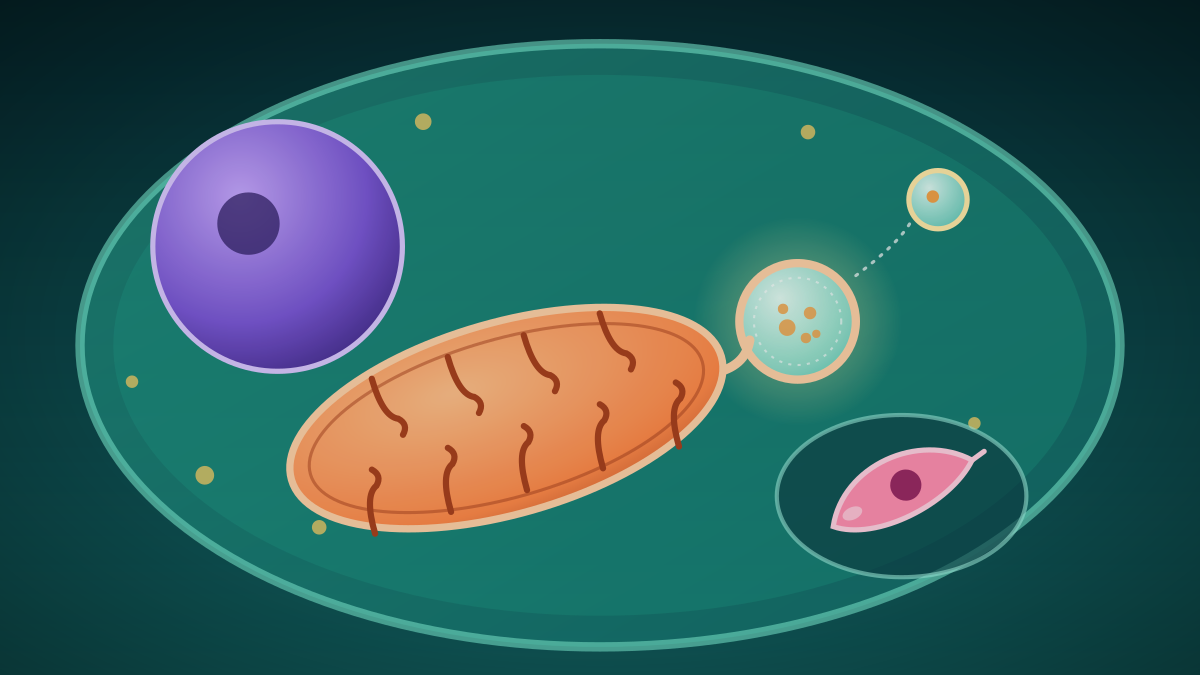
Organelles are the specialized structures inside a cell, a little like departments in a factory. MedlinePlus Genetics lists these main parts and their jobs:[1]
- The nucleus acts as the command center. It houses DNA and directs cell growth, maturation, division and death.
- Mitochondria convert food energy into energy the cell can use, and they contain their own separate genetic material.
- The endoplasmic reticulum processes molecules and transports them within or out of the cell, and the Golgi apparatus packages processed molecules for transport.
- Ribosomes read genetic instructions to build proteins.
- Lysosomes and peroxisomes recycle cell components, digest bacteria and remove toxins.
- The cytoskeleton gives the cell its framework and lets it move and shift organelles around.
- The plasma membrane forms the outer lining and controls what enters and leaves, while the cytoplasm is the gel-like fluid surrounding the nucleus that holds the other structures.
Britannica's article adds further structures to the list, including chloroplasts and vacuoles, and also traces the history of cell theory.[3] Together, these sources show why biologists start almost every story about life at the level of the cell.
The textbook Molecular Biology of the Cell states that all living cells on Earth, without any known exception, store hereditary information as double-stranded DNA, and that each cell is bounded by a plasma membrane that acts as a selective barrier. It also notes that a living cell can exist with fewer than 500 genes, as in the bacterium Mycoplasma genitalium.[4]
References
- MedlinePlus Genetics (U.S. National Library of Medicine). What is a cell?. 2021-02-22. Accessed October 5, 2026.
- National Human Genome Research Institute. Cell (Talking Glossary of Genomic and Genetic Terms). Accessed October 5, 2026.
- Encyclopaedia Britannica. Cell biology. 2026-10-01. Accessed October 5, 2026.
- Alberts B, Johnson A, Lewis J, et al., Molecular Biology of the Cell, 4th ed. (Garland Science, 2002), NCBI Bookshelf. The Universal Features of Cells on Earth. 2002. Accessed October 5, 2026.