How Photosynthesis Turns Sunlight Into Sugar, Step by Step
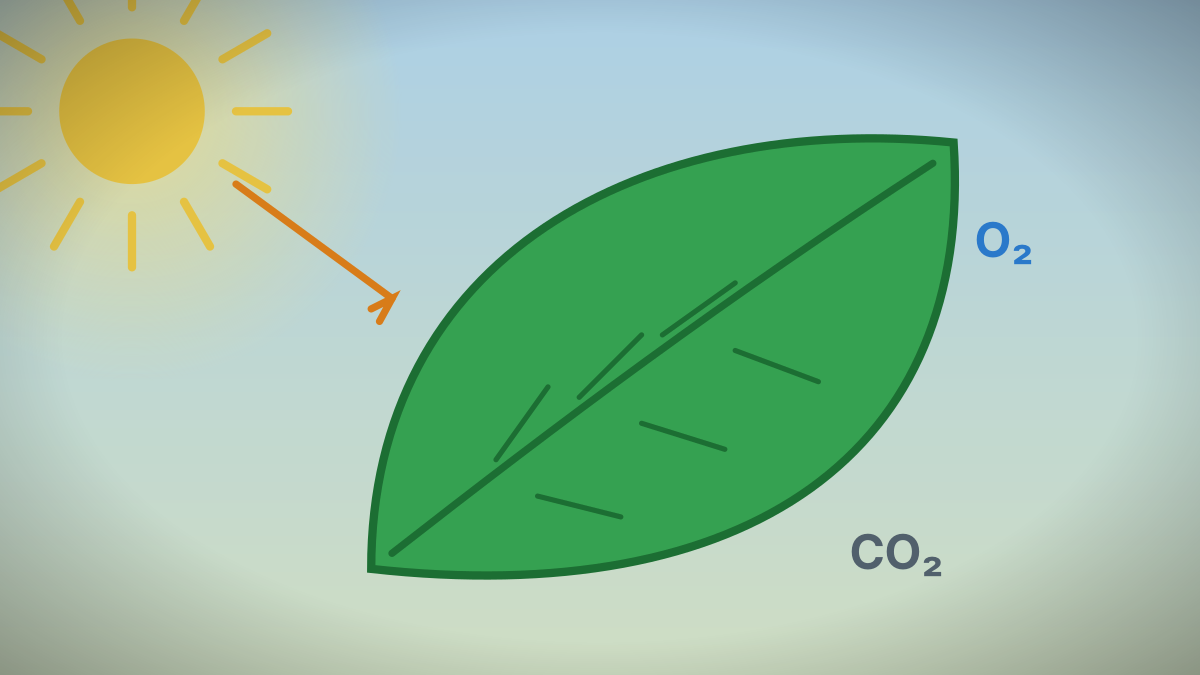
- Light reactions make ATP, NADPH and oxygen; a second stage uses them to build sugar.
- Chlorophyll absorbs blue and red light and reflects green.
- Roughly half of Earth's oxygen production comes from the ocean, mostly from plankton.
Almost every meal on Earth traces back to one trick performed by green cells: turning sunlight into sugar. A cell biology textbook describes photosynthesis as the process in which light energy is harvested and used to build glucose from carbon dioxide and water, making it "the ultimate source of metabolic energy for all biological systems."[1] National Geographic's education team puts it in everyday terms: plants use sunlight, water and carbon dioxide to make oxygen and sugar.[3]
Two stages inside the chloroplast
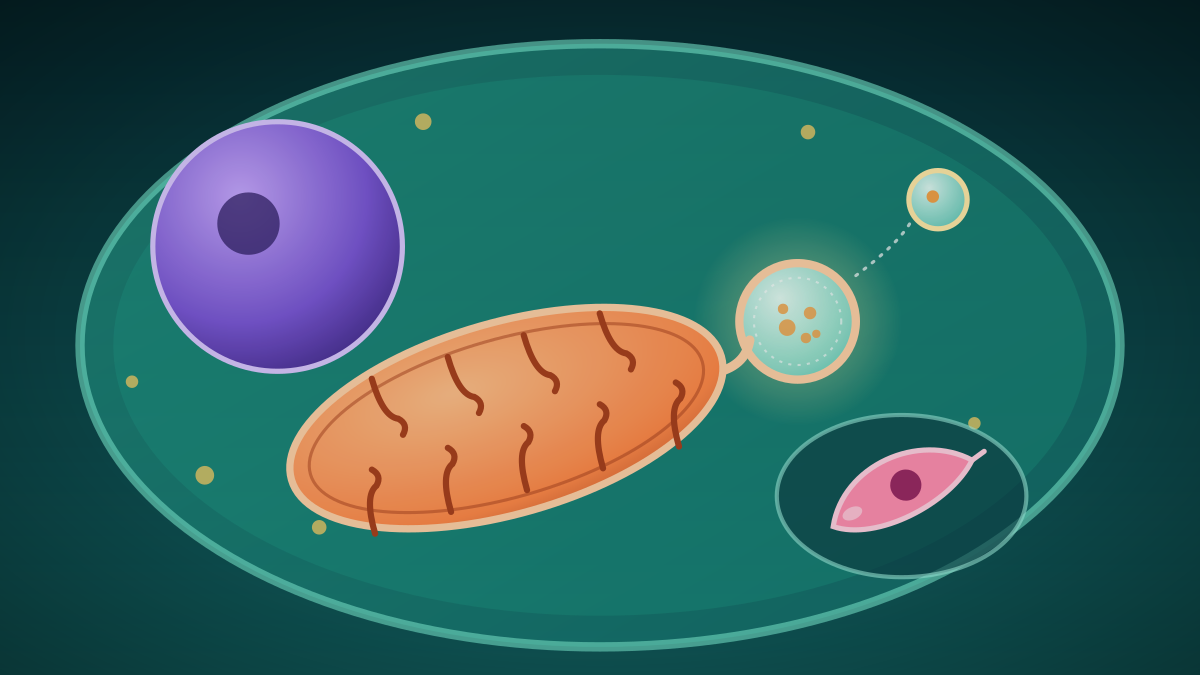
In plant and algal cells the work happens in chloroplasts. The first stage, the light reactions, takes place in the thylakoid membrane; the second stage runs in the surrounding fluid, called the stroma.[1] Pigments such as chlorophyll capture the light. Chlorophyll absorbs blue and red wavelengths and reflects green.[3]
During the light reactions, electrons pass through two photosystems in sequence. Photosystem II splits water molecules, releasing oxygen, and the electron flow builds up a gradient of protons that the enzyme ATP synthase uses to make ATP. Photosystem I helps generate NADPH.[1] Another textbook describes the same chain as moving electrons from water to a carrier called NADP+, with oxygen as a byproduct.[2] Chloroplasts resemble mitochondria but contain an extra internal compartment, the thylakoid space, and they carry their own DNA.[2]
- Light reactions: make ATP and NADPH and release oxygen from water.[1]
- Sugar-building reactions: use the ATP and NADPH to make glucose from carbon dioxide.[1]
- An alternative route, cyclic electron flow, makes extra ATP without making NADPH.[1]
Building sugar from air
The carbon-fixing step is centered on an enzyme called ribulose bisphosphate carboxylase, which joins carbon dioxide to a five-carbon sugar, ribulose 1,5-bisphosphate, and yields 3-phosphoglycerate. According to the textbook, fixing each carbon dioxide molecule requires 3 molecules of ATP and 2 of NADPH.[2] Plants differ in how they handle this stage. Most use C3 photosynthesis, which produces three-carbon compounds, while C4 photosynthesis produces four-carbon intermediates, a variation the National Geographic resource links to survival in low-light or dry settings.[3]
Why it matters far beyond plants
The same textbook notes that the vast majority of the organic material that living cells need was produced by photosynthetic organisms.[2] The food chain follows from that: herbivores get their energy from plants and carnivores get theirs from herbivores.[3]
The oxygen story reaches into the sea. The U.S. National Ocean Service says roughly half of the oxygen production on Earth comes from the ocean, largely from plankton, which it describes as drifting plants, algae and some bacteria that can photosynthesize. One bacterium, Prochlorococcus, is credited with up to 20 percent of the oxygen in the entire biosphere. The same page points out that marine life consumes roughly the same amount through respiration and decomposition.[4]
Taken together, the sources describe a process that starts with a few pigments absorbing light and ends up shaping food webs and the air.
References
- NCBI Bookshelf, The Cell: A Molecular Approach (G. M. Cooper). Photosynthesis. 2000. Accessed October 5, 2026.
- NCBI Bookshelf, Molecular Biology of the Cell, 4th ed. (Alberts et al.). Chloroplasts and Photosynthesis. 2002. Accessed October 5, 2026.
- National Geographic Education. Photosynthesis. 2026-09-15. Accessed October 5, 2026.
- NOAA National Ocean Service. How much oxygen comes from the ocean?. 2026-09-23. Accessed October 5, 2026.
Sources name the second stage differently: dark reactions (Cooper), carbon-fixation reactions (Alberts) and light-independent reactions or the Calvin cycle (National Geographic). The NOAA page showed a last-updated date of 2026-09-23, later than this article's date. Book years are the edition years shown.