Training the Immune System: How Vaccines Work
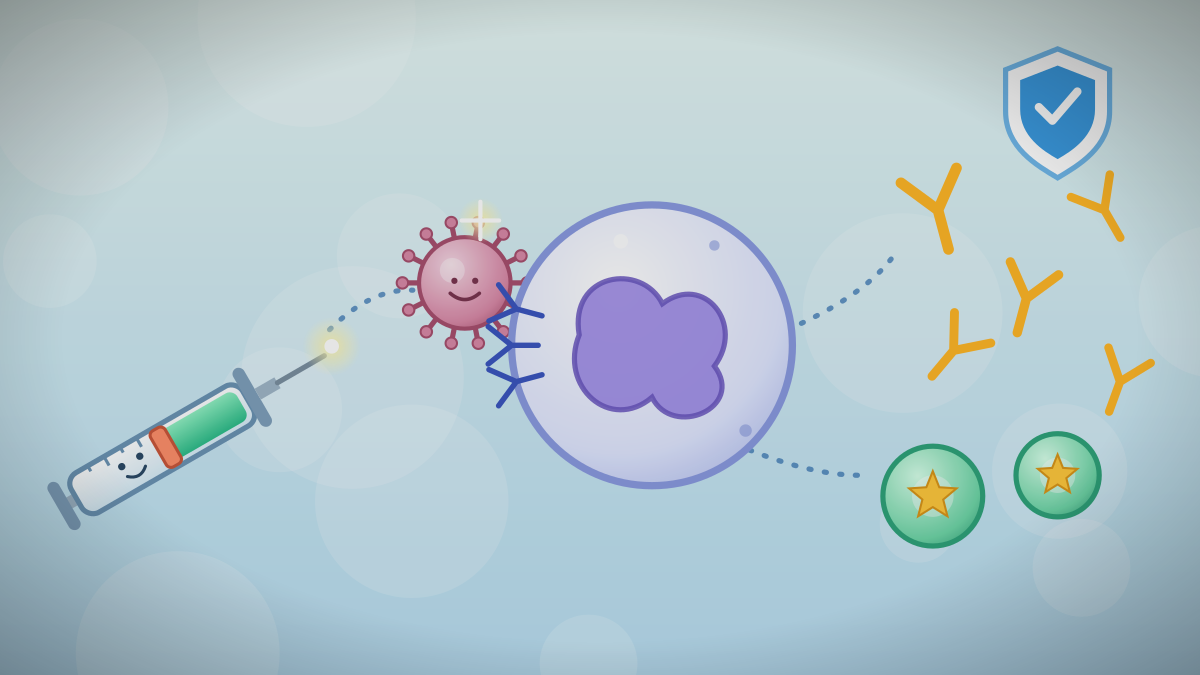
- Vaccines contain an antigen, such as a weakened or killed germ or part of one, that prompts the body to make antibodies.
- The immune system recognizes, fights and remembers, so it can respond faster later.
- WHO says vaccines prevent over 20 diseases and childhood vaccines alone save over 4 million lives a year.
General information only, not medical advice. Talk to a doctor or pharmacist about your own health.
A rehearsal for the immune system
The US Centers for Disease Control and Prevention (CDC) explains that vaccines work by mimicking infection. The active component of every vaccine is an antigen, a substance that prompts antibody production. It may be a weakened or killed bacterium or virus, or bits of its outer surface or genetic material.[1]
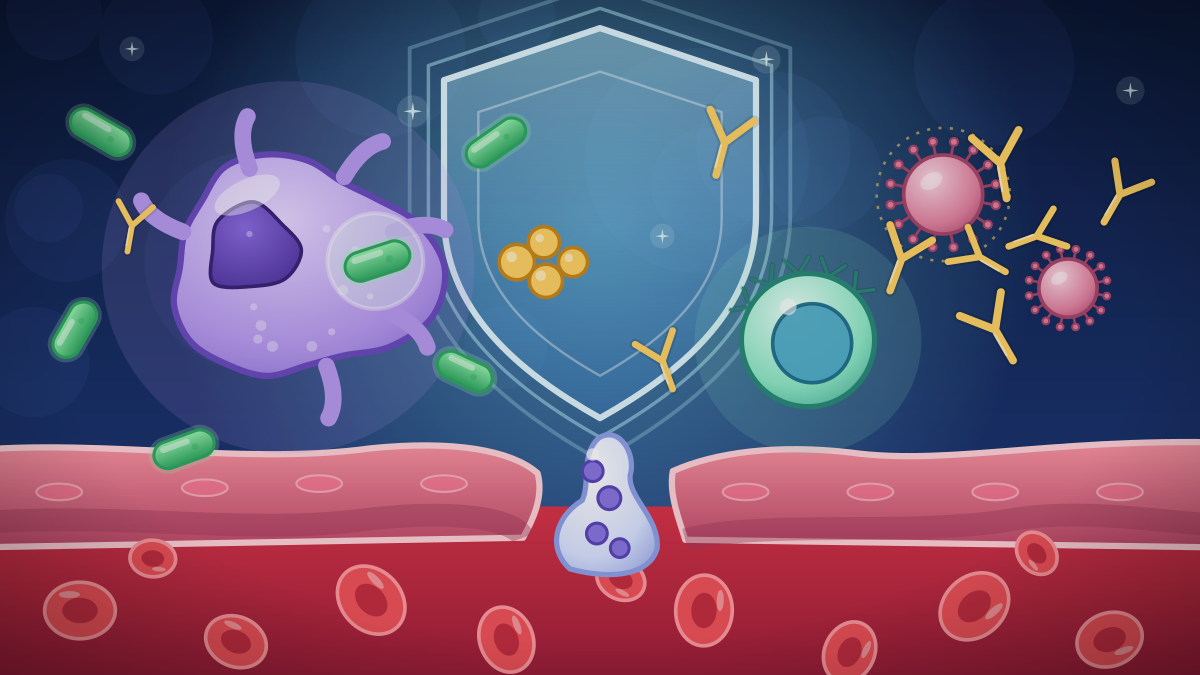
Antibodies, the CDC says, are proteins produced by white blood cells to identify and neutralize foreign substances. White blood cells multiply and attack the invader, then fall in number once the infection clears, leaving a few sentinels behind for ongoing protection.[1]
The World Health Organization (WHO) summarizes the process in three steps: recognizing the invading pathogen, producing antibodies to fight it and remembering the disease for the future. This memory means people typically remain protected for years, decades or even a lifetime.[2] MedlinePlus, from the US National Library of Medicine, says all vaccine types spark an immune response, and that the body remembers the germ and will attack it if it invades again. This acquired protection is called immunity.[3]
Many kinds of vaccine
MedlinePlus describes vaccines given as injections, liquids, pills or nasal sprays, and sorts them into six categories:[3]
- Live-attenuated, which use weakened germs.
- Inactivated, which use killed germs.
- Subunit, recombinant, polysaccharide and conjugate, which use specific germ components.
- Toxoid, which use toxins made by germs.
- mRNA, which instruct cells to produce germ proteins.
- Viral vector, which use genetic material carried in harmless viruses to deliver instructions.
The CDC distinguishes live-attenuated vaccines, which contain living organisms and can offer long-lasting, even lifetime, protection with two doses, from non-live vaccines. Non-live vaccines require three or more doses, and their protection fades over time.[1]
The wider picture
WHO says vaccines prevent over 20 diseases, naming measles, polio, tetanus, meningitis, influenza, COVID-19 and cervical cancer, and that vaccines against HIV and tuberculosis are in development. It states that childhood vaccines alone save over 4 million lives every year.[2]
Vaccines also have a community effect. MedlinePlus notes that when enough of a population is vaccinated, disease transmission slows considerably, which helps protect people who cannot receive certain vaccines.[3] WHO makes a similar point about vulnerable people depending on others being vaccinated.[2]
The CDC page, last updated in August 2024, and the WHO page, dated October 2025, describe the same basic idea in slightly different terms. Neither source treats vaccination as a substitute for the body's own defenses. Both describe it as a way of preparing them.[1][2]
The CDC Pink Book describes active immunity as protection produced by a person's own immune system, which typically lasts for years or a lifetime, and passive immunity as antibody transferred from another person or animal, which is temporary because the antibodies degrade within weeks to months. It adds that live attenuated vaccines must replicate in the vaccinated person and produce immunity virtually identical to natural infection, while inactivated vaccines cannot replicate or cause disease and generate mostly antibody production with little or no cellular immunity.[4]
References
- Centers for Disease Control and Prevention. Understanding How Vaccines Work. 2024-08-10. Accessed October 5, 2026.
- World Health Organization. Vaccines and immunization: What is vaccination?. 2025-10-22. Accessed October 5, 2026.
- MedlinePlus (U.S. National Library of Medicine). Vaccines. 2024-08-05. Accessed October 5, 2026.
- U.S. Centers for Disease Control and Prevention. Pink Book, Chapter 1: Principles of Vaccination. Last reviewed March 22, 2024. Accessed October 5, 2026.
General facts only; not medical advice for any individual.