How Does the Immune System Work?
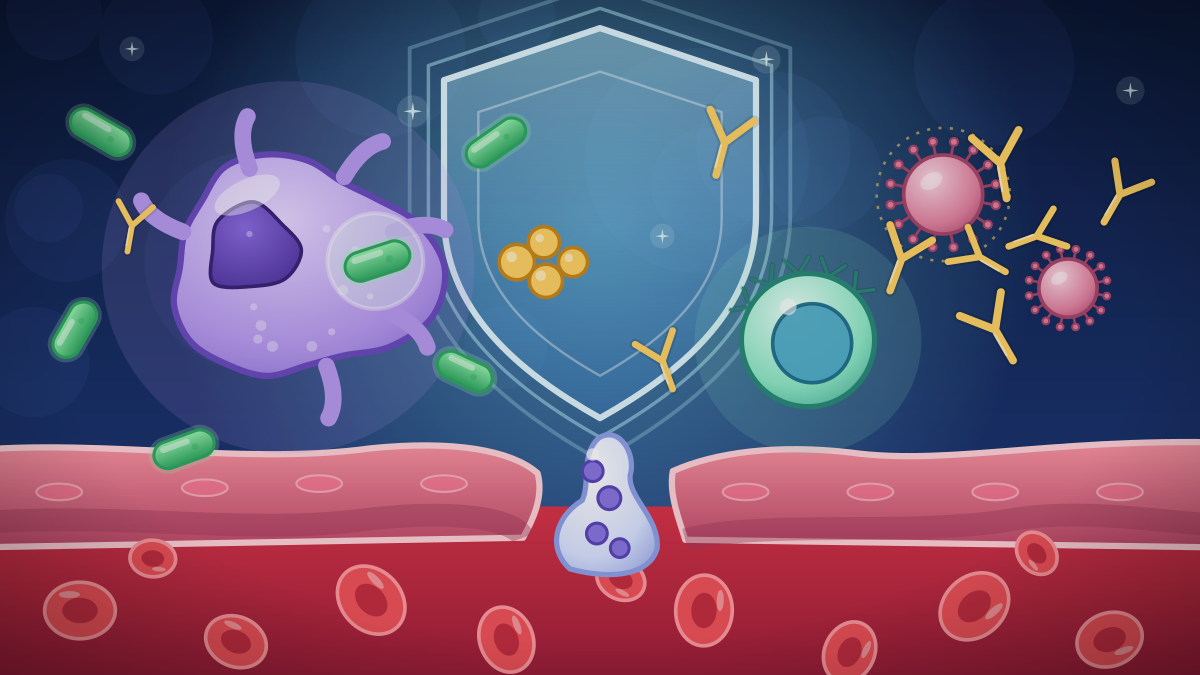
- The innate system responds within hours to all germs, while the adaptive system is slower but specific and keeps memory.
- T cells mature in the thymus, and B cells become plasma cells that make antibodies matched to a single antigen.
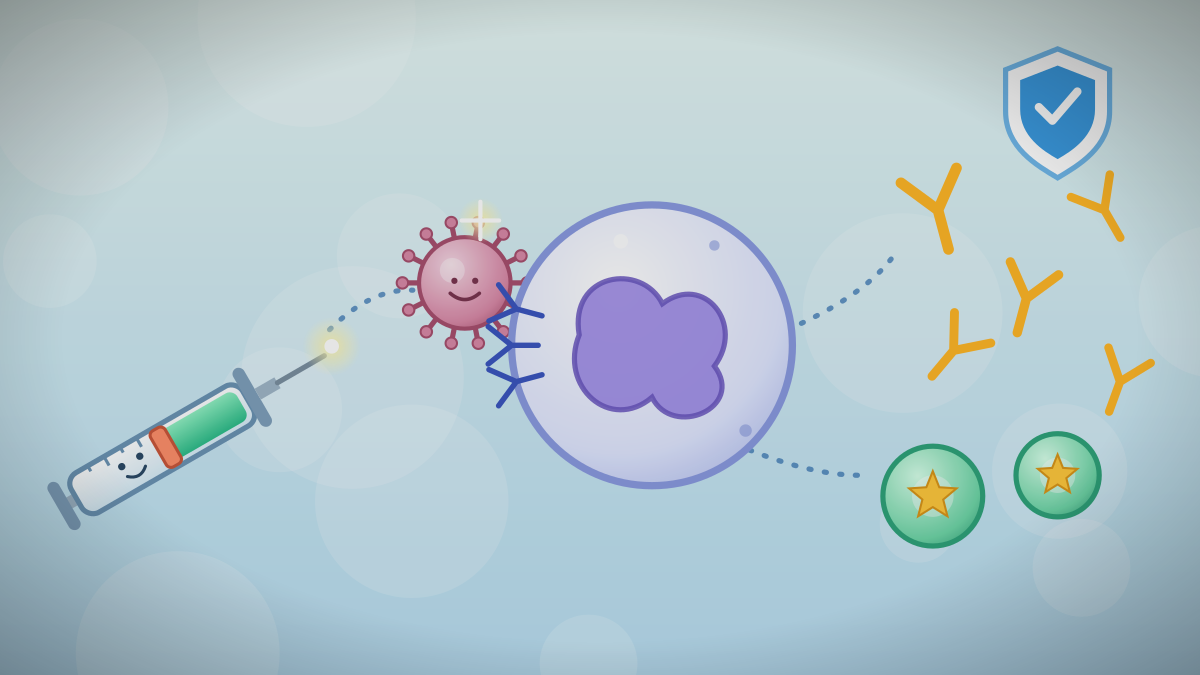
- Vaccines use immune memory by teaching the body to make antibodies before a real infection.
General information only, not medical advice. Talk to a doctor or pharmacist about your own health.
Defence in layers
The immune system defends the body against germs on the skin, in tissues and in fluids such as blood. It has two parts that work together, the innate and the adaptive immune systems.[2] Cleveland Clinic describes it as the body's first-line defence against invaders including bacteria, viruses, fungi, parasites and cancer cells, and says it keeps invaders out, destroys them, limits harm, heals damage and adapts to new threats.[1]
The innate system: fast and general
The innate system is present from birth and responds immediately, without prior training and without memory of past invaders.[1] It responds the same way to all germs, which is why it is called non-specific, and it often acts within hours, though it cannot always stop germs from spreading.[2]
Its defences begin with physical and chemical barriers: skin, mucous membranes, acid, enzymes, mucus and the movement of cilia in the lungs.[2] The NIAID adds that skin is usually the first line of defence against microbes and that skin cells secrete antimicrobial proteins.[3]
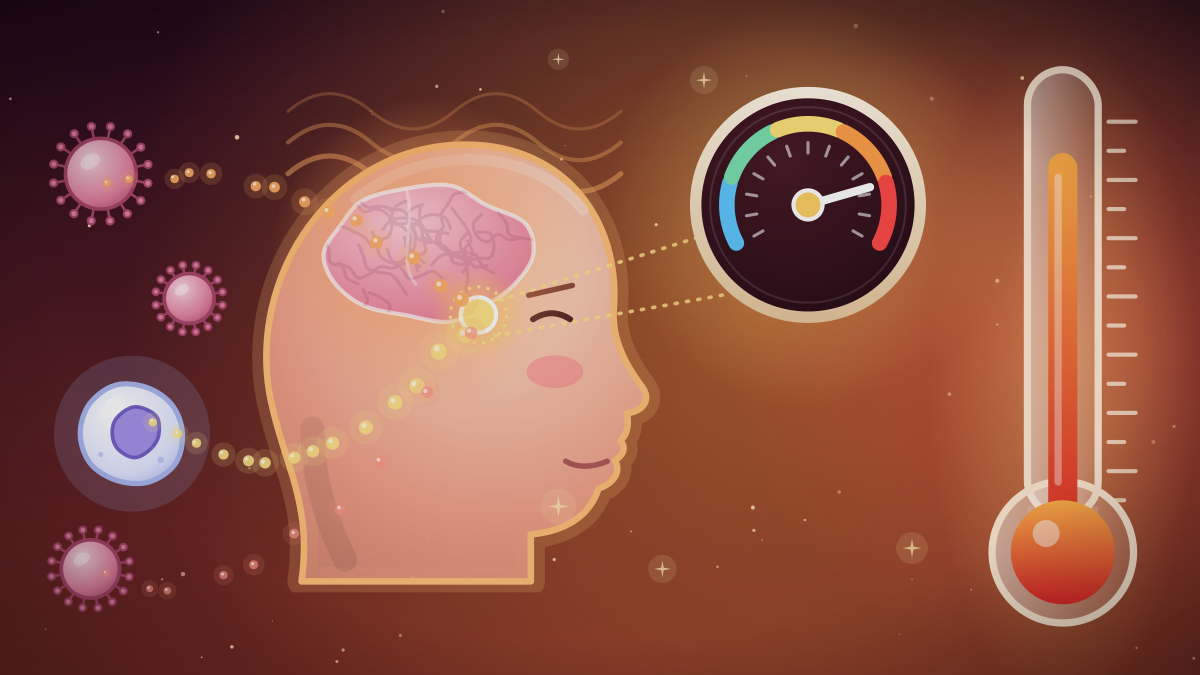
When germs get past the barriers, innate white blood cells take over. Phagocytes engulf and digest germs and display their remains so that the adaptive system can recognise them.[2] A chain reaction of nine enzymes marks germs, attracts immune cells, breaks down bacterial cell walls and attacks viruses.[2] Natural killer cells find virus-infected or abnormal cells and destroy them.[2] The NIAID lists neutrophils, eosinophils, basophils, mast cells, monocytes, dendritic cells and macrophages among the innate cells, all derived from the common myeloid progenitor stem cell.[3] Inflammation, with swelling, warmth and redness and sometimes fever, is part of this response.[2]
The adaptive system: slower and specific
The adaptive system targets specific germs. It is slower to respond than the innate system but more precise, and it has memory, so repeat infections are usually faster and milder.[2] Its three components are T cells, B cells and antibodies.[2] T and B cells derive from the common lymphoid progenitor stem cell.[3]
- T cells are made in bone marrow and mature in the thymus, a small organ in the upper chest. T helper cells activate other immune cells, cytotoxic T cells destroy infected or tumour cells, and some T cells become memory cells.[2][3]
- B cells are also made in bone marrow. T helper cells activate the B cells that match a given germ, which then become plasma cells that produce large amounts of antibodies. Some become memory cells.[2]
- Antibodies are proteins made by B cells that circulate in the blood. Each binds only to a matching antigen, a germ or substance that triggers antibody production, and they neutralise germs, assist other immune cells such as phagocytes and activate supporting proteins.[2]
The NIAID notes that natural killer cells share features of both systems: they provide immediate defence like innate cells, yet may be retained as memory cells like adaptive cells.[3]
Where the organs fit
Cleveland Clinic lists the parts of the system as white blood cells, antibodies, cytokines (chemical messengers that direct immune cells and regulate inflammation), the complement system of proteins, and organs and tissues: lymph nodes, which filter lymph fluid and number in the hundreds, the spleen, tonsils and adenoids, the thymus, bone marrow, and the skin and mucosa.[1] The spleen stores white blood cells and filters blood, and bone marrow produces blood cells, including white blood cells.[1]
Memory and vaccines
Lymphocytes remember specific invaders and can respond quickly if those invaders return.[1] Vaccines make use of this: the NHS says they teach the immune system how to create antibodies that protect against disease, and that once the immune system knows how to fight a disease it can often give lifelong protection.[4] Most vaccines contain a bacterium or virus that has been weakened or destroyed, plus chemicals that make the body react as if it had met the real germ. Live vaccines generally give long-term protection, while non-live vaccines often need several doses or a booster.[4]
When the system misfires
This is general information, not medical advice. A healthy immune system distinguishes the body's own cells from foreign ones, activates to kill harmful germs, ends the attack when the threat is gone, and learns from past contact.[1] Problems can arise in several ways:
- Autoimmune diseases, such as lupus and rheumatoid arthritis, occur when the immune system attacks the body's own healthy cells.[1]
- Primary immunodeficiency refers to inherited conditions that make a person more vulnerable to infection.[1]
- An overactive response can cause allergies, and sepsis is an extreme response to infection.[1]
- Immunity can be weakened by infections such as HIV, cancers such as leukaemia and lymphoma, and medicines including corticosteroids, immunosuppressants and chemotherapy.[1]
References
- Cleveland Clinic. Immune System. 2023-10-20. Accessed October 7, 2026.
- InformedHealth.org / NCBI Bookshelf. In brief: The innate and adaptive immune systems. 2023-08-14. Accessed October 7, 2026.
- National Institute of Allergy and Infectious Diseases (NIAID). Immune system overview. Accessed October 7, 2026.
- NHS. How vaccines work. 2023-03-28. Accessed October 7, 2026.
The opened pages describe the same system at different levels of detail and no cell counts are given. The NIAID overview page showed no review date, so its date is blank. The Cleveland Clinic and NHS pages carried review dates in 2023 (the NHS page lists a later modified date in 2024). Health information here is general, not individualised advice.