What Are Viruses, and How Do They Differ From Bacteria and Cells?

- A virus is genetic material (DNA or RNA) inside a protein coat.
- Viruses lack their own energy-generating system, so they depend on host cells.
- RNA viruses make copying errors far more often than DNA viruses.
Viruses are among the simplest biological entities, yet they cause diseases from the common cold to HIV. The U.S. National Human Genome Research Institute describes a virus as an infectious microbe made of a segment of nucleic acid, either DNA or RNA, surrounded by a protein coat.[4] MedlinePlus, from the National Library of Medicine, gives a similar description of genetic material wrapped in a protein coat, and calls viruses microscopic organisms.[3]
Not a cell, and not a bacterium
A medical microbiology textbook calls viruses "small obligate intracellular parasites."[1] A complete virus particle, or virion, is genetic material packaged inside a protein shell called a capsid. Some viruses also wear an outer lipid envelope that comes from the modified membrane of the host cell and carries surface glycoproteins.[1]
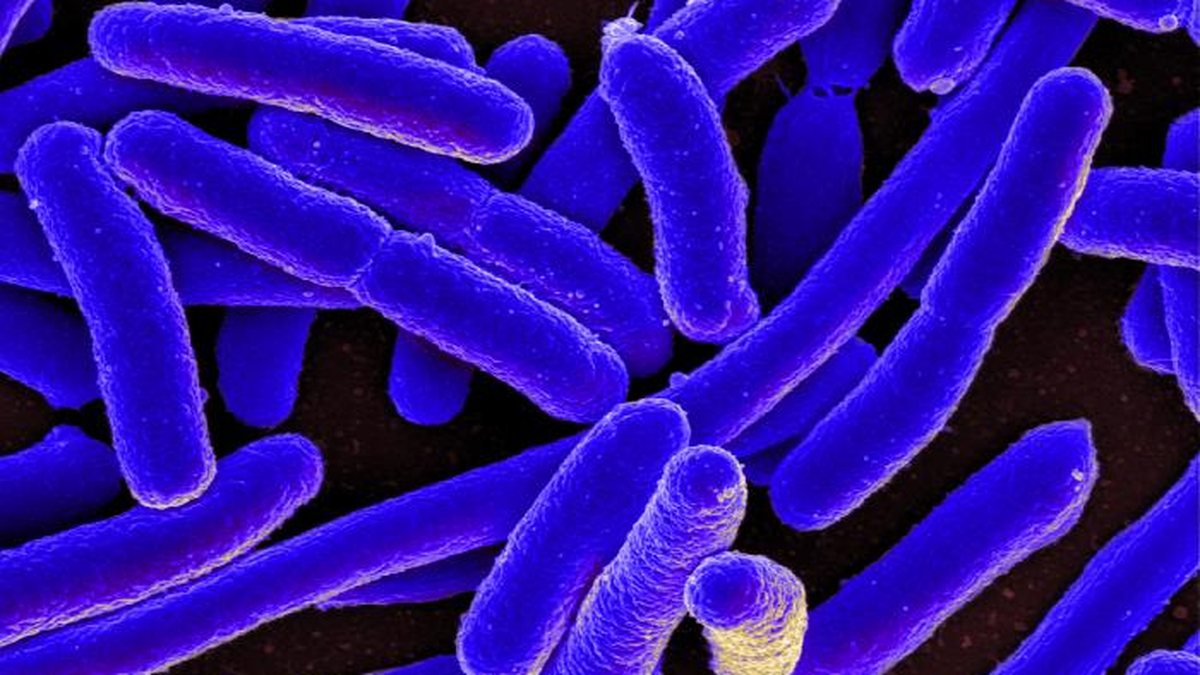
That structure is the key contrast. Bacteria are cells that generate their own energy and carry out their own metabolism, while viruses cannot generate energy independently and lack that machinery. They rely on host cells to survive and reproduce.[1] A companion chapter says viruses are simple entities, lacking an energy-generating system and having very limited biosynthetic capabilities.[2]
- Bacteria: cells with their own metabolism.
- Viruses: genetic material in a capsid, dependent on a host cell to replicate.[1]
- Virus genomes are small; the smallest have only a few genes and the largest about 200.[2]
Hijackers with surprising genetics
Although they lack metabolism, viruses still behave genetically a lot like cells. They mutate, they can recombine genomes from different viruses to produce new offspring, and they regulate gene expression.[2] Mutation rates differ sharply by genome type. DNA viruses make errors at rates resembling those of eukaryotic cells, roughly 10-8 to 10-11 per nucleotide, while RNA viruses lack proofreading and err at about 10-3 to 10-4 per nucleotide, potentially one mutation per genome copy.[2] That helps explain why RNA viruses can change quickly.
MedlinePlus likens viruses to hijackers: they invade cells and replicate inside them, which can damage or kill those cells.[3] The NHGRI glossary adds that they frequently destroy the host cell in the process, and that viruses infecting bacteria, called bacteriophages, are far more abundant in nature and make up the majority of viruses worldwide.[4]
Why the difference shows up in medicine
Because the two groups work differently, treatments differ. Penicillin blocks formation of cross-links in bacterial cell walls, and streptomycin inhibits bacterial protein synthesis. By contrast, a review notes that antiviral drugs do not destroy their target microbe but inhibit the progress and development of viruses.[5] MedlinePlus states plainly that antibiotics do not work for viral infections.[3]
This article reports general scientific background only and is not medical guidance.
References
- NCBI Bookshelf, Medical Microbiology, 4th ed. (H. R. Gelderblom). Structure and Classification of Viruses. 1996. Accessed October 5, 2026.
- NCBI Bookshelf, Medical Microbiology, 4th ed.. Viral Genetics. 1996. Accessed October 5, 2026.
- MedlinePlus, National Library of Medicine. Viral Infections. 2023-11-08. Accessed October 5, 2026.
- NHGRI Talking Glossary of Genomic and Genetic Terms. Virus. Accessed October 5, 2026.
- Human Physiology, Biochemistry and Basic Medicine (Cole and Kramer), via PubMed Central. Bacteria, Virus, Fungi, and Infectious Diseases. 2015-10-30. Accessed October 5, 2026.
Sources word the basic description differently: MedlinePlus calls viruses microscopic organisms, the NHGRI glossary calls a virus an infectious microbe, and the textbook calls viruses obligate intracellular parasites or mobile genetic elements. None of the opened pages settles whether viruses count as alive, so the article does not either. Book years are the edition years shown.