What Is an Ecosystem? Living Things, Nonliving Things and the Links Between Them
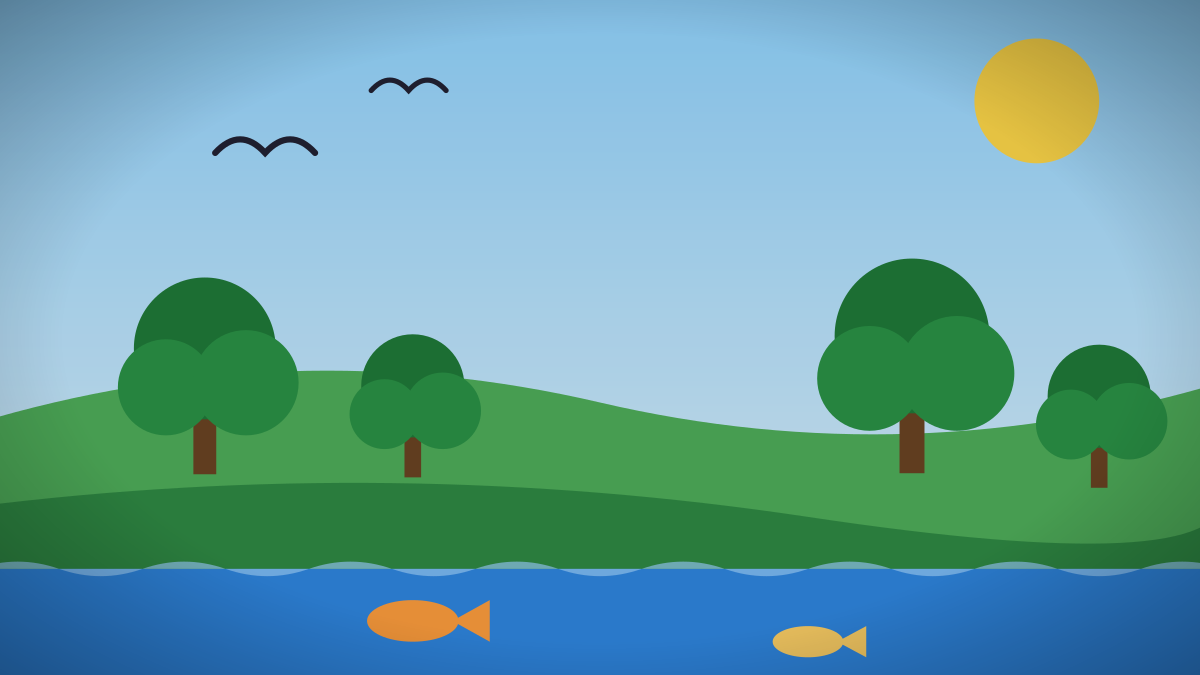
- An ecosystem includes both living (biotic) and nonliving (abiotic) parts.
- Boundaries are often fuzzy and set by scientists using species or physical features.
- Food webs show how energy moves from plants to herbivores to carnivores and decomposers.
A forest, a lake and a coral reef all count as ecosystems. The U.S. Environmental Protection Agency defines an ecological system as a biological community of all the living organisms, including humans, in a particular area plus the nonliving components such as air, water and mineral soil with which they interact.[1] National Geographic's classroom resource compresses that to a "community and interactions of living and nonliving things in an area."[3] The U.S. Geological Survey likewise says the biotic community and the abiotic environment function together as an ecological system.[2]
Living, once-living and nonliving parts
Ecologists use two handy terms. Biotic refers to living or once-living organisms, and abiotic to the absence of life.[3] EPA lists forests, grasslands, agricultural systems, lakes, streams, wetlands, estuaries and coral reefs as examples, and says they perform functions such as cycling water and nutrients, forming soil, producing oxygen and removing carbon dioxide from the atmosphere.[1]
Edges are rarely sharp. EPA points out that forests can grade into meadows and saltmarshes into freshwater marshes, so scientists typically define an ecosystem by its predominant species or physical characteristics and draw limits according to specific protocols.[1]
How energy moves
A food web shows feeding relationships within a community. In an ecology review, plants that convert solar energy into chemical energy form the base level, herbivores are primary consumers, and carnivores occupy higher levels.[4] There are two main pathways. In a grazing food chain, energy goes directly from plants to herbivores to carnivores. In a detrital chain, dead organic matter is broken down by decomposers and then eaten by detritivores and carnivores.[4] The review also reports that aquatic herbivores consume producer biomass at about four times the terrestrial rate, with detrital pathways dominating in terrestrial systems of high standing biomass.[4]
- Producers capture sunlight.
- Consumers eat producers or other consumers.
- Decomposers recycle dead material.[4]
Connected, and still debated
Because the parts are linked, changes ripple. National Geographic notes that pollution can contaminate a species' food supply and potentially change an entire food web, and that adding or removing species creates cascading effects.[5] Yellowstone National Park shows how complex this gets: its ecosystem relies on photosynthesis, predation, decomposition, climate and precipitation, and wildfire can rejuvenate forests. The park service adds that scientists are still debating whether changes seen after wolf reintroduction result from predation, shifts in animal behavior, or climate factors.[6]
The sources therefore agree on the core idea that living and nonliving parts form one working system, while leaving room for open questions about exactly how its pieces influence each other.
References
- U.S. Environmental Protection Agency. Ecological Condition. 2026-07-22. Accessed October 5, 2026.
- U.S. Geological Survey. Ecosystem Ecology. Accessed October 5, 2026.
- National Geographic Education. Biomes, Ecosystems, and Habitats. 2026-09-18. Accessed October 5, 2026.
- Nature Education Knowledge (Scitable), D. Hui. Food Web: Concept and Applications. 2012. Accessed October 5, 2026.
- National Geographic Education. Ecology. 2023-10-19. Accessed October 5, 2026.
- U.S. National Park Service, Yellowstone. Cycles and Processes. 2025-04-18. Accessed October 5, 2026.
No NIH or peer-reviewed page was used; the authoritative sources are U.S. federal science agencies (EPA, USGS, NPS) and a Nature Education review. The Yellowstone page says the cause of changes after wolf reintroduction is still debated. The USGS page showed no date.