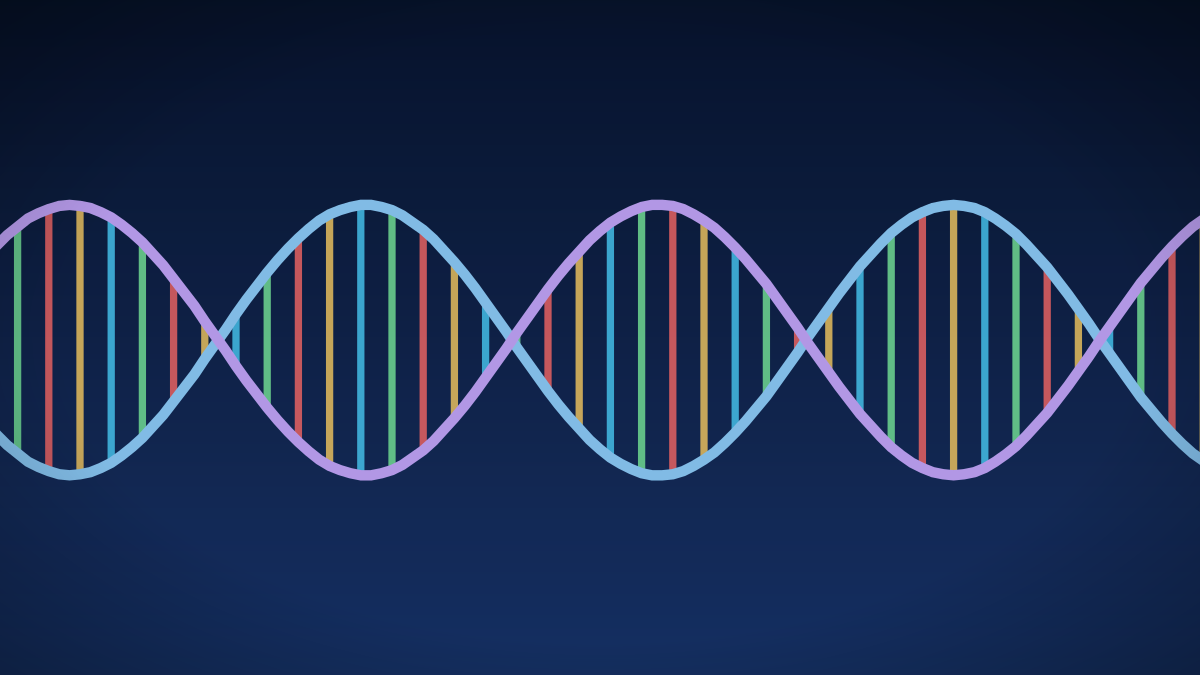
What Is CRISPR? The Gene-Editing Tool Borrowed From Bacteria
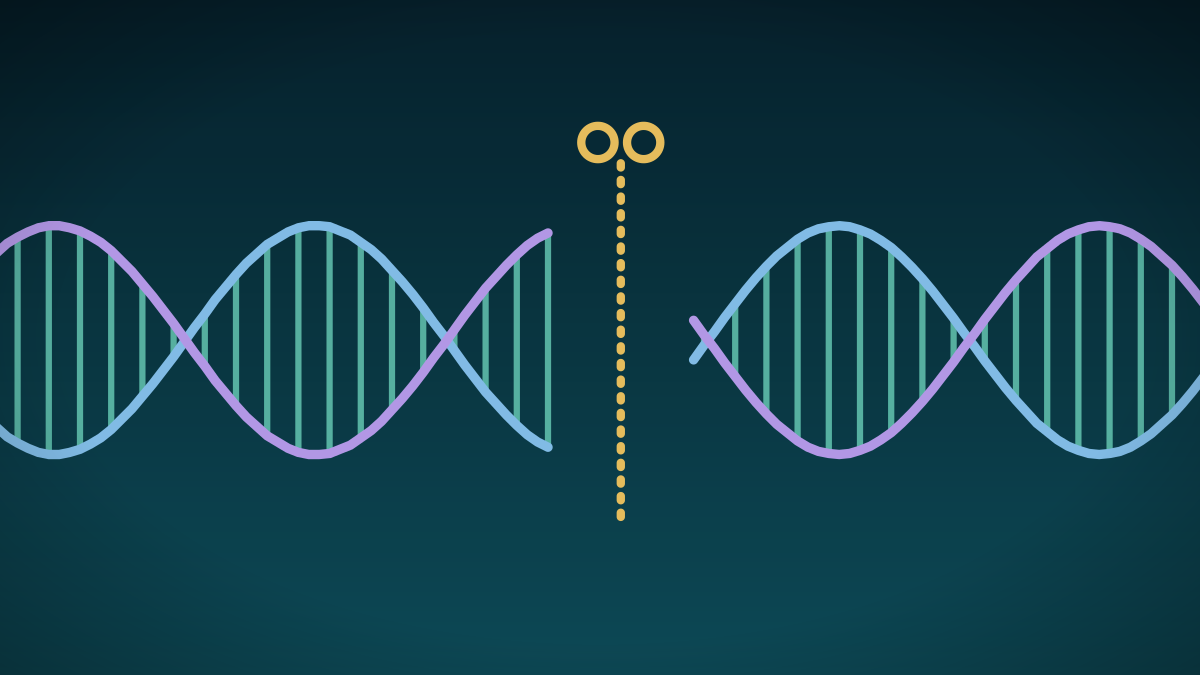
- A short guide RNA steers the Cas9 enzyme to a target DNA sequence, where it cuts.
- The first FDA-approved CRISPR treatment, Casgevy, was approved in December 2023 for sickle cell disease.
- Editing that could be inherited is illegal in the United States and many other countries, according to MedlinePlus.
CRISPR stands for clustered regularly interspaced short palindromic repeats. The National Human Genome Research Institute describes it as a technology that research scientists use to "selectively modify the DNA of living organisms," adapted from naturally occurring genome editing systems found in bacteria.[1] MedlinePlus similarly says CRISPR-Cas9 adapts a bacterial immune defense.[2]
Guide and scissors
In plain terms, the system has two parts. Researchers build a small piece of RNA with a short guide sequence that attaches to a specific target sequence in DNA. The guide leads the Cas9 enzyme to that spot, and Cas9 cuts the DNA there. Afterward the cell's own repair machinery modifies or replaces the genetic segment.[2] A medical journal review describes the same pair as Cas9, a programmable nuclease, and a single guide RNA, noting that the cut can inactivate a problem gene or allow a precise correction.[4] NHGRI calls such tools molecular scissors that can remove, add or replace DNA where it was cut.[3]
From lab bench to first approved therapy
Scientists use editing to study disease by changing genes in animals such as zebrafish and mice.[3] In medicine, the U.S. Food and Drug Administration approved Casgevy on December 8, 2023, calling it the first FDA-approved treatment to use a novel genome editing technology. It edits a patient's own blood stem cells to raise production of fetal hemoglobin, which prevents red blood cells from sickling, and was approved for patients 12 and older with recurrent vaso-occlusive crises. In trials, 29 of 31 evaluable patients (93.5 percent) had no severe episodes for at least 12 consecutive months.[5]
- Cells are removed, edited in the lab, and returned as a one-time treatment after chemotherapy conditioning.[5]
- MedlinePlus says clinical trials also explore conditions such as cystic fibrosis and hemophilia, while scientists are still working to determine whether the approach is safe and effective in people.[2]
Safety, ethics and rules
Most edits target somatic, or non-reproductive, cells and are not inherited. Changes to egg or sperm cells or to an embryo could be passed to future generations, and MedlinePlus states that germline and embryo editing are currently illegal in the United States and many other countries because of ethical and safety concerns.[2] NHGRI frames it somewhat differently: most scientists oppose germline editing for now, the NIH does not fund human embryo editing research, and international frameworks restrict such uses until safety improves.[3] It lists further questions, including consent for embryo treatment, fair access and cost, enhancement beyond disease prevention, and tools sometimes cutting at unintended locations.[3] The journal review likewise raises germline ethics, equitable access and off-target effects needing long-term monitoring.[4]
The sources describe CRISPR as a powerful, still-maturing tool whose rules are being shaped as the science advances.
References
- NHGRI Talking Glossary of Genomic and Genetic Terms. CRISPR. Accessed October 5, 2026.
- MedlinePlus Genetics, National Library of Medicine. What are genome editing and CRISPR-Cas9?. 2022-03-22. Accessed October 5, 2026.
- National Human Genome Research Institute. What is Genome Editing?. 2019-08-15. Accessed October 5, 2026.
- Annals of Medicine and Surgery (Singh et al.), via PubMed Central. Revolutionary breakthrough: FDA approves CASGEVY, the first CRISPR/Cas9 gene therapy for sickle cell disease. 2024-05-15. Accessed October 5, 2026.
- U.S. Food and Drug Administration. FDA Approves First Gene Therapies to Treat Patients with Sickle Cell Disease. 2023-12-08. Accessed October 5, 2026.
Regulation is worded differently by two sources: MedlinePlus says germline and embryo editing are illegal in the United States and many other countries, while NHGRI says the NIH does not fund human embryo editing and that international frameworks restrict it. Facts only; no individual advice. Some pages may reflect older status.