What Is a Genome, and What Was the Human Genome Project?
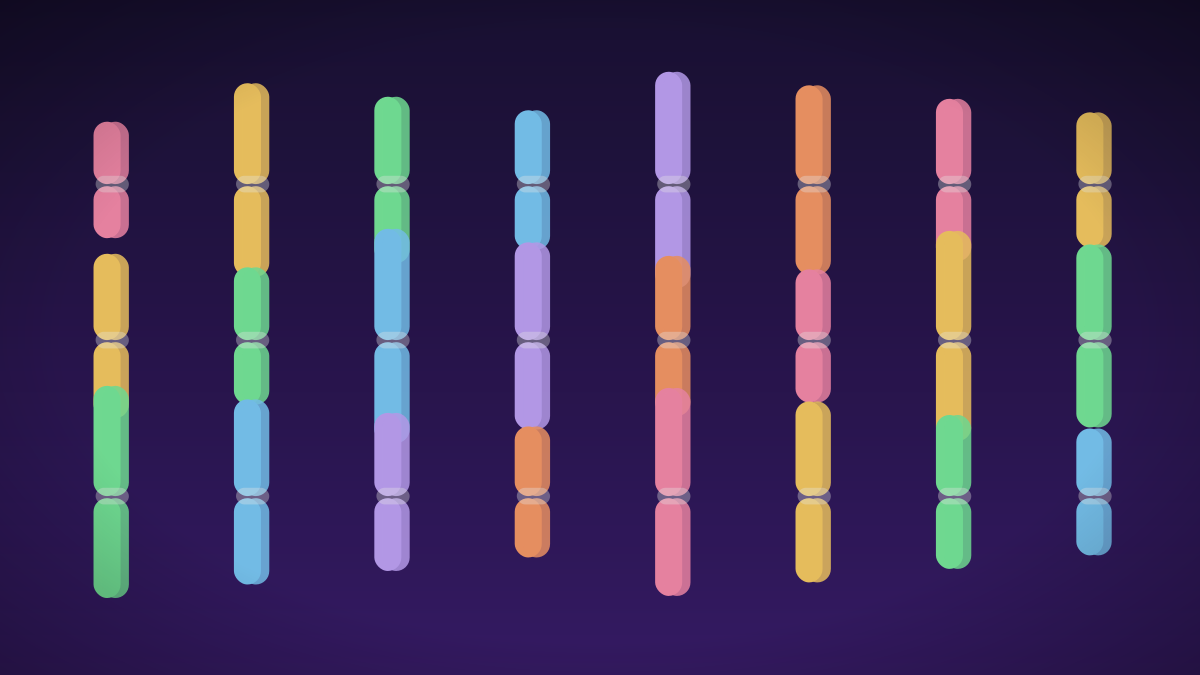
- The genome is the entire set of DNA instructions found in a cell.
- The human genome contains about 3 billion nucleotides.
- It is spread across 23 chromosomes.
NHGRI defines the genome as "the entire set of DNA instructions found in a cell."[1] Where DNA is the molecule, the genome is the complete collection of instructions it carries for an organism.
Size of the human genome
NHGRI states that the human genome contains about 3 billion nucleotides.[1] Counted as base pairs, the human genome encompasses roughly 3 billion, distributed across 23 chromosomes, with individual chromosomes ranging from about 50 million to 300 million base pairs.[2]
Sequencing the human genome
The Human Genome Project was launched in October 1990 and completed in April 2003, producing the first sequence of the human genome.[3] NHGRI says this provided fundamental information about the human blueprint.[3]
Genome and DNA
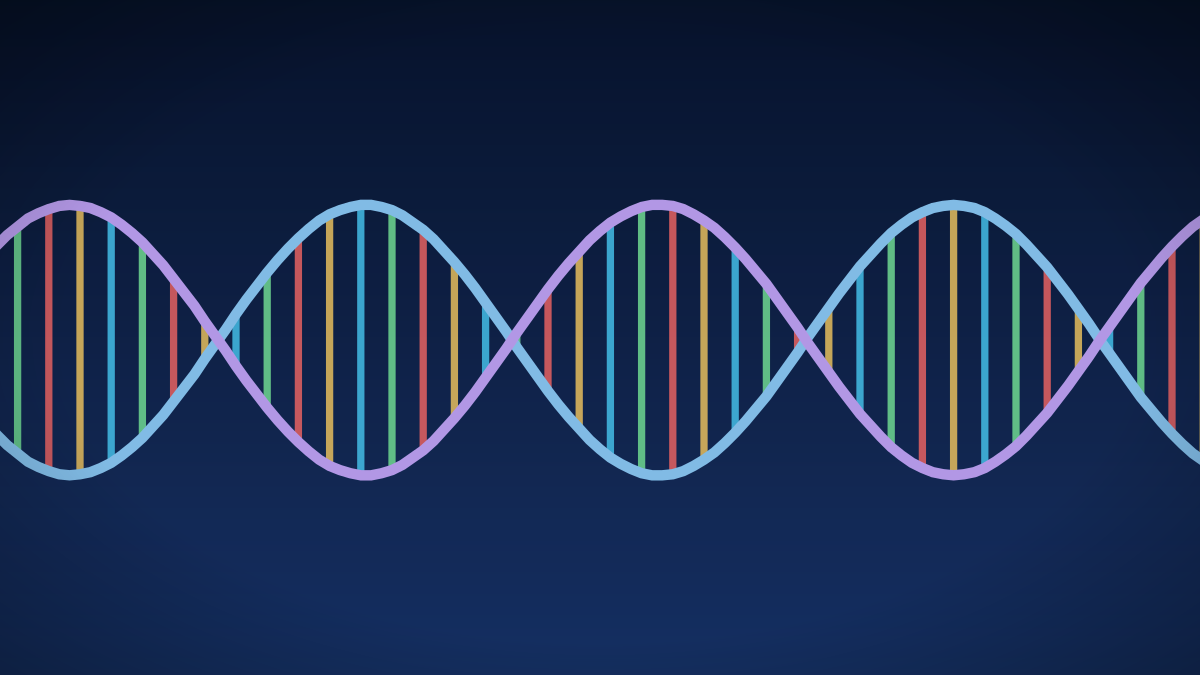
DNA is built from two strands forming a double helix, and its four bases, A, C, G and T, pair in fixed combinations.[2] The genome is the whole of that information for a cell. For a closer look at the molecule, see What Is DNA?
From draft to complete sequence
The International Human Genome Sequencing Consortium published a draft sequence in Nature in February 2001, covering about 94 percent of the genome, and reported an estimate of about 30,000 to 40,000 protein-coding genes.[4] NHGRI notes that the original project ended in 2003 with roughly 92 percent of the sequence complete. The Telomere-to-Telomere effort later filled the remaining gaps, including hard-to-sequence regions such as centromeres and telomeres, and reported the first complete, gapless sequence of a human genome in Science in 2022.[5]
References
- National Human Genome Research Institute. Genome. Accessed October 5, 2026.
- National Human Genome Research Institute. Base Pair. Accessed October 5, 2026.
- National Human Genome Research Institute. The Human Genome Project. Last updated March 19, 2025. Accessed October 5, 2026.
- International Human Genome Sequencing Consortium, Nature. Initial sequencing and analysis of the human genome. February 1, 2001. Accessed October 5, 2026.
- National Human Genome Research Institute. Telomere-to-Telomere (T2T): The first complete, gapless sequence of a human genome. March 31, 2022. Accessed October 5, 2026.
These NHGRI pages do not give a gene count, so none is stated here.