What Is DNA? The Molecule That Carries Your Instructions
- DNA carries genetic information for the development and functioning of an organism.
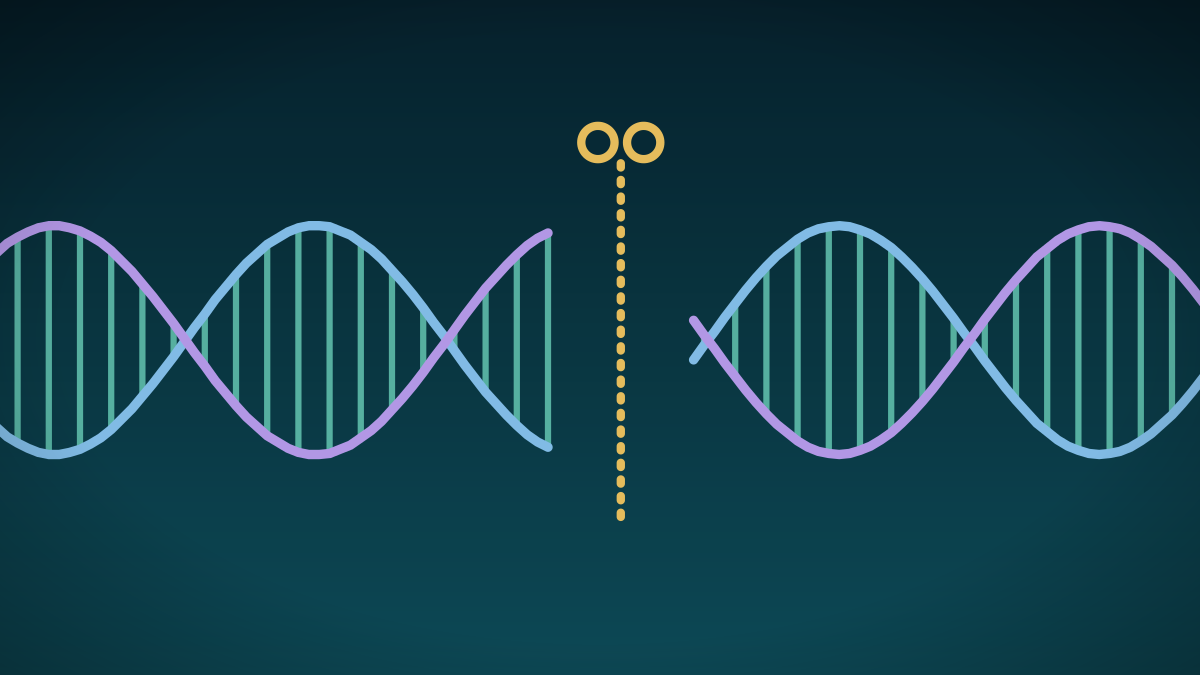
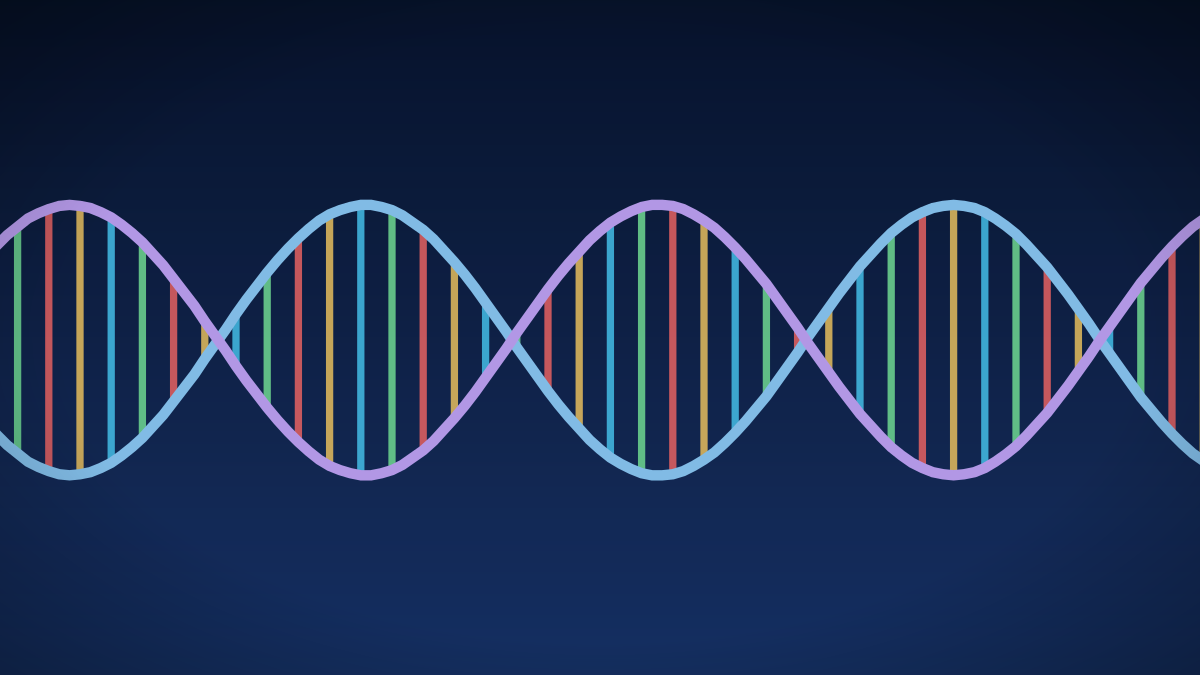
- It is two linked strands wound into a double helix, like a twisted ladder.
- The four bases pair in a fixed way: A with T, and C with G.
The U.S. National Human Genome Research Institute (NHGRI) defines deoxyribonucleic acid (DNA) as "the molecule that carries genetic information for the development and functioning of an organism."[1]
Structure
DNA consists of two linked strands that wind around each other like a twisted ladder, a shape known as a double helix.[1] Each strand has a backbone of alternating sugar and phosphate molecules, and one of four bases is attached to each sugar: adenine (A), cytosine (C), guanine (G) or thymine (T).[2]
Base pairing
The bases on the two strands bond through hydrogen connections: adenine always pairs with thymine, and cytosine always pairs with guanine.[1][2] Each such complementary pair is called a base pair, described by NHGRI as a "rung of the DNA ladder."[2]
Where DNA is found
MedlinePlus describes DNA as the hereditary material in humans and almost all other organisms. Most of it sits in the cell nucleus, and a small amount is found in the mitochondria, where it is called mitochondrial DNA.[3]
Scale
The human genome contains approximately 3 billion base pairs, distributed across 23 chromosomes.[2] Human DNA comprises about 3 billion bases, and more than 99 percent of them are identical from one person to another.[3]
The textbook Molecular Biology of the Cell states that the nucleotide sequence of each DNA strand is exactly complementary to that of its partner strand, with A always pairing with T and G with C. It describes genetic information as carried in the linear sequence of nucleotides, and notes that each strand can act as a template for a new complementary strand, which allows copying during cell division.[4]
References
- National Human Genome Research Institute. Deoxyribonucleic Acid (DNA). Accessed October 5, 2026.
- National Human Genome Research Institute. Base Pair. Accessed October 5, 2026.
- MedlinePlus Genetics, U.S. National Library of Medicine. What is DNA?. Last reviewed January 19, 2021. Accessed October 5, 2026.
- Alberts B, Johnson A, Lewis J, et al., Molecular Biology of the Cell, 4th ed. (Garland Science, 2002), NCBI Bookshelf. The Structure and Function of DNA. 2002. Accessed October 5, 2026.