Why Coral Turns White: Inside the Record Heat Stress That Reached 84% of the World's Reefs
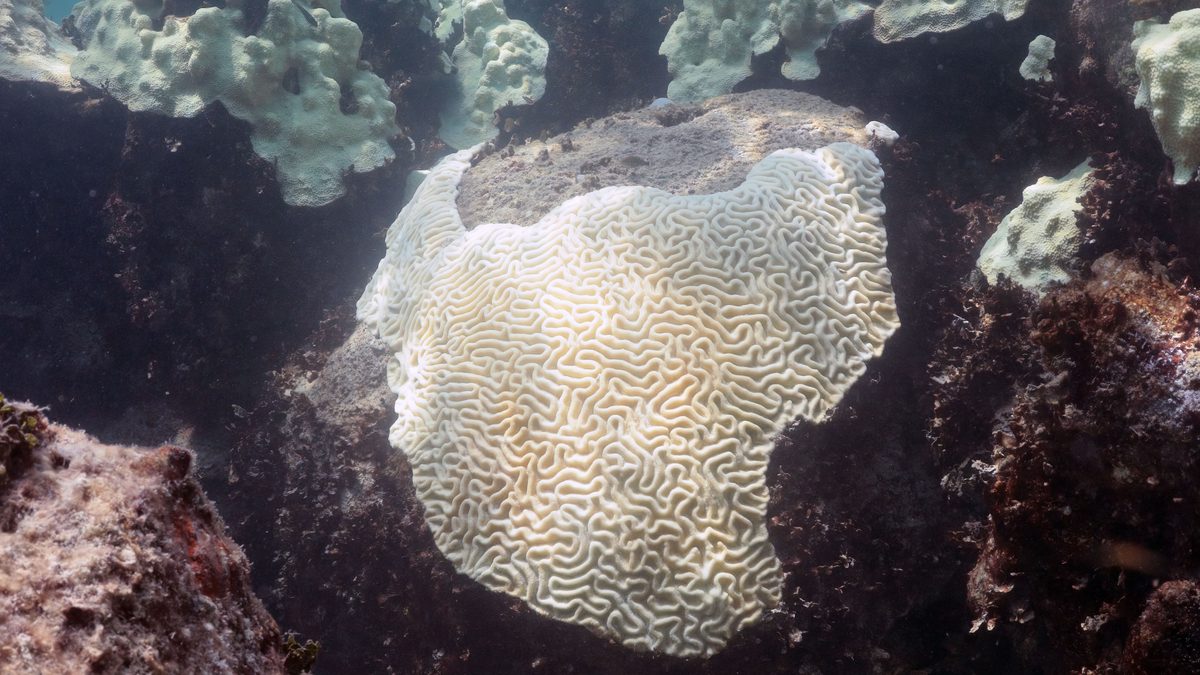
- Corals bleach when stress, most often unusually warm water, makes them expel the symbiotic algae that feed them and give them color. A bleached coral is not dead and can recover if the stress is not severe.[2]
- NOAA says that from early 2023 to mid-2025, bleaching-level heat stress hit 84% of the world's coral reef area, and mass bleaching was documented in at least 83 countries and territories.[1]
- NOAA's Coral Reef Watch coordinator says reefs are now in an era of near-annual bleaching.[1]
Coral reefs are colorful because of microscopic algae living inside the coral. When corals are stressed by changes in conditions such as temperature, light or nutrients, they expel the algae and turn completely white, an event called coral bleaching.[2]
A bleached coral is not a dead coral
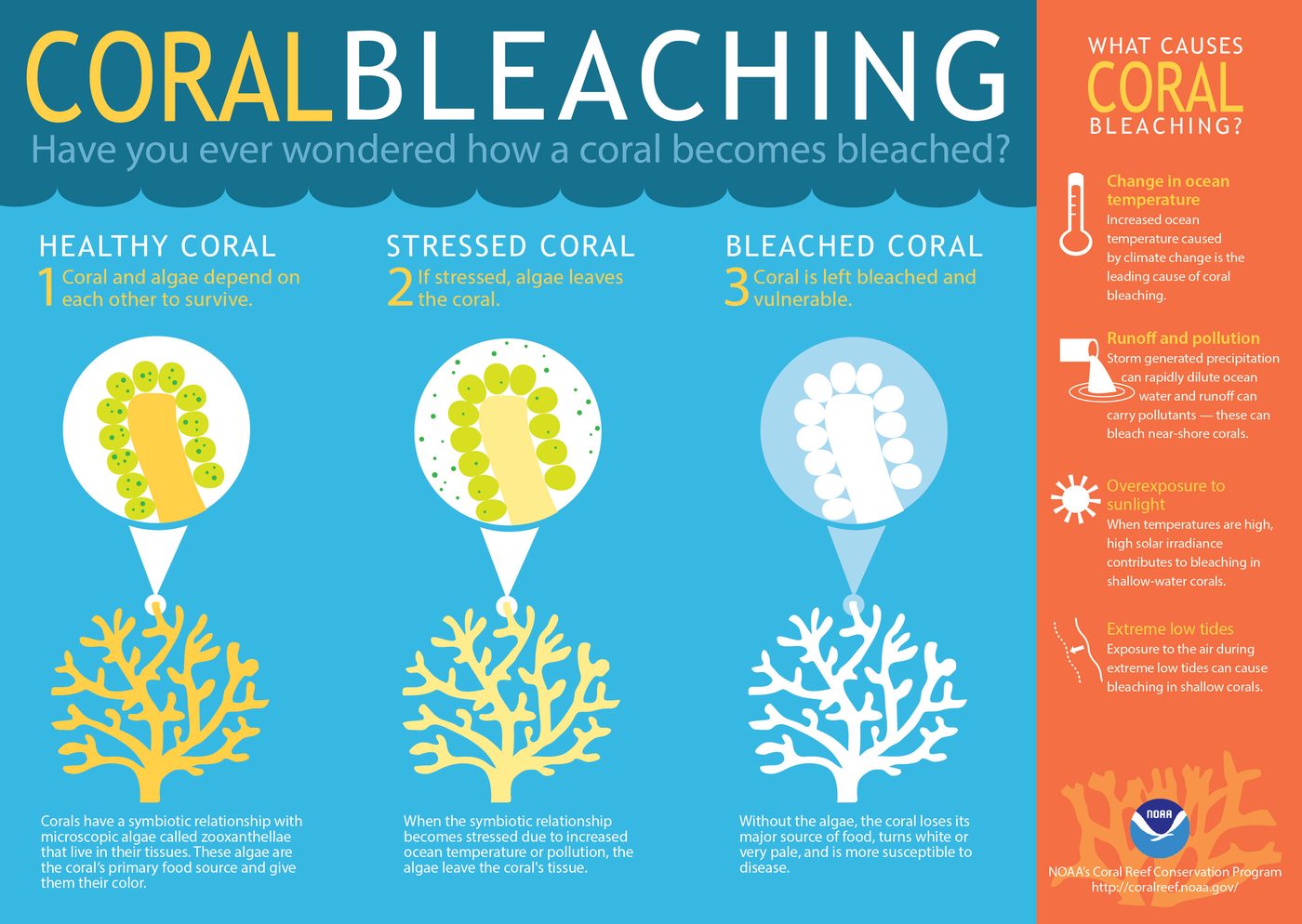
NOAA's National Ocean Service stresses that when a coral bleaches, it is not dead.[2] The algae, called zooxanthellae, are the coral's primary food source and give it its color, so without them the coral loses its major source of food, turns white or very pale and is more susceptible to disease.[2] If the stress is not severe, corals have been known to recover. If the loss of algae is prolonged and the stress continues, the coral eventually dies.[2]
What causes bleaching
NOAA says increased ocean temperature caused by climate change is the leading cause of coral bleaching.[2] It lists three other causes: runoff and pollution after storms, which can dilute seawater and bleach near-shore corals; overexposure to sunlight, which contributes to bleaching in shallow-water corals when temperatures are high; and extreme low tides that expose shallow corals to air.[2] Not every bleaching event is caused by warm water. In January 2010, cold water in the Florida Keys, 6.7 degrees Celsius below the usual temperature for the time of year, caused a bleaching event with some coral death.[2] NOAA also notes that in 2005 the United States lost half of its Caribbean coral reefs in one year because of a massive bleaching event.[2]
The record event of 2023 to 2025
NOAA confirmed the fourth global coral bleaching event on April 15, 2024.[1] From early 2023 to mid-2025, bleaching-level heat stress affected 84% of the world's coral reef area, in all three ocean basins that contain reefs: the Pacific, Atlantic and Indian Oceans.[1] Mass bleaching was documented in at least 83 countries and territories.[1] After analyzing satellite data and bleaching reports, NOAA's experts now say the event likely ended in mid-2025, following severe bleaching in Western Australia early that year, and that global heat stress has declined since, with only isolated bleaching reports.[1] The earlier global events were in 1998, in 2010 and from 2014 to 2017.[1]
Warnings and signs of resilience
Even in this event, not all reef areas bleached despite high ocean temperatures, and scientists are studying those places to learn what helped corals resist.[1] NOAA also says sea surface temperatures are still higher than they were 25 to 30 years ago, and that "thermal stress is now pervasive" on U.S. coral reefs.[1] Derek Manzello, coordinator of NOAA's Coral Reef Watch, said: "We are now in the era where reefs will bleach on a near-annual basis, which means defining when global events begin and end is becoming increasingly difficult."[1]
NOAA's report, published June 2, 2026, noted that every global bleaching event since 1998 has coincided with a strong El Niño, and that an El Niño expected to emerge within months could bring a return of widespread bleaching.[1] Its four-month outlook at the time showed high risk for much of the north Pacific, including Hawaiʻi, and for Florida and the Caribbean later in the summer.[1] Current conditions are posted by NOAA Coral Reef Watch.
Why reefs matter
NOAA describes coral reefs as a window into ocean health. They provide coastal protection from waves, support ocean biodiversity and create economic opportunities for communities through tourism and fisheries.[1]
This article relies on NOAA's own reporting. Figures are as published by NOAA, and the 84% refers to reef area exposed to bleaching-level heat stress, not to the share of corals that died. Images credited to NOAA are U.S. government works. NOAA does not endorse this site.
Sources2tap to view
- NOAA National Centers for Environmental Information (NESDIS). World's Fourth Mass Coral Bleaching Event Likely Ended in 2025. June 2, 2026. Accessed October 23, 2026.
- NOAA National Ocean Service. What is coral bleaching?. Last updated September 23, 2026. Accessed October 23, 2026.