
Genomics, Genetic Engineering, GMOs and Gene Therapy
Reading whole genomes, moving genes between species, how GM crops are made and assessed, gene therapy and CRISPR genome editing.
🎯 By the end of this lesson
- Distinguish genomics from genetics.
- Summarize the Human Genome Project and describe how DNA sequencing has changed.
- Describe the steps of making recombinant DNA using restriction enzymes, plasmids and ligase.
- Define GMO and give three purposes of GM crops.
- Explain the main safety concerns and how GM foods are assessed.
- Describe how gene therapy works and distinguish somatic from germline changes.
- Outline how CRISPR-Cas9 edits DNA.
- Explain why single-gene tests predict only a small part of disease risk.
1Overview
For most of history, people could change living things only by choosing which individuals bred. Since the second half of the 1900s, the ability to read, copy and alter DNA directly has produced a new set of tools. This lesson covers the first half of the official “applied genetics” content: genomics, genetic engineering, genetically modified organisms (GMOs) and gene therapy. The following lesson covers cloning, stem cells, reproductive technology and forensics, and the last lesson addresses the ethical considerations of all of them.
2Genomics: reading the whole genome
Genomics is the field of biology that studies all of an organism’s DNA: its genes, its other functional elements and how they interact. Genetics, by contrast, often refers to the study of a particular gene. The genome of an organism is the full set of its DNA (see What is a genome?).
The Human Genome Project
The Human Genome Project (HGP) was an international effort launched in October 1990 and completed in April 2003. Its signature achievement was generating the first sequence of the human genome. The information it provided about the human genetic blueprint has accelerated research in human biology and improved medical practice.
How DNA is sequenced
DNA sequencing determines the order of bases in a piece of DNA. The principle of the method developed by Frederick Sanger in the 1970s, which became the basis of later sequencing, is that DNA copying is deliberately stopped at different points using special, labelled nucleotides. The resulting fragments are sorted by size, and the labels reveal the base at each position. Since about 2005, next-generation sequencing has used automated, massively parallel methods that read hundreds of thousands to millions of short fragments in a day. The textbook notes that sequencing a human genome can now take about two days for about one thousand dollars, a tiny fraction of the early cost. A cheaper alternative, whole-exome sequencing, reads only the coding regions (exons).
Genomics also makes use of genetic maps, which show the positions of genes on chromosomes using landmarks called genetic markers, such as single-nucleotide variations (SNPs).
What genomics is used for
- Medicine. Whole-genome and exome sequencing can diagnose disease. In 2010, exome sequencing diagnosed a boy with severe intestinal problems, and a bone-marrow transplant then cured him.
- Personalized medicine and pharmacogenomics. A person’s genomic information can be used to choose the drugs most likely to be effective and least toxic for that individual.
- Predicting disease risk. Screening healthy people’s genomes can guide lifestyle changes or medicines before disease begins. This works best for single-gene defects, which account for only about 5 percent of diseases in developed countries. Common diseases such as heart disease involve several genes and environmental factors.
- Agriculture. Genomic data identify desirable traits that can be transferred to other organisms, improving crop breeding, for example making drought-sensitive crops more tolerant.
- Environment. Metagenomics studies the collective genomes of many species in an environment, helping identify new species and the effects of pollutants.
Genomics shifts the question from “what does this gene do?” to “how does the whole set of genes work together?” Its power comes from fast, inexpensive sequencing. Its limit is that most traits and diseases depend on many genes plus the environment, so a genome gives probabilities, not predictions.
3Genetic engineering
Genetic engineering (also called genetic modification) uses laboratory-based technologies to alter the DNA makeup of an organism. Changes can be small, such as swapping a single base pair, or larger, such as deleting a region of DNA or inserting a new segment. A common form is inserting a gene from one species into an organism of another species to give it a desired trait. Because nearly all organisms use the same genetic code, a gene from one species can usually be read by another.
The basic method: recombinant DNA
Molecular cloning of a gene follows a standard pattern, using three kinds of tools.
- Restriction enzymes cut DNA at specific sequences, often leaving short single-stranded “sticky” ends.
- Plasmids are small circular DNA molecules that can carry foreign DNA (a transgene) into bacteria, where they are copied.
- DNA ligase permanently joins cut DNA fragments, producing recombinant DNA.
- Cut the plasmid and the gene of interest with the same restriction enzyme, so their ends match.
- Mix the pieces and add DNA ligase to join them into a recombinant plasmid.
- Introduce the plasmid into bacteria.
- Grow the bacteria. As they divide, they copy the plasmid and produce the protein encoded by the gene.
- Collect and purify the protein.
Human insulin for people with diabetes is made in this way. Insulin was produced in E. coli bacteria as early as 1978, replacing insulin extracted from pigs, which had caused allergic reactions in some patients. Other cloned genes are used to make proteins for vaccines. Sheep, goats and chickens can be engineered to produce human proteins in milk or eggs.
4Genetically modified organisms (GMOs)
A genetically modified organism is an organism whose DNA has been altered in ways that do not occur naturally through mating or natural recombination. Foods made from or with these organisms are called GM foods. Selected genes can be moved between organisms, including unrelated species.
What GM crops are designed to do
- Insect resistance. Bt crops carry a gene for a bacterial toxin already used as a conventional insecticide.
- Virus resistance to certain plant viruses.
- Herbicide tolerance to some weed-killers.
- Other goals: higher nutrient content, drought resistance and, for non-food uses, pharmaceutical proteins such as vaccines.
The first GM crop on the market was the Flavr Savr tomato, launched in 1994. Where pest or weed pressure is high, GM crops have reduced insecticide or herbicide use and can raise yields.
Safety assessment and concerns
The World Health Organization (WHO) notes that each GM food is assessed case by case, so no general statement can be made about all GM foods. Assessments consider toxicity, allergenicity, key components, stability of the inserted gene, nutritional effects and unintended effects of the insertion. GM foods on the international market have passed national safety assessments, and no health effects have been shown in the general population where they are approved. The main concerns discussed are:
- Allergenicity: genes from commonly allergenic organisms should not be transferred unless the protein is shown to be non-allergenic.
- Gene transfer: movement of genetic material to body cells or gut bacteria is considered unlikely, but would matter if it affected health, especially if antibiotic resistance genes were involved.
- Outcrossing: genes moving into conventional or wild crops, and mixing of GM and non-GM crops.
- Environmental concerns: escape of engineered genes into wild populations, effects on non-target organisms, biodiversity loss and increased chemical use.
“GMO” is not a single thing that is either safe or dangerous. A GMO can be a bacterium making insulin, a crop with a bacterial gene, or an animal making a drug in its milk. Each product is evaluated on its own. Equally, a food being “non-GMO” says nothing about whether it was produced sustainably. Selective breeding, described in the previous lesson, also changes genes, but GMOs involve direct changes to DNA, sometimes with genes from other species.
5Gene therapy
Gene therapy is a technique that uses genes to treat, prevent or cure a disease or medical disorder. Often it adds new copies of a broken gene, or replaces a defective or missing gene with a healthy version. It has been used to treat inherited diseases (such as hemophilia and sickle cell disease) and acquired disorders (such as leukemia). A common way to deliver genes uses a modified virus, such as an adenovirus, as a vector; this approach was used in treating severe combined immunodeficiency (SCID).
A key distinction is between somatic and germline changes. Somatic changes affect non-reproductive cells, are limited to certain tissues and are not passed to future generations. Changes in eggs, sperm or embryos could be inherited by later generations.
6Genome editing and CRISPR
Genome editing refers to technologies that let scientists add, remove or alter DNA at specific locations. The best known is CRISPR-Cas9, adapted from a system that bacteria use as an immune defence against viruses. A guide RNA binds to a target DNA sequence and attaches to the Cas9 enzyme. Cas9 cuts the DNA at that spot, and the cell’s own repair machinery then adds, deletes or replaces genetic material. It is described as faster, cheaper, more accurate and more efficient than earlier methods.
CRISPR is used in cells and animal models to study diseases, and it is being explored in trials for single-gene disorders (such as cystic fibrosis, hemophilia and sickle cell disease) and complex diseases. Its safety and effectiveness in people are still being determined. The article What is CRISPR? gives more background.
A patient has a recessive condition caused by two faulty copies of a gene in blood-forming cells. A somatic gene therapy delivers working copies into some of those cells. The patient may improve, but sperm or egg cells are unchanged, so the patient’s children still inherit one faulty allele (the patient has genotype aa in the germline), and a Punnett square for a carrier partner would be unchanged. Germline editing, in contrast, could change the alleles passed to children, which is why it is treated as a much bigger ethical step.
Germline editing is currently illegal in the United States and many other countries, because of ethical and safety concerns, and it raises questions such as whether editing should ever be used to enhance normal traits such as height. These issues are explored in the last lesson.
7Putting the tools in context
These technologies are linked. Genomics reads the DNA and identifies genes of interest. Genetic engineering and genome editing change the DNA. GMOs are the engineered organisms, and gene therapy applies similar tools to treat patients. All depend on the ideas covered in earlier lessons: DNA structure, the genetic code, gene expression and mutation. Because nearly all life uses the same code, a gene from one species can function in another. For the broader background on DNA see What is DNA?.
8Practice problems with solutions
Problem 1: choose the right tool
Match each task to a tool. Reading the order of bases in an unknown DNA sample uses sequencing. Cutting a plasmid and a gene at matching sites uses a restriction enzyme. Joining the pieces uses DNA ligase. Making a bacterium produce insulin uses a recombinant plasmid. Switching a single base at a chosen site in a human cell line could use CRISPR-Cas9.
Problem 2: somatic or germline?
A treatment repairs a gene in a patient’s blood cells. Will the patient’s children inherit the repair? No, because only the blood cells were changed, which makes it somatic. If the same repair were made in a fertilised egg, every cell of the person, including egg or sperm cells, could carry it, and the change could be inherited.
Problem 3: evaluating a statement
“A genome test can predict whether a person will get heart disease.” This overstates what the test can do. Heart disease involves two or more genes and environmental factors such as diet, so a test gives a risk estimate. A test for a single-gene condition can be more informative, but such conditions account for only a small share of all diseases.
Summary
- Genomics studies whole genomes, and sequencing has become faster and cheaper since the Human Genome Project.
- Genetic engineering moves or changes genes using restriction enzymes, ligase and vectors such as plasmids.
- GM foods are assessed case by case, with concerns about allergenicity, gene transfer and outcrossing.
- Gene therapy and CRISPR aim to correct genes, and germline changes raise additional ethical questions.
🔑Key terms
?Quick check
Try each question first, then reveal the answer.
1. Explain the difference between genetics and genomics.
Genetics often studies one particular gene, while genomics studies the entire genome of an organism, including all genes, other functional elements and their interactions.
2. Why did the cost and speed of sequencing change so much after 2005?
Next-generation sequencing uses automated, massively parallel methods that read hundreds of thousands to millions of short fragments in a day, which is much faster and cheaper than earlier methods.
3. Describe the roles of restriction enzymes, plasmids and DNA ligase in making recombinant DNA.
Restriction enzymes cut DNA at specific sequences, plasmids carry the gene into bacteria where it is copied, and DNA ligase joins the cut pieces together permanently.
4. Why can a human gene be made to work in a bacterium?
Nearly all organisms use the same genetic code, so the bacterial ribosomes can read the human gene's codons and make the human protein.
5. List three goals of genetically modified crops and one concern about them.
Goals include insect resistance, virus resistance and herbicide tolerance or higher nutrient content. Concerns include allergenicity, gene transfer and outcrossing to wild or conventional crops.
6. What is the difference between somatic gene therapy and germline editing?
Somatic therapy changes non-reproductive cells and is not passed on to children. Germline editing changes eggs, sperm or embryos, so the change could be inherited.
7. Describe the steps by which CRISPR-Cas9 changes a gene.
A guide RNA matches a target DNA sequence and brings Cas9 to it. Cas9 cuts the DNA, and the cell's repair machinery adds, deletes or replaces DNA at the cut.
8. A genetic test finds a rare single-gene variant in a healthy person. Why is a test for a common condition such as heart disease less informative?
Single-gene defects account for only a small share of disease. Common conditions involve several genes and environmental factors such as diet, so a single variant changes risk but does not decide the outcome.
BC curriculum content covered in this lesson
- Applied genetics: genomics
- Applied genetics: GMOs
- Applied genetics: gene therapy
- Applied genetics: genetic engineering
Related articles
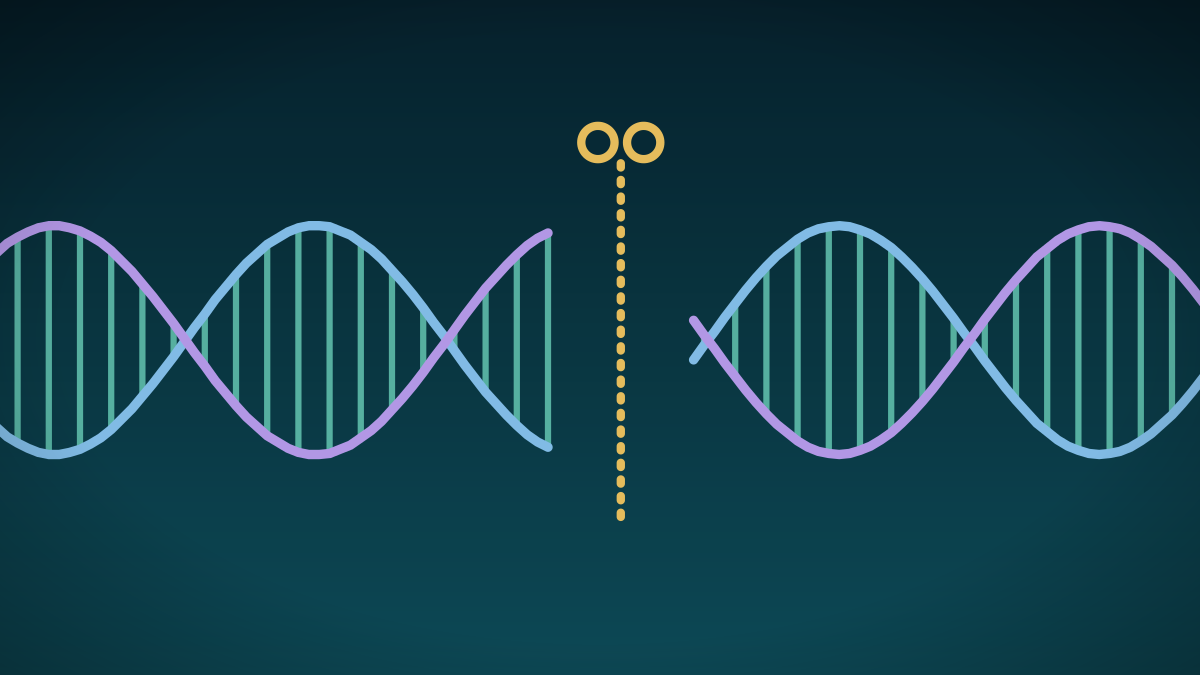
What Is CRISPR? The Gene-Editing Tool Borrowed From Bacteria
CRISPR-Cas9 lets scientists cut DNA at chosen spots using a guide RNA and a Cas9 enzyme, adapted from a bacterial defense system. Health agencies describe its first approved therapy and the debate over editing eggs, sperm and embryos.

What Is a Genome, and What Was the Human Genome Project?
A genome is an organism's complete set of DNA instructions. What that means and how large the human genome is.
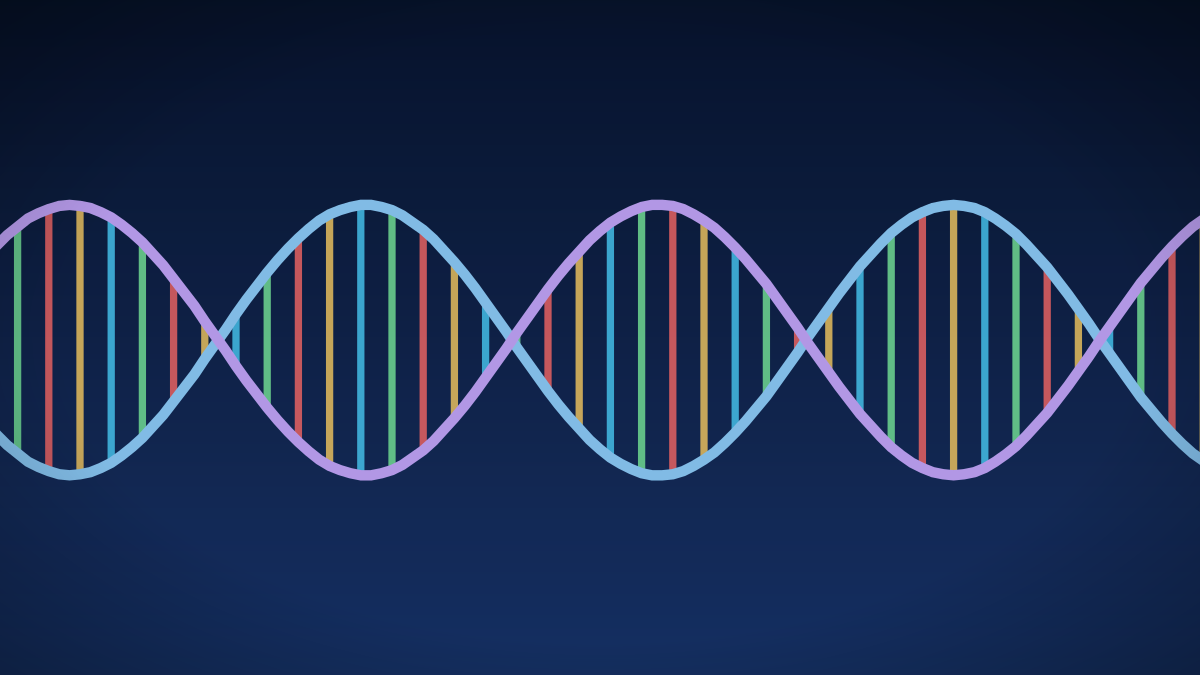
What Is DNA? The Molecule That Carries Your Instructions
DNA is the molecule that carries genetic information. A short guide to its structure and how its letters pair.
References
- BC Ministry of Education and Child Care. Science 10 (curriculum, Content and Elaborations). Accessed October 7, 2026.
- NHGRI. Genomics (Talking Glossary). Accessed October 7, 2026.
- NHGRI. Human Genome Project. Accessed October 7, 2026.
- OpenStax. Biology 2e, 17.2 Mapping Genomes. Accessed October 7, 2026.
- OpenStax. Biology 2e, 17.3 Whole-Genome Sequencing. Accessed October 7, 2026.
- OpenStax. Biology 2e, 17.4 Applying Genomics. Accessed October 7, 2026.
- OpenStax. Biology 2e, 17.1 Biotechnology. Accessed October 7, 2026.
- NHGRI. Genetic Engineering (Talking Glossary). Accessed October 7, 2026.
- World Health Organization. Food, genetically modified. Accessed October 7, 2026.
- NHGRI. Gene Therapy (Talking Glossary). Accessed October 7, 2026.
- MedlinePlus (NIH). What are genome editing and CRISPR-Cas9?. Accessed October 7, 2026.
- NHGRI. CRISPR (Talking Glossary). Accessed October 7, 2026.
These lessons follow the content areas listed in the British Columbia curriculum. They are study material written for this site and are not an official document. The official curriculum is the authority on what each course requires. Lessons are general education, not medical advice.