
Artificial Selection and Genetic Modification
Selective breeding, recombinant DNA, GMOs and gene therapy, and the social and ethical questions they raise.
🎯 By the end of this lesson
- Describe the steps of artificial selection and give examples from crops and animals.
- Compare artificial and natural selection.
- Distinguish artificial selection from genetic modification.
- Outline how recombinant DNA is made and used to produce a protein or a GMO.
- Define transgenic organism and give examples of GMOs.
- Explain gene addition and genome editing as forms of gene therapy.
- Evaluate a use of genetic modification by weighing benefits, risks, evidence and ethical issues.
- Apply a decision framework to a case such as GM labelling or fish farming.
1Overview
Broccoli, cabbage, kale, cauliflower, Brussels sprouts and kohlrabi look like six different vegetables. They are descended from a single wild plant. No laboratory was involved: farmers over many generations kept seeds from plants with the features they liked. In the last fifty years a second route to change opened up. Scientists can now move a single gene from one organism into another, or deliver a working gene to a patient's cells. These two routes, artificial selection and genetic modification, are the subject of this lesson, along with the ethical questions they raise.
2Artificial selection: humans as the selective force
In artificial selection (selective breeding), humans choose which individuals will breed, based on desirable characteristics. The steps are:
- Select parents that show the desired characteristics and breed them.
- Select offspring that show the desired characteristics and breed them.
- Repeat over many generations until the new breed reliably shows the selected characteristics in all offspring.
The mechanism is the same as in natural selection from the previous lesson: heritable variation, differential reproduction, and a change in allele frequencies. The difference is that humans, and not the environment, decide which individuals reproduce. Charles Darwin used this fact as an argument: if breeders can change populations so much, nature could do the same over longer periods.
Examples
- Crop plants: disease resistance, higher yield, drought tolerance, better-tasting fruit, and large or unusual flowers.
- Dogs: breeders choose which dogs mate to raise the chance of puppies with traits such as coat colour. Many breeds exist today, all of one species and descended from a single ancestor.
- Livestock and other domesticated animals, selected for products or behaviour useful to people.
Artificial versus natural selection
| Feature | Natural selection | Artificial selection |
|---|---|---|
| Who selects? | The environment (no intervention) | Humans |
| Result | Populations better adapted to their environment | Features useful to humans, which may not help the individual survive |
| Speed | Usually slow | Faster, because only chosen individuals reproduce |
| Raw material | Existing heritable variation | Existing heritable variation |
Artificial selection does not create traits out of nothing, and it is not the same as genetic modification. It works with variation that is already present in the population (arising earlier by mutation and recombination). Breeding for a trait also reduces the number of individuals that reproduce, which tends to reduce variation in the population, a point worth weighing when evaluating selective breeding.
The history of agriculture is a long record of artificial selection in action. Early farmers saving seed from the best plants changed the allele frequencies of the whole crop. The Curricular Competencies invite students to analyze how agricultural history shows artificial selection in humans themselves: what a society chooses to grow, eat and value can shape which traits are favoured. Discussing these examples is also an opportunity to ask about local First Peoples practices of managing and caring for plant and shellfish populations, as in the clam gardens of the first lesson.
Why artificial selection matters for understanding evolution
Artificial selection shows in miniature what natural selection can do. Within human history, a single species of wild plant has been reshaped into forms as different as a leafy head and a swollen stem, and breeds of one species of dog differ greatly in size, coat and behaviour. The speed of change comes from the strength of the selection: only chosen individuals reproduce. The same species can be shaped by different pressures into different forms, which is also a core idea in the next lesson on speciation and divergence.
3Genetic modification: changing DNA directly
Biotechnology uses biological agents for technological purposes, with major applications in medicine, agriculture and industry. Genetic modification goes beyond selecting among existing variants: a specific piece of DNA is added to or changed in an organism.
Recombinant DNA: the basic technique
Foreign DNA is cut with restriction enzymes (restriction endonucleases) and joined into a plasmid vector by DNA ligase, creating a recombinant DNA molecule. The plasmid is placed into a host such as a bacterium, which then makes the protein encoded by the foreign gene. Proteins made this way are called recombinant proteins.
GMOs and transgenic organisms
A genetically modified organism (GMO) has received recombinant DNA. If the foreign DNA comes from another species, the organism is transgenic. Examples:
- Bt crops: plants engineered to produce a toxin from the bacterium Bacillus thuringiensis that harms many insect pests.
- Transgenic animals such as sheep and goats that make human proteins in their milk.
- Transgenic plants with disease resistance, herbicide resistance, better nutrition or longer shelf life.
- Insulin made by bacteria, as above.
- The Flavr Savr tomato, the first GM crop on the market (1994), which used antisense RNA to slow spoilage and did not stay on the market because of maintenance and shipping problems.
The central difference between the two routes: artificial selection changes allele frequencies in a population over generations by choosing parents. Genetic modification changes the DNA of an individual organism directly, and can move a gene between unrelated species.
| Feature | Artificial selection | Genetic modification |
|---|---|---|
| What is changed | Allele frequencies in a population | The DNA of an individual organism |
| Source of the new trait | Variation already within the species | Can come from a different species |
| Timescale | Many generations | One generation can show the new trait |
| Examples | Dog breeds, cabbage family | Bt crops, bacterial insulin |
4Gene therapy
Gene therapy treats or prevents disease by correcting the underlying genetic problem instead of relying only on drugs or surgery. Two main approaches are described:
- Gene addition (gene transfer): the earliest method. A working copy of a gene is introduced to take the place of a faulty one, or a new gene is added to help fight disease.
- Genome editing: a newer method, such as CRISPR-Cas9, which changes the cell's existing DNA instead of adding new genetic material. Studied uses include fixing a faulty gene, turning a helpful gene on, turning a harmful gene off, and removing DNA that disrupts gene function.
In many gene-addition treatments the healthy gene is delivered to diseased cells by a modified virus that has had its disease-causing genes removed. An example is the treatment of severe combined immunodeficiency (SCID). Gene therapies are used to treat a small number of diseases, including Leber congenital amaurosis (an eye disorder) and spinal muscular atrophy (a muscle disorder), while many more are in research. See the article on CRISPR.
Gene therapy shows how knowledge from the viruses lessons can be reversed: a virus that normally delivers harmful genetic instructions is modified to deliver a helpful gene. Because a virus's host range and cell entry are determined by its surface proteins, the choice of the virus and its design matter a great deal for safety.
5Evaluating genetic modification: benefits, risks and ethics
The curriculum asks for ethical considerations, which means weighing benefits and risks and asking who decides. Reputable bodies describe the following.
| Possible benefits | Concerns raised |
|---|---|
| Insect resistance from Bt toxin, virus resistance for higher yields, and herbicide tolerance, which can reduce pesticide use where pest or weed pressure is high | Allergenicity: genes from commonly allergenic organisms are discouraged unless the protein is shown not to be allergenic |
| Lower prices, longer shelf life, better nutritional value | Outcrossing: genes can spread into conventional crops or wild relatives |
| Possible future uses: drought resistance, higher nutrient levels, pharmaceutical proteins such as vaccines | Environmental effects: escape into wild populations, effects on non-target organisms, loss of biodiversity, changes in chemical use |
| Human proteins such as insulin made safely and in quantity | Market concerns: control of seed markets by a few companies, farmer dependence, intellectual property rights |
Each GM food is assessed case by case, so general statements about the safety of all GM foods cannot be made. Assessments cover toxicity, allergenicity, specific components, gene stability, nutritional effects and unintended effects. GM foods on the international market have passed national safety assessments, and no health effects have been shown in the general population where they are approved. Countries regulate GM foods differently, and labelling is debated, with no worldwide consensus.
Question: A class debates a rule that all foods containing GM ingredients must be labelled. List one argument for and one against, and state what evidence would help.
For: labelling lets consumers make informed choices and supports transparency when public opinion is divided. Against: if assessments find no health difference, labelling might suggest a risk that evidence does not support, and it adds cost. Evidence needed: results of case-by-case safety assessments, data on environmental effects after release, and surveys of how consumers interpret labels.
Ethical questions for gene therapy and genome editing
For gene therapy, ethical questions include: who should have access if treatments are expensive; how the risks of an early-stage treatment should be weighed against the severity of the disease; whether changes should be limited to the treated person's body cells or could ever involve eggs and sperm, which would pass changes to later generations; and who should decide. These are questions of values as well as science, which is why Curricular Competencies ask students to examine the social, ethical and environmental effects of artificial selection and genetic modification.
Science can describe what a technology does and what risks have been measured. Deciding whether and how to use it also involves ethics, law, economics and cultural values, including the perspectives of Indigenous communities, farmers, patients and consumers.
6Cloning and the limits of biotechnology
Cloning produces an organism that is genetically almost identical to its donor. Dolly the sheep, the first cloned mammal, lived seven years and died of respiratory complications; the donor cell's age may have affected her lifespan. Cloned animals often show facial, limb and cardiac abnormalities, and therapeutic cloning has faced bioethical objections. Cloning shows a general pattern of new technologies: success in one respect does not guarantee safety or ethical acceptance in others, and risk must be assessed case by case.
Question: Classify each as artificial selection, genetic modification or neither: (a) a farmer saves seed from the highest-yielding plants each year, (b) a bacterium is given the human insulin gene on a plasmid, (c) a plant grows taller in fertilizer, (d) a modified virus delivers a working copy of a gene to a patient's cells.
Answer: (a) artificial selection (humans choose parents, allele frequencies shift across generations). (b) genetic modification (recombinant DNA, a transgenic organism). (c) neither: an environmental effect on one individual that is not inherited. (d) genetic modification applied as gene therapy.
7Weighing a technology: a decision framework
When asked to evaluate a use of artificial selection or genetic modification, a structured approach avoids opinion alone:
- Define the change: which gene or trait, and by which method (selection, transgenic modification, gene therapy, genome editing).
- List benefits and who receives them: farmers, patients, consumers, ecosystems.
- List risks and who bears them: health, environmental, economic, cultural.
- Identify the evidence: what has been tested, how, and what remains unknown.
- Consider alternatives: conventional breeding, other treatments, or no intervention.
- Decide how to monitor: post-market monitoring is recommended for GM foods, for example.
The same framework can be applied to fish farms, an example the Curricular Competencies mention for evaluation: farmed fish can supply food, but questions about the ecosystem effects and about wild fisheries, including First Peoples fisheries, require evidence and consultation.
8Summary
- Artificial selection is humans choosing which individuals breed; it works with existing variation and can be fast. The cabbage family came from one wild plant.
- Genetic modification changes the DNA of an organism directly; recombinant DNA uses restriction enzymes and ligase to move genes, even between species.
- GMOs include Bt crops and bacteria making insulin; they are assessed case by case.
- Gene therapy adds a working gene (often via a modified virus) or edits existing DNA (genome editing such as CRISPR-Cas9).
- Ethical evaluation weighs benefits, risks, access and who decides.
🔑Key terms
?Quick check
Try each question first, then reveal the answer.
1. Describe the steps of artificial selection.
Individuals with the desired characteristic are chosen and bred, offspring with the characteristic are chosen and bred, and the process is repeated over many generations until the breed reliably shows the trait.
2. Give one similarity and two differences between natural and artificial selection.
Both act on existing heritable variation. In natural selection the environment selects and the result is better adaptation to the environment, whereas in artificial selection humans select and the traits are useful to humans but may not help survival. Artificial selection is usually faster.
3. Explain how cabbage, broccoli and kale can be the same species.
They were all bred from one wild brassica plant. Breeders selected different plant parts, such as leaves, flower clusters or stems, in different lines, so allele frequencies diverged while the species stayed the same.
4. What roles do restriction enzymes and DNA ligase play in making recombinant DNA?
Restriction enzymes cut the plasmid and the source DNA at specific sites, and DNA ligase joins the gene into the plasmid.
5. What is the difference between a GMO and a transgenic organism?
A GMO has received recombinant DNA. If that DNA came from another species, the organism is also transgenic.
6. Describe how a virus can be used in gene therapy.
A virus is modified to remove its disease-causing genes and to carry a healthy gene. It delivers the gene into the patient's cells, which can then make the missing protein.
7. Identify two concerns raised about GM crops and one possible benefit.
Concerns include possible allergenicity, spread of genes to wild relatives or conventional crops, and effects on non-target organisms or biodiversity. A benefit is insect resistance from Bt toxin, which can reduce pesticide use.
8. A government considers requiring labels on all GM foods. Outline how to evaluate this proposal using evidence and ethics.
Gather evidence from case-by-case safety assessments and environmental monitoring, consider the benefits (informed consumer choice) and costs (possible suggestion of risk, expense), consider who is affected, and weigh values such as transparency and trust.
BC curriculum content covered in this lesson
- artificial selection and genetic modifications: artificial selection
- artificial selection and genetic modifications: gene therapy
- artificial selection and genetic modifications: GMOs
- artificial selection and genetic modifications: ethical considerations
Related articles
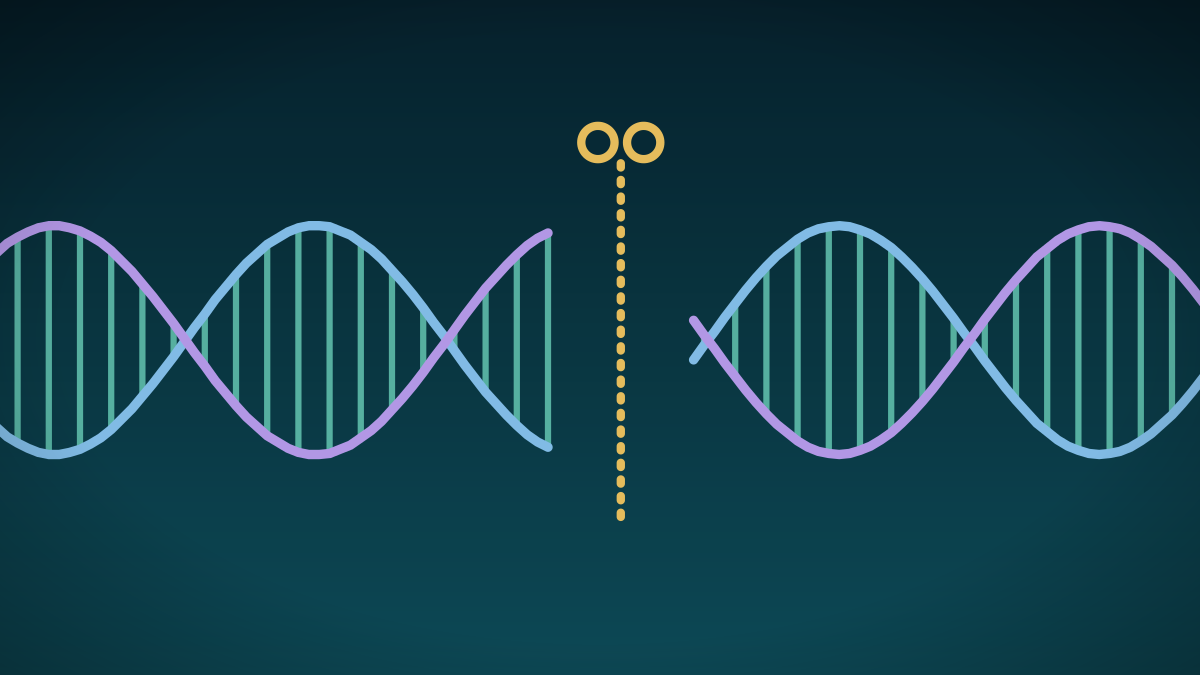
What Is CRISPR? The Gene-Editing Tool Borrowed From Bacteria
CRISPR-Cas9 lets scientists cut DNA at chosen spots using a guide RNA and a Cas9 enzyme, adapted from a bacterial defense system. Health agencies describe its first approved therapy and the debate over editing eggs, sperm and embryos.
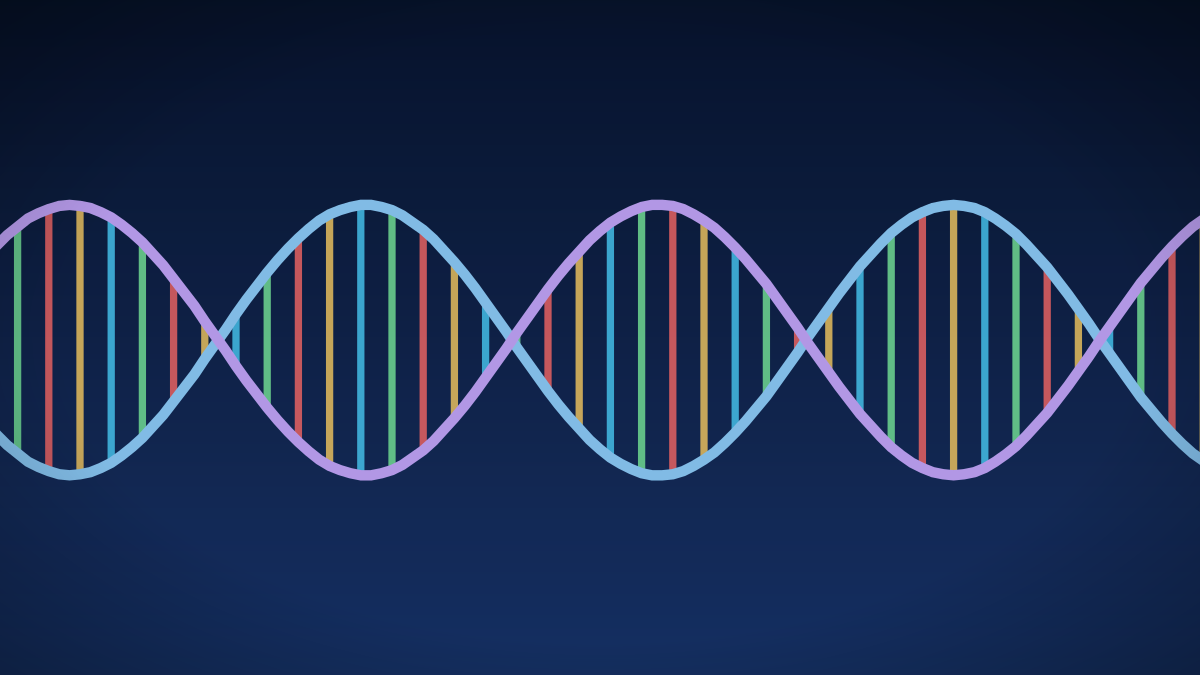
What Is DNA? The Molecule That Carries Your Instructions
DNA is the molecule that carries genetic information. A short guide to its structure and how its letters pair.
Survival of the Fittest? What Natural Selection Really Says
Natural selection is one of the basic mechanisms of evolution, and it is often misunderstood. Three sources explain what it needs, how it works and what it does not mean.
References
- BC Ministry of Education. Life Sciences 11 content with elaborations (PDF). Accessed October 7, 2026.
- OpenStax. Biology 2e: Biotechnology. Accessed October 7, 2026.
- Save My Exams. Artificial selection (IGCSE Biology). Accessed October 7, 2026.
- MedlinePlus Genetics. What is gene therapy?. Accessed October 7, 2026.
- WHO. Food, genetically modified: questions and answers. Accessed October 7, 2026.
- Simon Fraser University. Researchers continue to unlock mysteries of ancient clam gardens. Accessed October 7, 2026.
These lessons follow the content areas listed in the British Columbia curriculum. They are study material written for this site and are not an official document. The official curriculum is the authority on what each course requires. Lessons are general education, not medical advice.