
Microevolution, Mutation and Natural Selection
How populations change over generations: mutations, population genetics, natural selection, drift, and adaptation to changing environments.
🎯 By the end of this lesson
- Define microevolution in terms of allele frequency in a population.
- Calculate allele frequencies from population data.
- Explain how mutations arise and distinguish germline from somatic mutations.
- Describe the steps of natural selection and apply them to an example.
- Distinguish stabilizing, directional and diversifying selection from graphs.
- Explain how genetic drift, bottlenecks, founder effects and gene flow change allele frequencies.
- Use the Hardy-Weinberg equations to calculate expected genotype frequencies.
- Distinguish an adaptation from a change that occurs during one individual's lifetime.
1Overview
The influenza virus that circulates this winter is not quite the one that circulated last winter, which is why flu vaccines are re-planned every year. Bacteria that once died from a standard antibiotic now survive it. A forest of pale birch trees darkens with soot, and the moths on the trunks change in colour within a few generations. None of these changes happens inside one individual's lifetime. They happen in populations, over generations. This lesson explains how, using the curriculum's terms: microevolution, adaptation to changing environments, changes in DNA (mutations and population genetics) and natural selection as a mechanism of gradual change.
2What microevolution is
Microevolution is change within a species that occurs over time in a population. In the language of population genetics, evolution is a change in the frequency of alleles in a population. A gene pool is the sum of all the alleles in a population, and the allele frequency is the number of copies of one allele divided by the number of copies of that gene in the whole population.
Two points are essential. First, the unit of evolution is the population, not the individual. An individual does not evolve; it keeps the genes it was born with. Second, only heritable variation, rooted in the genetic code, can be acted on by natural selection. Features shaped by environment alone, such as a tan, are not inherited and do not directly cause evolution.
Giraffes did not grow longer necks by stretching. Traits acquired during a lifetime are not passed on through genes. In populations, individuals with heritable variation that suits the environment leave more offspring, so the frequency of the helpful alleles increases from one generation to the next.
Question: In a population of 100 diploid individuals, 40 copies of allele A and 160 copies of allele a are present. What are the allele frequencies?
Answer: There are 200 copies of the gene (2 per individual). Frequency of A = 40 ÷ 200 = 0.20, and frequency of a = 160 ÷ 200 = 0.80. The frequencies sum to 1. If the next generation has A at 0.25, the population has evolved, in the population-genetics sense.
3Changes in DNA: the source of new variation
A mutation is a change in the DNA sequence of an organism. Mutations can arise from errors in DNA replication during cell division, from exposure to mutagens such as certain chemicals and ionizing radiation, and from viral infection. Mutations occur constantly, but cells have repair machinery that fixes many of them quickly, and almost none of them affect health. Real mutations are not superhero-like; most have no visible effect, some are harmful and a few are beneficial.
Germline and somatic mutations
Germline mutations occur in eggs and sperm and can be passed on to offspring; they appear in every cell of the resulting person. Somatic mutations occur in body cells such as skin or muscle, are not passed on and affect only the cell where they occurred and the cells that grow from it. Only germline mutations matter for evolution.
The sources of variation in a population
| Source | What it does |
|---|---|
| Mutation | Creates new alleles; the main source of new variation |
| Gene flow | Moves alleles into or out of a population by migration of individuals or gametes such as pollen |
| Sexual reproduction | Reshuffles existing alleles (crossing over, independent assortment, random fertilization) |
Mutations occur by chance, and they do not occur because an organism needs them. Whether a mutation spreads depends on the environment. Mutation supplies the raw material, and selection sorts it.
4Natural selection: the mechanism of gradual change
When individuals in a population differ in heritable traits that affect survival or reproduction, alleles that help individuals survive and have more offspring tend to spread, and detrimental alleles can be eliminated. This is natural selection. The logic can be written as a chain:
- Variation. Individuals differ in traits, and some differences are heritable.
- Overproduction and competition. More offspring are produced than can survive on limited resources.
- Differential survival and reproduction. Individuals with better-suited traits leave more offspring.
- Inheritance. Those offspring inherit the helpful alleles, so the allele frequency rises.
- Repeat over generations. The population becomes better suited to the environment: an adaptation.
Fitness
Fitness is an organism's contribution to the next generation's gene pool. What matters is relative fitness: how an individual compares with others in its population. "Survival of the fittest" therefore means differential reproductive success and not strength or speed.
Modes of selection
| Mode | What is favoured | Effect on variability | Example |
|---|---|---|---|
| Stabilizing | The average phenotype | Decreases | Mice whose brown fur matches the forest floor survive best |
| Directional | One extreme | Shifts the average | Peppered moths becoming darker as soot darkened the trees |
| Diversifying | Both extremes | Increases | Beach mice matching either sand or grass |
Question: Soot from factories darkens tree bark. Light moths and dark moths are both present. Describe what happens to the moth population and name the mode of selection.
Answer: Light moths are easier for predators to see on dark bark, so dark moths survive and reproduce more. The proportion of the allele for dark colour rises over generations, and the average colour shifts toward dark. This is directional selection. Individual moths do not change colour; the population changes.
Sexual selection
Competition for mates can favour traits such as large body size or elaborate ornaments, which can produce differences between the sexes (sexual dimorphism). Some traits help reproduction while hurting survival, such as a peacock's large tail. One proposal, the handicap principle, suggests that costly traits are an honest signal of quality; another, the good genes hypothesis, suggests ornaments signal efficient metabolism or disease resistance.
5Evolution without selection: genetic drift, gene flow and other forces
Natural selection is not the only force that changes allele frequencies.
- Genetic drift is random change in allele frequency. Small populations are much more affected than large ones.
- Bottleneck effect: a random catastrophe removes a large share of the population, and the survivors' genetic makeup becomes that of the new population.
- Founder effect: a new population started by a few individuals reflects the genetics of those founders.
- Gene flow: alleles move between populations by migration.
- Nonrandom mating: mate choice and physical distance change which alleles get passed on.
Drift is not selection. In drift the alleles that rise or fall are not better or worse; they are simply the ones that happen to survive a random event. Drift often occurs alongside natural selection and may lead to the loss of useful alleles in small populations.
6The Hardy-Weinberg principle
How can a biologist tell if a population is evolving? The Hardy-Weinberg principle gives a reference point: allele and genotype frequencies stay stable unless an evolutionary force acts on the population. It assumes a very large population with no mutation, migration or selection. For a gene with two alleles at frequencies p and q:
p + q = 1 and p2 + 2pq + q2 = 1
Here p2 and q2 are the expected frequencies of the two homozygous genotypes and 2pq is the expected frequency of heterozygotes. If observed genotype frequencies differ from the predicted ones, the population is evolving.
Question: In a population, allele R has frequency p = 0.7. Predict the genotype frequencies if the population is in Hardy-Weinberg equilibrium.
Answer: q = 1 − 0.7 = 0.3. Homozygous RR = p2 = 0.49. Heterozygous Rr = 2pq = 2 × 0.7 × 0.3 = 0.42. Homozygous rr = q2 = 0.09. Check: 0.49 + 0.42 + 0.09 = 1.00.
7Adaptation to changing environments
An adaptation is a heritable feature that makes an organism better suited to its environment, produced by natural selection over generations. The textbook example is the tongue length of a nectar-feeding moth matching the flower it feeds from. Adaptations are often grouped as:
- Structural: body features such as colour, shape or the length of a tongue.
- Physiological: internal processes such as heat conservation in polar bears.
- Behavioural: actions such as migration or mating displays.
Environments change, so what counts as "well suited" changes too. When soot darkens tree bark, dark moths gain an advantage. When a vaccine becomes common, viruses that escape it gain an advantage. A population with more variation has a better chance that some individuals will suit a new environment, which links back to the value of sexual reproduction and to the role of mutation.
Adaptation is not the same as an individual adjusting to conditions. A person who becomes tanned or fit has changed during one lifetime, and the change is not inherited. An adaptation is a heritable trait whose frequency has increased in a population because it improved survival or reproduction.
Reading evidence of microevolution
Evolution can be detected whenever allele or genotype frequencies change between generations. A student analysing data should look for three things: (1) is the trait heritable, (2) does it affect survival or reproduction in the environment studied, and (3) has the frequency of the trait changed across generations? If all three are yes, natural selection is a good explanation. If frequencies changed but the trait does not affect survival, drift or gene flow might be a better explanation.
Question: A population of 1000 beetles is 36% green (genotype gg, recessive) and 64% brown. The population is assumed to be in Hardy-Weinberg equilibrium. Find the frequency of the green allele, and the number of heterozygous beetles.
Answer: q2 = 0.36, so q = 0.6 and p = 0.4. Heterozygotes = 2pq = 2 × 0.4 × 0.6 = 0.48, or 480 beetles. Brown beetles are therefore 160 homozygous brown (p2 = 0.16) plus 480 heterozygous. If predators remove most green beetles, q will fall in the next generation, and the population will have evolved.
Humans have used the same logic with experiments. A change in an environmental condition (for example the colour of a background) can be set up, and the survival of differently coloured prey can be counted and compared. Evidence for evolution therefore comes from observation, experiment and mathematical models together.
Limits of natural selection and examples in real life
- Selection can act only on existing variation, which comes from mutation and gene flow.
- It acts on the whole organism, so a good allele linked to a poor one can be lost.
- Nonadaptive forces such as drift and gene flow can introduce harmful alleles.
- Evolution has no preset goal, and it does not produce perfect organisms.
Influenza viruses show microevolution in action. Because the viruses keep changing, including in ways that help them survive vaccines, vaccines are planned every year. Their changes illustrate each stage: mutations create variants, selection favours variants that escape existing immunity, and the population of viruses shifts. For the broader picture of selection, see the article on natural selection and the one on DNA.
Microevolution covers every change in allele frequency inside a population: mutation adds variants, gene flow moves them, drift changes them at random, and natural selection changes them according to their effect on survival and reproduction. Adaptation is the result of selection acting over many generations.
8Summary
- Microevolution is a change in allele frequency in a population over generations; the population, not the individual, evolves.
- Mutations in DNA create new alleles; only germline mutations are inherited.
- Natural selection favours heritable traits that increase survival and reproduction, producing adaptation to changing environments.
- Selection can be stabilizing, directional or diversifying; sexual selection favours traits that win mates.
- Drift (including bottlenecks and founder effects), gene flow and nonrandom mating also change allele frequencies.
- Hardy-Weinberg equations give the expected frequencies when no evolutionary force acts.
🔑Key terms
?Quick check
Try each question first, then reveal the answer.
1. Why is it said that populations, and not individuals, evolve?
An individual keeps the genes it was born with. Evolution is a change in allele frequencies across generations in a population.
2. A population has 30 copies of allele B and 70 copies of allele b. State both allele frequencies.
The total is 100 copies, so B = 0.30 and b = 0.70.
3. Explain the difference between germline and somatic mutations and say which matters for evolution.
Germline mutations occur in eggs or sperm and can be passed to offspring, while somatic mutations occur in body cells and are not inherited. Only germline mutations affect evolution.
4. List the steps of natural selection in order.
Heritable variation exists, more offspring are produced than can survive, individuals with better-suited traits survive and reproduce more, the helpful alleles become more frequent, and this repeats over generations.
5. Soot darkens tree trunks and dark moths become more common. Name the type of selection and explain why individual moths did not change colour.
It is directional selection. Moth colour is determined by inherited alleles, so individuals do not change; dark moths survived and reproduced more, so the dark allele became more frequent.
6. How does a bottleneck differ from natural selection as a cause of change?
In a bottleneck, survivors are determined by chance, not by their traits, so allele frequencies change randomly. In natural selection, individuals with certain heritable traits are favoured.
7. If p = 0.6 for a dominant allele in a Hardy-Weinberg population, what are the frequencies of the three genotypes?
q = 0.4. Homozygous dominant = 0.36, heterozygous = 2 x 0.6 x 0.4 = 0.48, homozygous recessive = 0.16.
8. Give two reasons natural selection does not produce perfect organisms.
It can act only on existing variation from mutation and gene flow, and it acts on the whole organism so good alleles linked to poor ones can be lost. Drift and gene flow can also add harmful alleles, and evolution has no preset goal.
BC curriculum content covered in this lesson
- microevolution: change within a species that occurs over time in a population
- adaptation to changing environments
- changes in DNA: mutations, population genetics
- natural selection: mechanisms of gradual change
Related articles
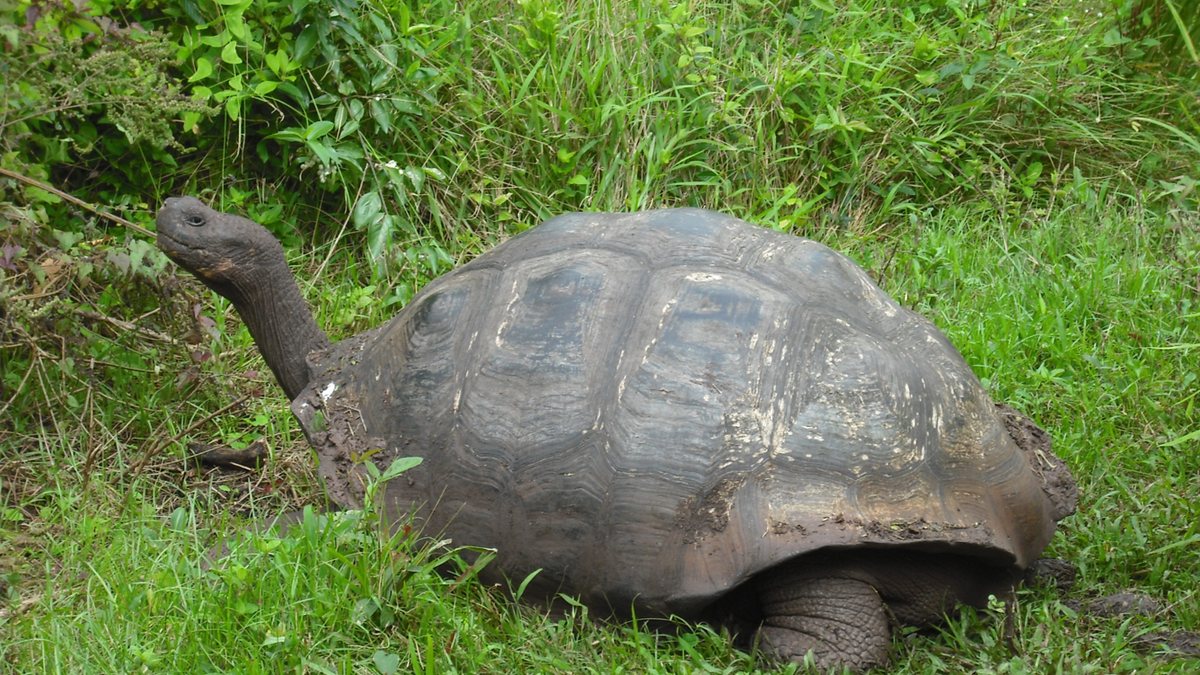
Survival of the Fittest? What Natural Selection Really Says
Natural selection is one of the basic mechanisms of evolution, and it is often misunderstood. Three sources explain what it needs, how it works and what it does not mean.
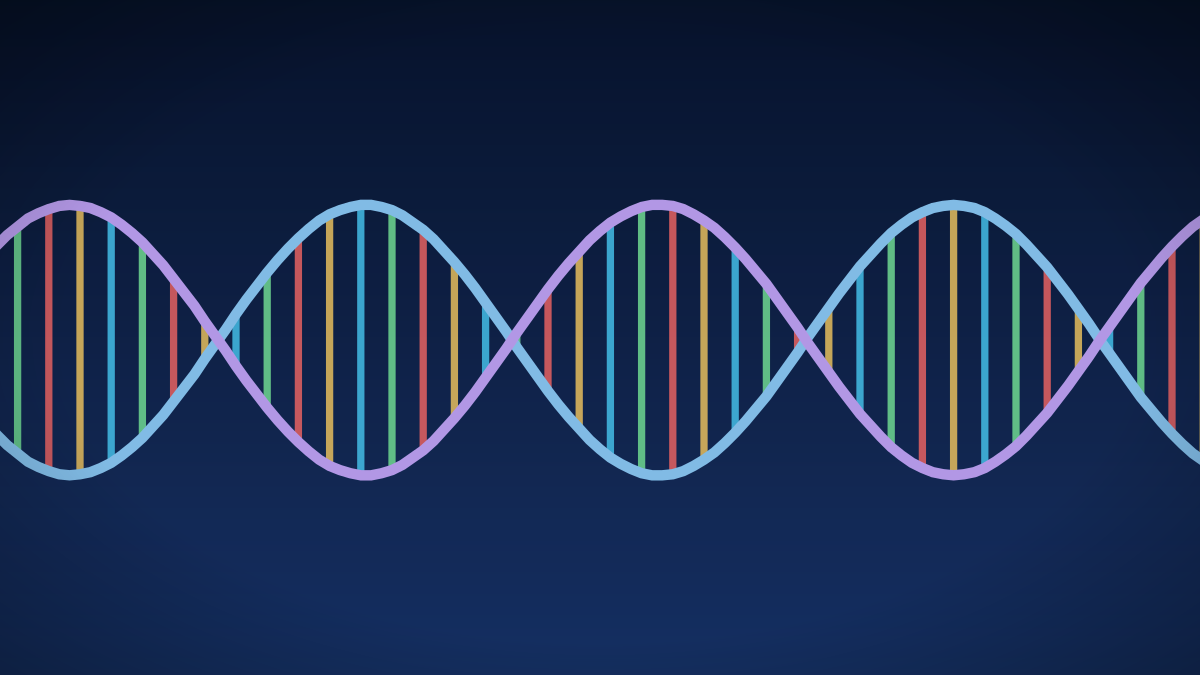
What Is DNA? The Molecule That Carries Your Instructions
DNA is the molecule that carries genetic information. A short guide to its structure and how its letters pair.
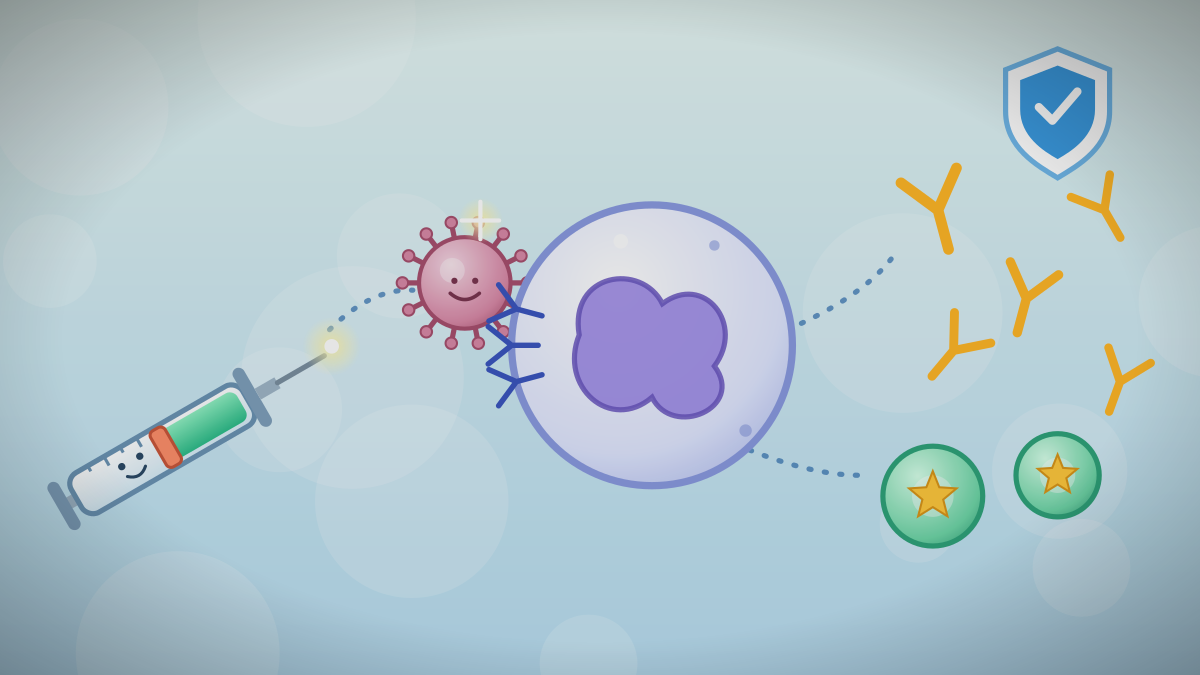
Training the Immune System: How Vaccines Work
Vaccines let the immune system practice against a germ without a real infection. Health agencies describe the antigen, the antibodies and the memory that results.
References
- BC Ministry of Education. Life Sciences 11 (BC curriculum). Accessed October 7, 2026.
- OpenStax. Biology 2e: Population Evolution. Accessed October 7, 2026.
- OpenStax. Biology 2e: Population Genetics. Accessed October 7, 2026.
- OpenStax. Biology 2e: Adaptive Evolution. Accessed October 7, 2026.
- NHGRI. Genetics glossary: Mutation. Accessed October 7, 2026.
- OpenStax. Biology 2e: Themes and Concepts of Biology. Accessed October 7, 2026.
These lessons follow the content areas listed in the British Columbia curriculum. They are study material written for this site and are not an official document. The official curriculum is the authority on what each course requires. Lessons are general education, not medical advice.