
Viral Disease: Immunity, Vaccines and Prevention
How the immune system responds to viruses, how vaccines and herd immunity work, and how spread of H1N1, avian flu, HIV, Ebola and viral STIs is reduced.
🎯 By the end of this lesson
- Distinguish innate from adaptive immunity and name the roles of B cells, T cells, antibodies and memory cells.
- Explain the difference between a primary and a secondary immune response.
- Describe how vaccines produce immunity without causing the disease and name the main vaccine types.
- Explain herd immunity and why the coverage needed depends on how contagious a disease is.
- Identify the links in the chain of transmission and match control measures to them.
- Explain how reassortment produced the 2009 H1N1 influenza virus.
- Compare the transmission and control of avian influenza, HIV, Ebola and viral STIs.
- Plan a reasoned strategy to reduce the risk of a pandemic.
1Overview
In 2009 a new influenza virus appeared and spread around the world within months. A few years earlier, a single unvaccinated traveller returning from abroad was enough to start a measles outbreak in a country that had nearly eliminated the disease. Viral disease is not only a medical subject: it shows biology at work at the levels of molecules, cells, organisms, populations and ecosystems. This lesson follows a virus from its first contact with a body, through the immune response, to the strategies that stop it from spreading through a whole population.
2How the body defends itself: innate and adaptive immunity
The immune system has two broad layers. The innate response is fast and general. The adaptive response is slower, highly specific and remembers what it met.
Innate defences
- Barriers: intact skin, mucus, tears, cilia and stomach acid block or remove pathogens.
- Phagocytes such as macrophages and neutrophils engulf pathogens and debris.
- Interferons are signals released by virus-infected cells. Neighbouring cells that receive them break down RNA and reduce protein synthesis, which limits viral replication.
- Inflammation makes blood vessels leakier so that immune cells and fluid reach the site of infection, producing redness, swelling, heat and pain.
- Fever is caused by cytokines raising body temperature. See the article on why fevers happen.
Adaptive immunity
Adaptive immunity develops over days to weeks and is directed at specific antigens, foreign molecules that immune cells recognize. Its main players are:
- B cells, which bind an intact antigen. With help from helper T cells they multiply and become antibody-secreting plasma cells and memory B cells.
- Antibodies, proteins that match a specific antigen and help to disable pathogens and mark them for phagocytes.
- Helper T cells, which release cytokines and coordinate other immune cells.
- Cytotoxic T cells, which recognize infected cells and kill them. They are especially important against viruses because viruses hide inside cells, where antibodies cannot reach.
- Memory cells, long-lived B and T cells that persist for years or decades and respond rapidly if the same antigen returns.
The primary response to a first exposure is slow and produces a modest amount of antibody. The secondary response after a later exposure begins sooner and produces much more antibody, because memory cells skip the early activation steps. This difference is the entire basis of vaccination. See also the article on how the immune system works.
Immunity means that the body can respond faster and more effectively to a pathogen because of earlier exposure. Exposure can happen through infection or through vaccination, but vaccination provides the memory without the disease.
3Vaccines
A vaccine delivers harmless antigens from a pathogen so that the immune system forms memory cells without the person becoming ill. A vaccine produces a mild primary response; later exposure to the real pathogen triggers the fast secondary response. Memory cells can decline over time, which is why some vaccines need booster doses (tetanus boosters about every ten years are a standard example).
| Vaccine type | What it contains |
|---|---|
| Live-attenuated | A weakened form of the germ |
| Inactivated | A killed form of the germ |
| Subunit, recombinant, polysaccharide, conjugate | Only specific parts of the germ, such as a protein, a sugar or an outer coating |
| Toxoid | An inactivated toxin made by the germ |
| mRNA | Instructions that tell cells to make a protein (or part of one) from the germ |
| Viral vector | Genetic material delivered by a harmless virus to make a germ protein |
Vaccines undergo extensive safety testing before approval, and research supported by public health bodies concludes that their benefits in preventing illness and death greatly outweigh their risks. A worldwide vaccination campaign eradicated smallpox in the 1970s. After a vaccine against Haemophilus influenzae type b (Hib) was introduced in the mid-1980s, the incidence of Hib disease in the United States dropped by 99%.
A vaccine does not "give the disease" in order to teach immunity. Vaccines contain weakened or killed germs, or only parts of germs, or instructions to make a part. None of these can cause the full disease in the way that the real infection does.
4Herd immunity
Herd immunity (also called community immunity) occurs when enough people in a population are immune that a disease has little room to spread. An infected person meets mostly immune people, so the chain of transmission is broken. The protection extends to those who cannot be vaccinated, such as newborns and people with weakened immune systems.
The proportion of the population that must be immune depends on how contagious the disease is: more contagious diseases need higher immunization rates to stop transmission. Measles is highly contagious, so even small gaps in coverage can allow outbreaks. Even where a disease is not eliminated, high coverage makes epidemics less frequent.
Question: In a school of 500 students, a measles case appears. Compare what is likely to happen if 95% versus 60% of students are immune.
Answer: With 95% immune, only 25 students are susceptible, scattered among immune classmates, so each infected student has few susceptible contacts and the chain of transmission usually dies out. With 60% immune, 200 students are susceptible, so each infected student is likely to meet many susceptible contacts and the outbreak can grow. (The exact thresholds depend on the disease and are set by public health researchers; the point of the example is the direction of the effect.)
In 2005 a measles outbreak in the United States began with one unvaccinated traveller returning from Europe, a country that had nearly eliminated measles by 2000. Travel connects populations, so protection in one region depends on protection elsewhere.
5How viral diseases spread, and how to reduce the spread
Preventing a viral disease means breaking the chain of transmission at one or more links.
6Case studies of viral disease
| Virus | Key biology | Spread | Main control measures |
|---|---|---|---|
| H1N1 (2009 pandemic influenza) | Influenza A with a segmented RNA genome; formed by reassortment of gene segments from swine, avian and human flu viruses | Person to person | Vaccination, hygiene, surveillance |
| Avian influenza (such as H5) | Wild aquatic birds are the main natural reservoir; infects poultry and some mammals | Mostly from direct contact with infected animals; no sustained person-to-person spread so far | Avoiding contact with sick animals, hand hygiene, cooking meat and eggs, animal and human surveillance |
| HIV | Retrovirus that attacks certain white blood cells and weakens the immune system | Body fluids: blood, semen, vaginal fluids, breast milk; mother to child | Condoms, testing, PrEP, PEP, antiretroviral therapy, safe injection |
| Ebola | Fruit bats thought to be the natural hosts | Contact with blood or body fluids of a sick or deceased person; contaminated objects | Isolation, contact tracing, infection control, safe burials, vaccination (for Ebola virus disease) |
| Viral STIs (HPV, herpes simplex, hepatitis B, HIV) | Different virus families spread by sexual contact; many have no symptoms | Sexual contact; some by blood or from mother to child | Condoms, testing, vaccines for HPV and hepatitis B |
H1N1: new viruses from mixing genes
The influenza genome is made of separate segments. When two flu viruses infect the same cell, their segments can be mixed, a process called reassortment. The 2009 H1N1 virus was first detected in people in the United States in April 2009. Six of its eight genes match viruses that regularly infect pigs in North America, and the other two match viruses previously found only in Eurasian pigs. Some of these genes came from viruses that had spread among humans and birds. Pigs can carry bird, human and swine flu viruses at once, so they can act as a "mixing vessel". Reassortment can cause an abrupt, major change called antigenic shift, so that most people have little or no protection against the new virus.
Avian influenza: crossing from animals to people
Wild aquatic birds are the main natural reservoir for most avian influenza A viruses. Infections also occur in poultry and some mammals. Most human infections follow direct contact with infected birds or other animals, for example handling or processing them, and properly cooked poultry and eggs are not considered a route of transmission. The currently circulating avian viruses have not shown sustained spread between people. A pandemic would need a new influenza A virus that spreads continuously between people and to which the population has little or no immunity, and because wild birds carry the viruses, eliminating them is not possible. Surveillance in animals and people is therefore a key control.
HIV: a retrovirus and the immune system
HIV targets white blood cells and weakens the immune system, making other infections and some cancers more likely. It spreads through blood, semen, vaginal fluids and breast milk, and from mother to child during pregnancy, birth or breastfeeding. It is not spread by kissing, hugging, handshakes or shared food or objects. Prevention includes condoms, testing, safe injection practices, PrEP (antiretroviral medication taken by HIV-negative people to lower risk) and PEP (taken after a possible exposure). Antiretroviral therapy suppresses the virus, lets the immune system recover and allows people to live long, healthy lives. People with an undetectable viral load do not transmit HIV sexually. There is no cure: ART controls HIV but does not eliminate it, which fits with the integration of HIV DNA into the host genome described in the previous lesson. Untreated HIV can progress, often after many years, to AIDS, the most advanced stage.
Ebola: control without a cure for everyone
Ebola disease has an incubation period of 2 to 21 days. Early signs are sudden fever, fatigue, muscle pain, headache and sore throat; later signs include vomiting, diarrhoea and rash. Bleeding is less common than often assumed. People are not infectious before symptoms appear. The virus spreads through contact with blood or body fluids of a sick or deceased person, and burial practices involving direct contact can spread it. Health workers are at risk when infection control precautions are not strictly followed. Outbreak control combines isolation of patients, contact tracing and 21 days of monitoring for contacts, infection prevention in health facilities, safe and dignified burials, community involvement and, for Ebola virus disease, vaccination.
Viral STIs
Hepatitis B, herpes simplex virus, HIV and human papillomavirus (HPV) are viral sexually transmitted infections. Safe, effective vaccines exist for HPV and hepatitis B. Condoms, used correctly and consistently, are among the most effective protections, although they do not fully protect against infections that cause sores outside the genital area, such as genital herpes. Many STIs have no symptoms, so testing is important. Some STIs can pass from mother to child during pregnancy, childbirth and breastfeeding.
Control works best when several measures are combined and when communities are involved. Ebola control relies on social mobilization and safe burials as well as medicine, and HIV prevention combines behaviour, testing, drugs and, for mother-to-child transmission, treatment during pregnancy.
7Preventing the next pandemic
The Curricular Competencies invite students to plan how drug companies, health agencies and governments could prevent pandemics. A reasoned plan can be organized by link in the chain:
- At the source: monitor viruses in animals such as birds and pigs, because viruses can cross to people and reassort in animal hosts.
- In populations: maintain high vaccination coverage, offer testing and give clear public information.
- In health systems: isolate cases, trace contacts, follow infection control, and develop vaccines and antiviral drugs that target viral enzymes.
- Across borders: share surveillance data, because travel moves infections quickly between regions.
Because viruses change (by mutation and by reassortment), prevention is ongoing, not a single event. Surveillance, vaccination, hygiene, safe practices and community trust together keep the spread of viral disease low.
8Summary
- Innate defences act fast; adaptive immunity is specific and creates memory, giving a stronger secondary response.
- Vaccines present harmless antigens so that memory forms without the disease.
- Herd immunity protects a population, including those who cannot be vaccinated; the coverage needed rises with contagiousness.
- Control measures target links in the chain of transmission.
- H1N1 arose by reassortment; avian flu is a zoonotic risk; HIV is controlled by antiretroviral therapy and prevention; Ebola is controlled by isolation, safe burials and vaccination; vaccines exist for the viral STIs HPV and hepatitis B.
🔑Key terms
?Quick check
Try each question first, then reveal the answer.
1. Compare innate and adaptive immunity in speed and specificity.
Innate immunity acts quickly and non-specifically, using barriers, phagocytes, interferons and inflammation. Adaptive immunity takes days to weeks, is specific to particular antigens and forms memory.
2. Why is the secondary immune response faster and stronger than the primary response?
Memory B and T cells formed during the first exposure persist and can become effector cells quickly, so the response skips the early activation steps and produces much more antibody.
3. Explain how a vaccine provides protection without the person becoming ill.
It contains harmless antigens (weakened or killed germs, parts of germs, or instructions to make a part) that trigger a mild primary response and memory cells. If the real pathogen appears, the secondary response is fast.
4. Why are cytotoxic T cells particularly important against viruses?
Viruses replicate inside cells where antibodies cannot reach, and cytotoxic T cells recognize and kill infected cells.
5. What is herd immunity, and who benefits from it besides the vaccinated?
It is the protection of a population when enough people are immune that the disease has little room to spread. Newborns and people with weakened immune systems, who may not be able to be vaccinated, benefit as well.
6. Why does a highly contagious disease such as measles need higher vaccination coverage than a less contagious disease?
Each case infects more people, so a larger fraction of the population must be immune to prevent each infected person from finding enough susceptible contacts to keep the chain going.
7. Explain how the 2009 H1N1 virus was a new virus to which most people had little immunity.
Influenza has a segmented genome, so when different flu viruses infect the same cell, as can happen in pigs, their segments mix (reassortment). The result had a combination of swine, avian and human genes that was new, an antigenic shift, so few people had immunity.
8. Choose two viral diseases from this lesson and state one control measure for each, naming the link in the chain of transmission it interrupts.
For Ebola, safe burials stop spread from the bodies of deceased patients (the exit or route). For HIV, condoms or PrEP interrupt transmission through body fluids and protect the susceptible host. Other correct answers include vaccination for hepatitis B or HPV, which protects the host.
BC curriculum content covered in this lesson
- viral disease: immunity
- viral disease: vaccines
- viral disease: herd immunity
- viral disease: reducing the spread of viral diseases (e.g., H1N1, avian flu, HIV, Ebola, STIs)
Related articles
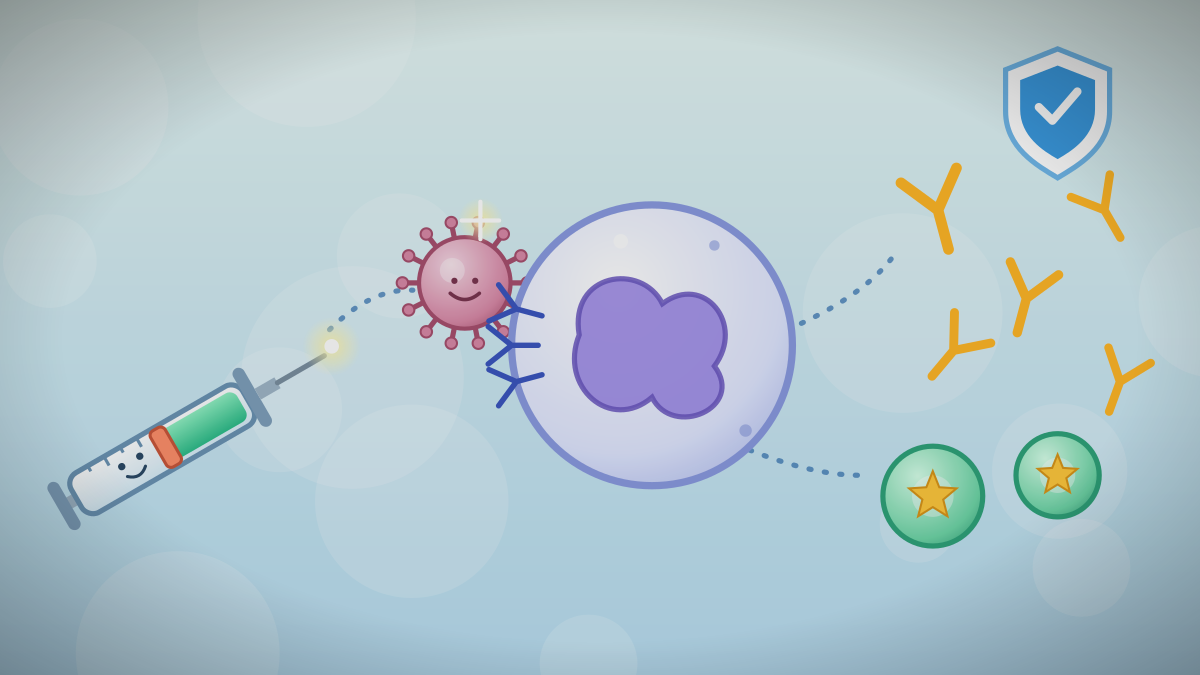
Training the Immune System: How Vaccines Work
Vaccines let the immune system practice against a germ without a real infection. Health agencies describe the antigen, the antibodies and the memory that results.
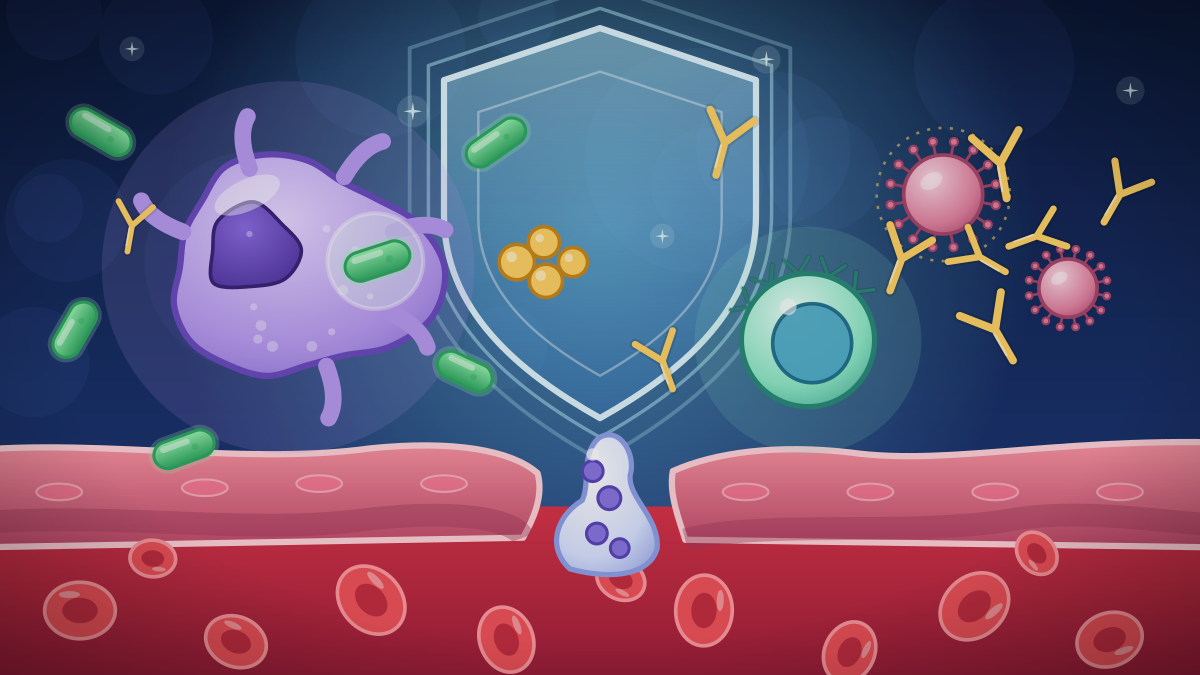
How Does the Immune System Work?
The immune system has a fast, general innate layer and a slower, specific adaptive layer with memory. Barriers, white blood cells, antibodies, organs and what happens when it misfires.
What Are Viruses, and How Do They Differ From Bacteria and Cells?
Viruses are tiny packages of genetic material that cannot run their own metabolism and must hijack host cells to reproduce. Reference texts explain how that sets them apart from bacteria.
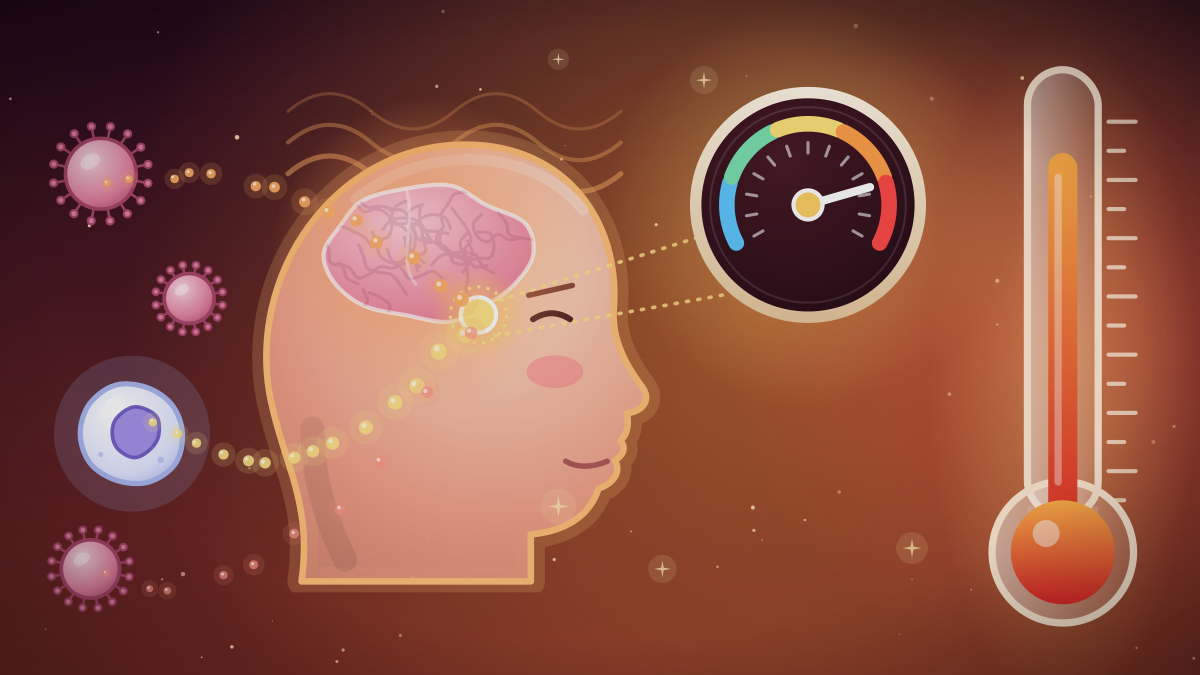
Why Does the Body Get a Fever?
A fever is a raised hypothalamic set point triggered by pyrogens, usually during infection. Health sources describe its mechanism, benefits, how it is graded and when care is advised.
References
- BC Ministry of Education. Life Sciences 11 (BC curriculum). Accessed October 7, 2026.
- OpenStax. Biology 2e: Innate Immune Response. Accessed October 7, 2026.
- OpenStax. Biology 2e: Adaptive Immune Response. Accessed October 7, 2026.
- OpenStax. Biology 2e: Virus Infections and Hosts. Accessed October 7, 2026.
- MedlinePlus. Vaccines. Accessed October 7, 2026.
- NIH News in Health. The Importance of Vaccines. Accessed October 7, 2026.
- WHO. Ebola disease fact sheet. Accessed October 7, 2026.
- WHO. HIV and AIDS fact sheet. Accessed October 7, 2026.
- WHO. Sexually transmitted infections fact sheet. Accessed October 7, 2026.
- WHO. Influenza (avian and other zoonotic) fact sheet. Accessed October 7, 2026.
- CDC. Origin of 2009 H1N1 flu: questions and answers. Accessed October 7, 2026.
These lessons follow the content areas listed in the British Columbia curriculum. They are study material written for this site and are not an official document. The official curriculum is the authority on what each course requires. Lessons are general education, not medical advice.