
Molecules of Life: Water, pH, Carbohydrates, Lipids, Proteins, Nucleic Acids and ATP
The chemistry beneath physiology: why water is special, how pH is buffered, and how the four organic macromolecule classes and ATP are built and broken down.
🎯 By the end of this lesson
- Explain how the polarity of water accounts for its roles as solvent, heat sink, lubricant and reactant.
- Distinguish acids, bases and salts, and calculate how many times more acidic one pH is than another.
- Describe how a buffer, with the carbonic acid-bicarbonate system as the example, resists a change in blood pH.
- Compare dehydration synthesis with hydrolysis and identify which occurs during building and during digestion.
- Classify carbohydrates and lipids by structure and relate each class to a body function.
- Describe the four levels of protein structure and predict what denaturation does to function.
- Contrast DNA and RNA and list the three parts of a nucleotide.
- Describe the structure of ATP and the reactions that release and restore its energy.
1Overview
A cheeseburger, a muscle cell and a strand of DNA look nothing alike, yet all three are assembled from the same short list of molecule types. Anatomy and physiology begins with that list, because every organ system in the body depends on the behaviour of water, ions, sugars, fats, proteins, nucleic acids and one tiny energy carrier called ATP. Understanding these molecules explains why blood pH is guarded so closely, why fats and sugars store energy differently, and why a fever of a few degrees can disable an enzyme.
2Water: the medium of life
Water makes up up to about 70% of adult body weight, and nearly every chemical reaction in the body takes place in it. The reason lies in its shape. A water molecule is bent, with the oxygen atom pulling shared electrons closer than the two hydrogen atoms do. The oxygen end therefore carries a slight negative charge and the hydrogen ends a slight positive charge. Molecules with such uneven charge are called polar.
Polarity gives water several jobs that matter in physiology:
- Solvent. Water dissolves ionic and polar substances (hydrophilic, "water-loving") by surrounding them, as in the figure. Nonpolar substances such as fats are hydrophobic and do not dissolve.
- Heat sink. Water absorbs the heat from chemical reactions without a large rise in temperature, and evaporating sweat carries heat away from the skin.
- Lubricant and cushion. Water is the main component of synovial fluid in joints and pleural fluid around the lungs, and it cushions the brain, the eyes and the fetus.
- Reactant. Water is consumed in hydrolysis and released in dehydration synthesis (described below).
Mixtures in water come in three kinds. A solution (sugar in water) is evenly mixed and transparent. A colloid (milk, cream) contains larger particles that scatter light. A suspension settles over time, as red blood cells do in a tube of blood left standing. Concentration is often reported as mg/dL or as molarity (moles per litre); blood glucose in a healthy adult is on the order of 100 mg/dL.
Because water is polar, ions and polar molecules dissolve in it and move freely between reacting partners. That single property makes the watery cytoplasm and the watery blood plasma workable chemical environments.
3Salts, acids, bases, pH and buffers
Salts and electrolytes
When a salt such as NaCl dissolves, it separates into ions (Na+ and Cl-). Ions in solution conduct electricity and are therefore called electrolytes. This is what allows nerve impulses and muscle contraction. Some salts are structural instead: calcium phosphate forms the hard mineral part of bone and teeth.
Acids and bases
An acid releases hydrogen ions (H+) in solution; a base releases hydroxide ions (OH-) or accepts H+. Strength depends on how completely a substance ionizes. Hydrochloric acid in the stomach is a strong acid that ionizes completely, helping digestion and killing many microbes. Acetic acid in vinegar is a weak acid that ionizes only partly. Bicarbonate (HCO3-) is a weak base; it neutralizes stomach acid as it enters the small intestine.
The pH scale
pH is the negative base-10 logarithm of the H+ concentration. Pure water is neutral at pH 7, lower values are acidic and higher values are basic. Each unit is a tenfold change, so pH 4 is ten times more acidic than pH 5 and a hundred times more acidic than pH 6.
Blood at pH 7.4 is compared with a hypothetical drop to pH 6.4. The change of exactly one pH unit means a tenfold rise in H+ concentration. A shift that small on paper is a very large chemical change, which explains why the body treats a blood pH below 7.35 or above 7.45 as an emergency rather than a minor drift.
Buffers
Blood pH is normally held at about 7.4 (range 7.35 to 7.45). A buffer is a chemical pair, a weak acid with its conjugate base, that absorbs small additions of acid or base so the pH barely moves. The main buffer of the extracellular fluid is the carbonic acid-bicarbonate system, which is present in a ratio of about 20 bicarbonate to 1 carbonic acid at normal pH. Proteins (including hemoglobin) and phosphate also buffer. The buffers act within seconds, breathing adjusts the level of CO2 within minutes, and the kidneys adjust bicarbonate over hours to days. Later lessons on the respiratory and urinary systems return to this three-tier defence.
In real life. Prolonged vomiting, severe diarrhea (loss of bicarbonate), uncontrolled diabetes (build-up of acidic ketone bodies) and breathing problems that trap CO2 can all push blood toward acidosis. Overbreathing that exhales too much CO2, aspirin overdose or excessive antacid use can push toward alkalosis. In each case buffers and organs are overwhelmed and symptoms follow.
4Carbon and functional groups
Carbon has four valence electrons and completes its outer shell by sharing electrons, so it forms stable covalent bonds with hydrogen, oxygen, nitrogen and other carbon atoms. Chains and rings of carbon form the skeleton of every organic molecule. What a skeleton does is decided largely by the small groups of atoms attached to it, called functional groups.
| Functional group | Property | Where it matters |
|---|---|---|
| Hydroxyl (–OH) | polar, so it helps a molecule dissolve | sugars, alcohols |
| Carboxyl (–COOH) | acidic: can release H+ | fatty acids, amino acids |
| Amino (–NH2) | basic: can accept H+ | amino acids |
| Methyl (–CH3) | nonpolar | lipids, parts of amino acids |
| Phosphate | charged, links molecules and stores energy | phospholipids, nucleotides, ATP |
Amino acids carry both an acidic and a basic group, which is why proteins can act as buffers: they can pick up or release H+ as conditions change.
Building and breaking polymers
Large biological molecules are polymers built from repeating monomers. Two opposite reactions handle nearly all construction and demolition.
- In dehydration synthesis one monomer gives up an H and the other an OH; the two leftover pieces join through a new covalent bond and a water molecule is released. Building requires energy input.
- In hydrolysis a water molecule is added across the bond, splitting the polymer back into monomers and releasing energy. Digestion is hydrolysis.
Both are examples of the broader reaction types of synthesis (A + B → AB) and decomposition (AB → A + B). Because enzymes catalyze them, they happen at body temperature.
5Carbohydrates
Carbohydrates have the general formula (CH2O)n, with hydrogen and oxygen in the same 2:1 ratio as in water. They come in three size classes.
| Class | Examples | Role in the body |
|---|---|---|
| Monosaccharides (one sugar) | glucose, fructose, galactose; ribose and deoxyribose (5-carbon) | Glucose is the main fuel; ribose and deoxyribose form part of RNA and DNA nucleotides |
| Disaccharides (two sugars) | sucrose, lactose, maltose | Must be hydrolyzed to monosaccharides before absorption |
| Polysaccharides (many sugars) | starch, glycogen, cellulose | Starch (plant storage) is digestible; glycogen is animal storage in liver and muscle; cellulose is indigestible fibre that aids digestion and fullness |
Every body cell can use glucose, and neurons and red blood cells rely on it almost entirely. Carbohydrate chains also decorate cell surfaces as glycoproteins and glycolipids, which act as identity tags.
6Lipids
Lipids are mostly hydrocarbon, so they are hydrophobic and form emulsions rather than true solutions. Four groups are important.
- Triglycerides (fats and oils): one glycerol joined to three fatty acids, releasing three water molecules in the process. They are the largest energy store, insulate, cushion organs and carry the fat-soluble vitamins A, D, E and K. Saturated fatty acids have no double bonds, are straight and tend to be solid at room temperature (butter). Unsaturated fatty acids have one or more double bonds that kink the chain, so they are liquid (plant oils, fish oils). Trans fats, made by partially hydrogenating oils, are considered even more harmful to the heart and vessels than saturated fats.
- Phospholipids: a glycerol with two fatty acids and a charged phosphate head. The head is hydrophilic and the tails hydrophobic, so phospholipids spontaneously form the double layer of every cell membrane (Lesson 3).
- Steroids: built on four fused hydrocarbon rings. Cholesterol is made by the liver, is part of membranes and is the starting material for bile acids and for sex and adrenal hormones.
- Prostaglandins: signalling lipids made from unsaturated fatty acids that influence inflammation, blood pressure and pain. Anti-inflammatory drugs such as aspirin and ibuprofen work by lowering their production.
Cholesterol is often described only as "bad". It is an essential molecule used in membranes, bile and steroid hormones. Problems arise from excess in the blood and from the type of fat in the diet, not from the molecule's existence.
7Proteins
Proteins carry out most of the work in cells: they are enzymes, transporters, receptors, antibodies, hormones and structural fibres. Their monomers are amino acids. Each has a central carbon bonded to an amino group, a carboxyl group, a hydrogen and a variable R group. About 20 different amino acids build thousands of proteins; nine are essential, meaning the body cannot make them and they must come from food. Amino acids join by dehydration synthesis into peptide bonds; a chain shorter than about 100 amino acids is a polypeptide.
- Primary structure is the sequence of amino acids. It is dictated by the gene (Lesson 4).
- Secondary structure is local folding into an alpha helix or beta-pleated sheet, held by hydrogen bonds.
- Tertiary structure is the 3-D folding of the whole chain, stabilized by hydrogen bonds, disulfide bonds (between cysteines) and interactions of the R groups with water.
- Quaternary structure exists when several polypeptides join. Hemoglobin has two alpha and two beta chains.
Proteins are also classed by overall shape. Fibrous proteins such as collagen are long, strong and structural. Globular proteins such as hemoglobin and enzymes are compact, water-soluble and reactive.
In proteins, shape equals function. Heat, strong acids or bases can denature a protein, unfolding it so it can no longer work. Milk curdles when lemon juice is added for exactly this reason, and a dangerously high fever threatens enzymes for the same reason.
Amino acids contain both acidic and basic groups, so proteins also serve as buffers. Protein is used as an energy source only when carbohydrate and fat are inadequate; because the body has no protein store, this causes tissue wasting.
8Nucleic acids and ATP
A nucleotide has three parts: a phosphate group, a five-carbon sugar and a nitrogen-containing base. The bases are the double-ring purines adenine (A) and guanine (G), and the single-ring pyrimidines cytosine (C), thymine (T, DNA only) and uracil (U, RNA only).
| Feature | DNA | RNA |
|---|---|---|
| Sugar | deoxyribose | ribose |
| Bases | A, C, G, T | A, C, G, U |
| Strands | two, forming a double helix held by hydrogen bonds between bases | usually one |
| Job | stores genetic information in the nucleus | helps express the code as proteins (for example mRNA carries instructions to ribosomes) |
ATP (adenosine triphosphate) is a nucleotide with ribose, adenine and three phosphate groups. The bond between the second and third phosphates holds a great deal of usable energy. Hydrolysis gives ATP + H2O → ADP + Pi + energy. Cells rebuild ATP by phosphorylation, adding phosphate back to ADP with energy from food. ATP is cycled continually rather than stockpiled; Lesson 2 shows how it is made and spent.
In real life. Many nutrition ideas map directly onto these molecules. Fibre is cellulose that humans cannot hydrolyze. Omega-3 fats from cold-water fish are polyunsaturated lipids. Complete proteins supply all nine essential amino acids. Iodized salt supplies an ion that the thyroid needs (Lesson 7).
Putting the molecules together: following a meal
A slice of buttered toast with an egg illustrates how every class appears in one meal and how the reactions of this lesson are used. The starch in the bread is a polysaccharide; salivary and pancreatic enzymes hydrolyze it to disaccharides and then to glucose, which is small enough to be absorbed. The butter is mostly triglyceride, which is hydrolyzed to fatty acids and glycerol (after bile emulsifies it into tiny droplets) before absorption. The egg protein is hydrolyzed to amino acids, which cells recombine by dehydration synthesis into the body's own proteins. Even the egg yolk's cholesterol and phospholipids end up in cell membranes and hormones, and the nucleotides from the food's cells are reused for DNA and RNA.
| Class | Monomer | Main roles | Typical storage or form |
|---|---|---|---|
| Carbohydrate | monosaccharide | fuel, cell identity tags | glycogen in liver and muscle |
| Lipid | fatty acids and glycerol (not true polymers) | energy store, membranes, hormones, insulation | triglycerides in adipose tissue |
| Protein | amino acid | enzymes, structure, transport, signalling, defence | no store; excess is broken down |
| Nucleic acid | nucleotide | information storage and expression | DNA in the nucleus |
A starch molecule of 1000 glucose units is completely hydrolyzed. Each bond that joined two neighbouring glucose units is split by one water molecule. A chain of 1000 units has 999 bonds, so 999 water molecules are consumed and 1000 glucose molecules are released. Dehydration synthesis in the liver, building the same chain into glycogen, would release the same 999 water molecules.
Taken together, these classes make a compact toolkit: carbohydrates and lipids mainly store and supply energy, proteins do most of the work, nucleic acids hold and express the instructions, and ATP couples energy supply to energy use, all dissolved in water and held at a near-constant pH.
🔑Key terms
?Quick check
Try each question first, then reveal the answer.
1. Why does table salt dissolve in water but cooking oil does not?
Water is polar and its partial charges surround and separate the Na+ and Cl- ions. Oil is nonpolar and hydrophobic, so water cannot interact with it and the two form separate layers or an emulsion.
2. Blood pH falls from 7.4 to 6.4. By what factor does the H+ concentration change, and why is this serious?
A drop of one pH unit is a tenfold increase in H+ concentration. Because normal blood pH is held between 7.35 and 7.45, such a change would exceed what buffers can absorb and would disrupt enzymes and other proteins.
3. State what happens in dehydration synthesis and name one place in the body where hydrolysis is essential.
Two monomers are joined by a new covalent bond and a water molecule is released. Hydrolysis is essential in digestion, where enzymes add water to split polymers such as starch and proteins into absorbable monomers.
4. Compare saturated and unsaturated fatty acids in structure and in state at room temperature.
Saturated fatty acids have no double bonds, so the chains are straight and pack tightly, making fats like butter solid. Unsaturated fatty acids have one or more double bonds that kink the chain, so they pack loosely and are liquid oils.
5. Why can a very high fever be dangerous at the molecular level?
Proteins, including enzymes, depend on their folded shape. Extreme heat can denature them, so they lose their shape and cannot catalyze reactions.
6. A student states that the hemoglobin molecule has quaternary structure. What does this mean?
It means hemoglobin is made of more than one polypeptide chain (two alpha and two beta chains) that assemble into a single functional protein.
7. List three differences between DNA and RNA.
DNA contains deoxyribose, the base thymine and is usually double-stranded; RNA contains ribose, the base uracil and is usually single-stranded.
8. Explain why ATP is described as a cycle rather than a store of energy.
A cell holds only a small amount of ATP at a time. Hydrolysis to ADP and phosphate releases energy for work, and phosphorylation using energy from food rebuilds ATP, so the same molecules are used again and again.
BC curriculum content covered in this lesson
- Biological molecules: water
- Biological molecules: acids, bases and buffers (pH)
- Biological molecules: dehydration synthesis and hydrolysis reactions
- Biological molecules: carbohydrates, lipids, proteins and nucleic acids
- Biological molecules: ATP
Related articles
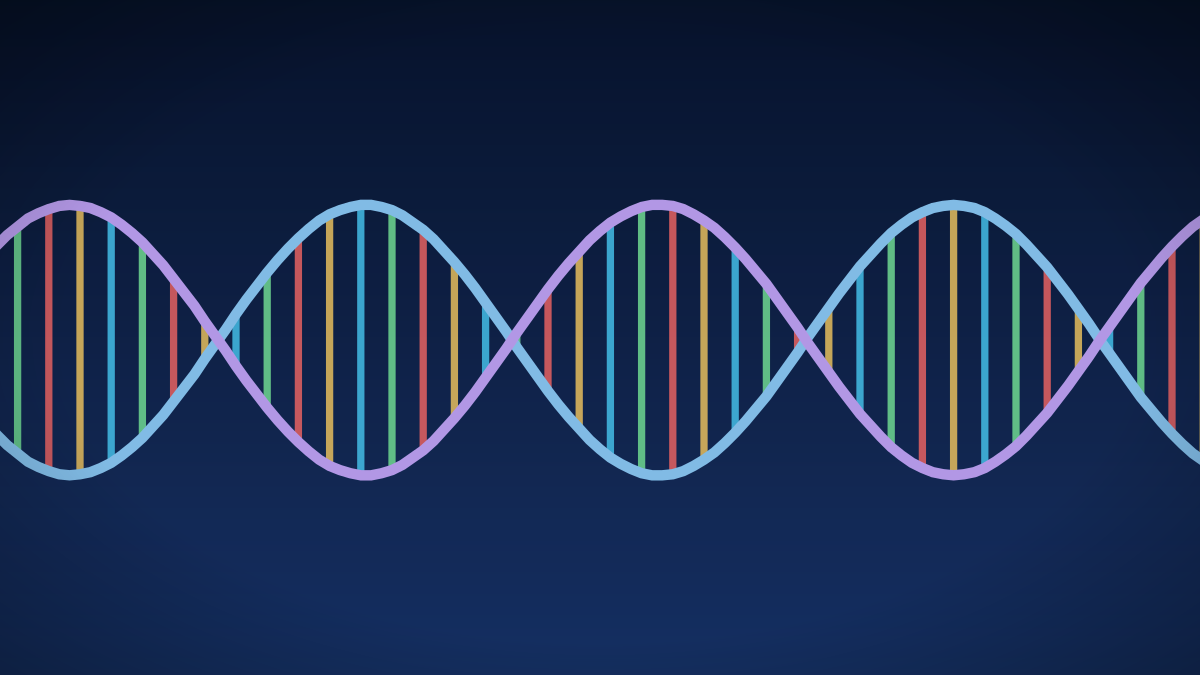
What Is DNA? The Molecule That Carries Your Instructions
DNA is the molecule that carries genetic information. A short guide to its structure and how its letters pair.
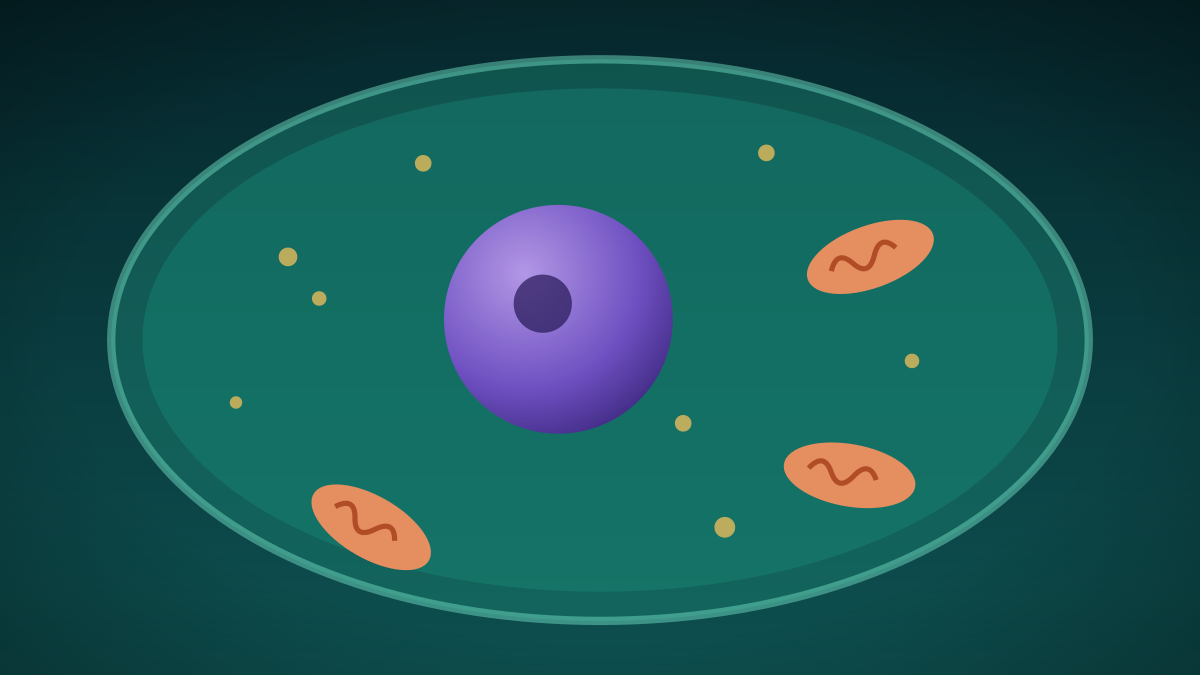
Trillions Strong: Inside the Cell, the Smallest Unit of Life
Every living thing is made of cells, from lone bacteria to the trillions in a human body. A look at the two main cell types and the tiny structures inside them.
References
- OpenStax. Anatomy and Physiology 2e, 2.4 Inorganic Compounds Essential to Human Functioning. Accessed October 7, 2026.
- OpenStax. Anatomy and Physiology 2e, 2.5 Organic Compounds Essential to Human Functioning. Accessed October 7, 2026.
- OpenStax. Anatomy and Physiology 2e, 2.3 Chemical Reactions. Accessed October 7, 2026.
- OpenStax. Anatomy and Physiology 2e, 26.4 Acid-Base Balance. Accessed October 7, 2026.
- OpenStax. Anatomy and Physiology 2e, 18.1 An Overview of Blood. Accessed October 7, 2026.
- BC Ministry of Education and Child Care. Anatomy and Physiology 12 (curriculum). Accessed October 7, 2026.
These lessons follow the content areas listed in the British Columbia curriculum. They are study material written for this site and are not an official document. The official curriculum is the authority on what each course requires. Lessons are general education, not medical advice.