Why Sleep Is Not Downtime: What the Brain and Body Do After Dark
- Sleep supports learning, memory, metabolism, the immune system and heart health.
- The CDC lists 8 to 10 hours for teens and 7 or more for adults aged 18 to 60.
- The NIH figures differ a little: about 9.5 hours for children and teens, 7 to 9 for most adults.
General information only, not medical advice. Talk to a doctor or pharmacist about your own health.
An active night shift
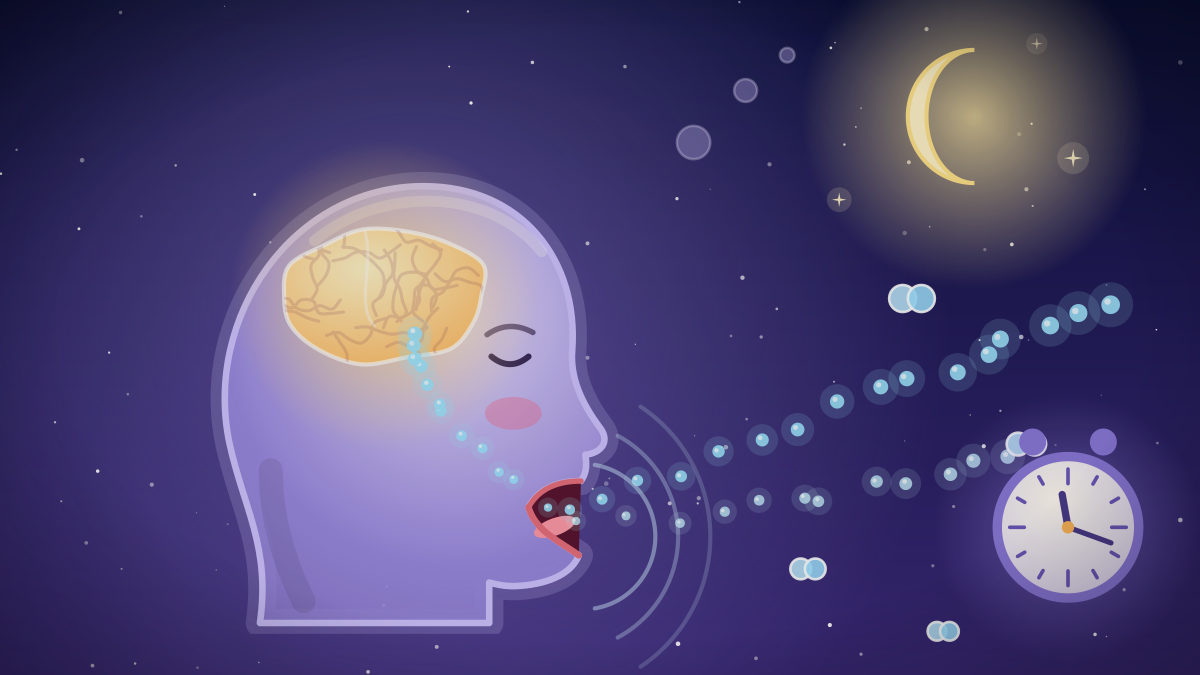
Sleep can look like a switched-off state, but the National Institute of Neurological Disorders and Stroke (NINDS) describes four stages. In stage 1 non-REM sleep, heartbeat, breathing and eye movements slow. Stage 2 is lighter sleep in which brain waves slow but are punctuated by brief bursts. In stage 3, the deep stage, heartbeat and breathing fall to their lowest levels. REM sleep, when the most vivid dreaming occurs, begins about 90 minutes after falling asleep.[2]
NINDS adds that a 24-hour circadian rhythm, driven by the body's internal clock, directs functions ranging from wakefulness to body temperature, metabolism and hormone release.[2]
What sleep does
The US National Heart, Lung, and Blood Institute (NHLBI) says sleep supports brain function and physical health, and, in younger people, growth and development. Its page lists several processes tied to sleep:[3]
- Blood pressure and heart rate decrease during non-REM sleep.
- Hormone release follows a schedule, with cortisol in the morning promoting alertness.
- Circadian clocks help regulate how the body handles fats and prepares for digestion.
- Certain immune cells become more active.
- Sleep aids learning and the formation of long-term memory.
NINDS makes a parallel point about the brain: it says sleep helps clear toxins that build up during waking hours and is needed to form and maintain the pathways that support learning and new memories.[2]
The same NHLBI page reports that insufficient sleep is linked with higher risks of coronary heart disease, high blood pressure, obesity and stroke, as well as trouble concentrating and a weaker immune response.[3] The Centers for Disease Control and Prevention (CDC) similarly lists benefits of enough sleep, including better mood, attention and memory, and fewer motor vehicle crashes.[1]
How much is recommended
The CDC, on a page last updated in May 2024, lists these recommended amounts:[1]
- School-age children (6 to 12 years): 9 to 12 hours
- Teens (13 to 17 years): 8 to 10 hours
- Adults (18 to 60 years): 7 or more hours
- Adults aged 61 to 64: 7 to 9 hours
- Adults aged 65 and older: 7 to 8 hours
NINDS gives somewhat different figures. It lists about 9.5 hours for school-age children and teens, 7 to 9 hours for most adults and 7 to 9 hours for older adults.[2] The agencies therefore do not give identical numbers, and the CDC's teen range of 8 to 10 hours overlaps with, but is not the same as, the NINDS estimate. The sources do agree on the main point: sleep needs are highest in early life and remain substantial throughout adulthood.
A joint consensus statement of the American Academy of Sleep Medicine and the Sleep Research Society states that adults should sleep 7 or more hours per night on a regular basis to promote optimal health. It associates regularly sleeping less than 7 hours with adverse outcomes including weight gain and obesity, diabetes, hypertension, heart disease and stroke, depression, and increased risk of death. The statement adds that sleeping more than 9 hours may be appropriate for young adults, people recovering from sleep deprivation and those managing illness, while the implications for others remain uncertain.[4]
References
- Centers for Disease Control and Prevention. About Sleep. 2024-05-15. Accessed October 5, 2026.
- National Institute of Neurological Disorders and Stroke. Brain Basics: Understanding Sleep. 2025-02-25. Accessed October 5, 2026.
- National Heart, Lung, and Blood Institute. Why Is Sleep Important?. 2022-03-24. Accessed October 5, 2026.
- Watson NF, Badr MS, Belenky G, et al., American Academy of Sleep Medicine and Sleep Research Society, Journal of Clinical Sleep Medicine. Recommended Amount of Sleep for a Healthy Adult: A Joint Consensus Statement. 2015; 11(6). Accessed October 5, 2026.
Agencies' recommended hours differ slightly; both sets are reported. Factual overview only, not individual advice.