
DNA, Replication, Gene Expression and Proteins
How DNA stores information, is copied, and is expressed through transcription and translation, and how proteins link genes to cell structure and function.
🎯 By the end of this lesson
- Describe the structure of DNA, including complementary base pairing and antiparallel strands.
- Explain the three steps of semiconservative DNA replication and the roles of helicase and DNA polymerase.
- Distinguish transcription from translation by location, template and product.
- Describe pre-mRNA processing, including introns, exons and alternative splicing.
- Use the genetic code idea to predict the tRNA anticodon for a given mRNA codon.
- Relate protein structure to function using structural proteins, enzymes, hormones and membrane proteins as examples.
- Distinguish germline from somatic variants and explain how a variant can change a protein.
- Explain how hormones and other environmental signals can alter gene expression.
1Overview
A skin cell and a neuron in the same person contain exactly the same DNA, yet one makes the tough protein keratin and the other builds the machinery for firing electrical signals. The difference is not the instructions the cells possess but the instructions each one uses. This lesson follows information from the DNA molecule to the finished protein: how DNA stores a code, how that code is copied when a cell divides, how it is read to build proteins, and why proteins are the molecules through which genes shape the structure and function of every cell. The lesson also covers the second big idea of the course, that protein synthesis reflects an interaction between genes and the environment.
2DNA: genetic information in the cell
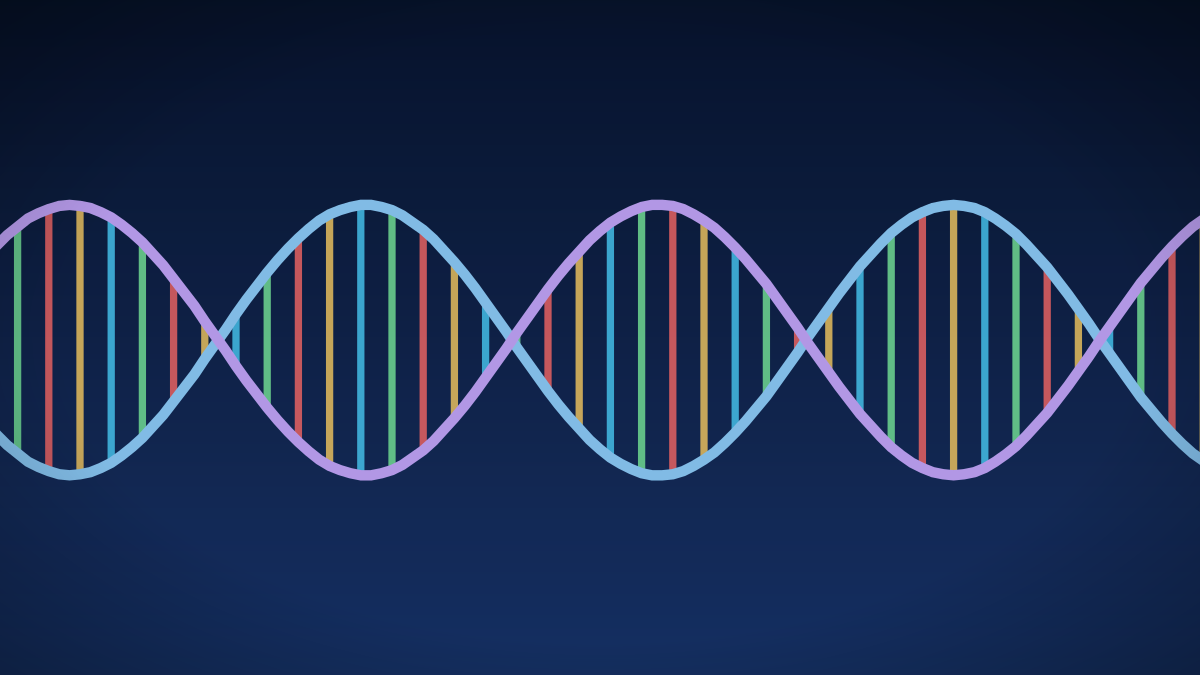
DNA is a polymer of nucleotides, each with a phosphate, the sugar deoxyribose and one of four bases (A, T, C or G). Two strands twist into a double helix. The sugar-phosphate backbones run along the outside, and the bases point inward and pair by hydrogen bonds: adenine with thymine and cytosine with guanine. The two strands are antiparallel (they run in opposite directions) and complementary, so the sequence of one strand allows the other to be deduced.
In human cells the DNA is in the nucleus, wrapped around histone proteins to form nucleosomes, which look like beads on a string. This chromatin condenses into visible chromosomes when the cell divides. Humans have 46 chromosomes and roughly 20,000 protein-coding genes. A gene is a functional segment of DNA that carries the information for building one protein (or a functional RNA). Genes vary from a few hundred to more than 2 million base pairs, and many stretches of DNA do not code for proteins but help control other genes. Most genes are the same in all people; fewer than 1% differ slightly between individuals, and the alternative versions of a gene are called alleles.
The information in DNA lies in the order of its four bases, much as the meaning of a sentence lies in the order of its letters. Because A always pairs with T and C with G, one strand is a template for the other, which is the basis of both copying and reading DNA.
3DNA replication
Before a cell divides, its entire genome must be copied so that each daughter cell receives a complete set. Replication is semiconservative: each new double helix contains one original (conserved) strand and one newly built strand. Meselson and Stahl deduced this in 1958.
- Initiation. The enzyme helicase unwinds the helix and separates the two strands at a replication fork. Each strand serves as a template.
- Elongation. DNA polymerase adds complementary nucleotides one at a time, pairing A with T and C with G. Because polymerase can build only in one direction, one new strand (the leading strand) is made continuously and the other (the lagging strand) is made in short fragments that the enzyme ligase later joins.
- Termination. Replication finishes when each template has a complete partner strand, giving two identical DNA molecules.
Proofreading enzymes scan the new strands and correct mismatched bases, which keeps errors rare. Replication has to be complete before the cell divides.
One template strand reads 3'-A T G C C T-5'. The new strand is built by complementary pairing as 5'-T A C G G A-3'. Following the base-pairing rule gives the daughter strand without any other information. If polymerase mistakenly put an A opposite the final A, proofreading would detect the mismatch and replace it.
4Gene expression: from DNA to protein
Gene expression is the conversion of the information in a gene into a final product, and it determines which proteins a cell makes. The process has two steps with RNA as the intermediate: transcription (DNA to RNA, in the nucleus) and translation (RNA to protein, at a ribosome in the cytoplasm).
| Feature | DNA | RNA |
|---|---|---|
| Sugar | deoxyribose | ribose (one more oxygen) |
| Strands | two | mostly one |
| Base paired with A | T | U (uracil) |
Step 1: Transcription
- Initiation. A promoter, a sequence at the start of a gene, signals where to begin. A short region of DNA unwinds.
- Elongation. RNA polymerase adds complementary RNA nucleotides (A, C, G, U) using one DNA strand as the template, building a growing pre-mRNA.
- Termination. A terminator sequence causes the new RNA to fold and release from the gene and the enzyme.
Step 2: Processing the transcript
The new transcript is pre-mRNA. It contains introns, non-coding regions that are removed, and exons, the segments that are joined together. A spliceosome of proteins and RNA does the cutting and joining. Alternative splicing, using different combinations of exons, lets one gene produce protein variants with different structures and functions. The finished mRNA leaves the nucleus through nuclear pores.
Step 3: Translation
A codon is a sequence of three mRNA bases that specifies one amino acid. A DNA triplet is the corresponding three bases on the gene (for example the triplet CAC specifies valine). The genetic code is the set of rules linking codons to amino acids; it includes a start codon (AUG, which also codes methionine) and stop codons that signal the end. Ribosomes, made of rRNA and protein in a small and a large subunit, are the sites of translation. Transfer RNA (tRNA) is the translator: one end carries a specific amino acid, and the other has an anticodon complementary to an mRNA codon. The tRNA that carries glycine, for example, has the anticodon CCU, which pairs with the glycine codon GGA.
- Initiation. The ribosome subunits assemble on the mRNA at a start codon.
- Elongation. A tRNA whose anticodon matches the next codon enters the ribosome; its amino acid is attached to the growing chain using enzymes and energy; the tRNA is released; the ribosome shifts one codon along; the next matching tRNA arrives.
- Termination. A stop codon signals the end, and the completed polypeptide is released and folds into its final shape.
Many ribosomes can read one mRNA at the same time, forming a polyribosome, which multiplies the protein output from a single transcript. Ribosomes attached to the rough ER make proteins destined for membranes, lysosomes or export, which then pass through the Golgi apparatus (Lesson 3).
Genes do not "make" traits directly. A gene codes for the sequence of a protein; the protein then folds, acts in the cell and, together with other proteins and the environment, produces a trait. Stating "gene for X" is shorthand for "gene whose protein contributes to X".
Putting it together: decoding a short gene
A worked example shows how the pieces fit. Suppose the coding strand of a very short gene reads 5'-ATG GGA GTG TAA-3'. The template strand is its complement, and RNA polymerase builds mRNA complementary to the template, so the mRNA has the same sequence as the coding strand with U in place of T.
- mRNA: 5'-AUG GGA GUG UAA-3'.
- Codons and amino acids: AUG (start, methionine), GGA (glycine), GUG (valine), UAA (stop).
- tRNA anticodons: UAC for AUG, CCU for GGA, CAC for GUG. No tRNA pairs with the stop codon; a release factor ends translation.
- Polypeptide: Met-Gly-Val, three amino acids long.
If the second codon were changed from GGA to GGG, the polypeptide would still be Met-Gly-Val because the genetic code is redundant: several codons specify the same amino acid. If instead the third codon became GAG, the polypeptide would end with glutamic acid instead of valine. If the change were in the first base of the second codon so that it became a stop codon, the chain would end after one amino acid and the protein would not work.
5Kinds of variants and what they do to a protein
At the level of the DNA sequence, variants fall into a few standard types. The effect on the protein depends on where the change occurs and what it does to the reading of codons.
| Type | Change | Typical consequence |
|---|---|---|
| Substitution | one base replaced by another | silent (same amino acid), missense (different amino acid) or nonsense (premature stop) |
| Insertion or deletion | one or more bases added or removed | if the number is not a multiple of three, a frameshift changes every codon downstream and usually destroys the protein |
Whether a change matters also depends on the cell in which it arises. A somatic variant in a skin cell exposed to ultraviolet light stays in that cell lineage, while a germline variant in an egg or sperm can be inherited. Most variants have no effect on health.
6Controlling which genes are on
Only a fraction of the genome is expressed in any one cell at any one time. Several layers of control explain how a liver cell and a neuron use different genes.
- Whether transcription starts. A promoter and the proteins that bind near it determine whether RNA polymerase can begin. Steroid and thyroid hormone receptors act in this way.
- How the transcript is processed. Alternative splicing creates different mRNAs from one gene.
- How packaged the DNA is. Tightly wound chromatin is hard to read; chemical modifications on DNA and histones loosen or tighten it.
- How long mRNA and proteins last, and how many ribosomes read each mRNA. Polyribosomes increase output from a single message.
In real life. Sun exposure illustrates gene-environment interaction. Ultraviolet radiation can cause somatic variants in skin cells, and the skin also responds by switching on genes for melanin production. Both effects arise from the same environmental signal acting through different routes.
7Proteins: structure and function of cells
Because the amino acid sequence (primary structure) is dictated by the gene and determines how the chain folds (Lesson 1), a change in DNA can change a protein's shape and therefore its function. Proteins are the main way that genetic information becomes cellular reality. Their roles include:
| Role | Example | Structure-function link |
|---|---|---|
| Structural | collagen in bone scaffolds; muscle proteins; keratin | long, strong fibrous proteins |
| Enzymes | digestive enzymes, DNA polymerase | specific active site fits one substrate (Lesson 2) |
| Hormones | insulin, growth hormone, ADH | signal molecules that bind specific receptors (Lesson 7) |
| Membrane proteins | channels, carriers, pumps, receptors | shape forms a selective pore or binding site (Lesson 3) |
| Transport | hemoglobin carrying O2 | four chains each with an iron-containing heme group (Lesson 10) |
| Defence | antibodies | variable region fits a specific antigen (Lesson 9) |
| Fluid and ion balance | albumin; ion channels | albumin is the main contributor to blood osmotic pressure (Lesson 8) |
In real life. Cystic fibrosis shows the full chain. A change in the CFTR gene alters the CFTR protein, a chloride channel in the membrane. With the channel faulty, ions and water do not move properly, and airway mucus becomes thick (Lesson 3). One altered gene, one altered protein, a whole-body condition.
8Gene variants, the environment and gene expression
A permanent change in a gene's DNA sequence is called a variant (formerly a mutation). Variants can affect one nucleotide or many. Germline variants are inherited and are present in virtually every cell. Somatic variants arise during life in certain cells and cannot be passed on; causes include ultraviolet radiation and copying errors during cell division. Most variants do not cause disease, and common variants account for traits such as eye colour, hair colour and blood type.
The environment also influences which genes are used. The field of epigenetics studies changes that do not alter the DNA sequence: chemical modifications on DNA and on the proteins bound to it affect how strongly genes are switched on or off, and some of these modifications are copied when a cell divides. The set of such changes is called the epigenome. Hormones add another layer of control. Steroid and thyroid hormones cross the cell membrane, bind a receptor in the cytosol or nucleus, and the hormone-receptor complex attaches to DNA and triggers transcription of a target gene (Lesson 7). In that way a signal from outside the cell, shaped by diet, stress, light or activity, changes which proteins are made.
All the body's cells share one genome but differ in which genes are expressed. Expression is regulated by signals from the environment, the other cells and the body's hormones. The second big idea of the course, that protein synthesis reflects an interaction between genes and the environment, rests on this fact.
The pieces of this lesson now form a continuous pathway: DNA stores the code, replication copies it, transcription and translation read it, and the resulting proteins build and run the cell. The next lesson scales this up from one gene to the whole genome and to the technologies that read and edit it.
🔑Key terms
?Quick check
Try each question first, then reveal the answer.
1. A DNA strand reads 5'-ATGCCA-3'. Write the complementary strand and state its direction.
The complementary strand is 3'-TACGGT-5' because A pairs with T and C pairs with G. It runs in the opposite direction, which is why the strands are antiparallel.
2. What does it mean that DNA replication is semiconservative?
Each of the two new DNA molecules contains one original strand and one newly synthesized strand.
3. State the roles of helicase and DNA polymerase.
Helicase unwinds and separates the DNA strands to form the replication fork. DNA polymerase adds complementary nucleotides to each template strand to build the new strands.
4. Compare transcription and translation in terms of location, template and product.
Transcription occurs in the nucleus, uses DNA as the template and produces pre-mRNA. Translation occurs at ribosomes in the cytoplasm, uses mRNA as the template and produces a polypeptide.
5. The mRNA codon is GGA. Name the tRNA anticodon and explain how the correct amino acid is placed.
The anticodon is CCU because C pairs with G and U with A. The tRNA with that anticodon carries glycine, so pairing at the ribosome puts glycine into the chain.
6. How can alternative splicing give more proteins than there are genes?
Different combinations of exons can be joined from the same pre-mRNA, producing mRNAs and therefore proteins with different structures and functions.
7. Explain how a single base change in a gene could stop an enzyme from working.
A change in the DNA can change a codon and therefore an amino acid. That alters the folding of the protein, which can distort the active site so that the substrate no longer fits.
8. Skin cells and neurons contain the same genome yet differ in structure and function. Explain.
They express different genes. Regulation of transcription, by hormones, other signals and chemical modifications on DNA, determines which proteins each cell makes, and the proteins determine the cell's structure and function.
BC curriculum content covered in this lesson
- DNA: Genetic information in the cell; Replication
- Gene expression: transcription, mRNA processing and translation
- Proteins and their relationship to the structure and function of all cells (structural proteins, hormones, enzymes)
- Big idea: protein synthesis reflects an interaction between genes and the environment
Related articles
What Is DNA? The Molecule That Carries Your Instructions
DNA is the molecule that carries genetic information. A short guide to its structure and how its letters pair.
What Is a Genome, and What Was the Human Genome Project?
A genome is an organism's complete set of DNA instructions. What that means and how large the human genome is.
Trillions Strong: Inside the Cell, the Smallest Unit of Life
Every living thing is made of cells, from lone bacteria to the trillions in a human body. A look at the two main cell types and the tiny structures inside them.
References
- OpenStax. Anatomy and Physiology 2e, 3.3 The Nucleus and DNA Replication. Accessed October 7, 2026.
- OpenStax. Anatomy and Physiology 2e, 3.4 Protein Synthesis. Accessed October 7, 2026.
- OpenStax. Anatomy and Physiology 2e, 2.5 Organic Compounds Essential to Human Functioning. Accessed October 7, 2026.
- OpenStax. Anatomy and Physiology 2e, 17.2 Hormones. Accessed October 7, 2026.
- OpenStax. Anatomy and Physiology 2e, 3.1 The Cell Membrane. Accessed October 7, 2026.
- MedlinePlus Genetics. What is a gene?. Accessed October 7, 2026.
- MedlinePlus Genetics. What is a gene variant and how do variants occur?. Accessed October 7, 2026.
- NIH NHGRI. Epigenetics (Talking Glossary of Genomic and Genetic Terms). Accessed October 7, 2026.
- BC Ministry of Education and Child Care. Anatomy and Physiology 12 (curriculum). Accessed October 7, 2026.
These lessons follow the content areas listed in the British Columbia curriculum. They are study material written for this site and are not an official document. The official curriculum is the authority on what each course requires. Lessons are general education, not medical advice.