
Genomics and Biotechnology: Genome Projects, Recombinant DNA, Cloning, GMOs and Gene Therapy
The genome as a whole, major genome projects, personal genomics, and the technologies of recombinant DNA, cloning, GMOs and gene therapy, with their ethical questions.
🎯 By the end of this lesson
- Define genome and genomics and distinguish genomics from genetics.
- Compare the goals and findings of the Human Genome Project, ENCODE and the Human Microbiome Project.
- Evaluate the benefits, limitations and privacy issues of direct-to-consumer genetic testing.
- Outline the steps of recombinant DNA technology and explain how insulin can be produced by bacteria.
- Distinguish gene cloning, reproductive cloning and therapeutic cloning and describe the nuclear transfer method.
- Describe how GM crops are made and weigh the stated benefits and concerns.
- Compare gene addition with genome editing as gene therapy approaches.
- Apply a framework of questions to evaluate the social and ethical implications of a biotechnology.
1Overview
In 1990 an international group of researchers set out to read every letter of human DNA, a text of about six billion characters per cell. The sequence was finished in 2003, and the work is still not over: reading DNA has become so fast that, as the National Human Genome Research Institute puts it, the ability to sequence has far outpaced the ability to interpret. This lesson looks at the genome as a whole (genomics) and at the technologies built on it: recombinant DNA, cloning, genetically modified organisms and gene therapy. Each technology also raises questions that science alone cannot answer, so the lesson includes the social and ethical thinking that the Curricular Competencies ask students to practise.
2From genes to genomes
A genome is the complete set of DNA in an organism, and genomics is the study of all of it: identifying and characterizing all the genes and other functional elements and how they interact. The term is often contrasted with genetics, the study of a particular gene or trait. Genomics has grown from basic research into a major part of medicine, agriculture, environmental monitoring, ancestry research and forensics.
Some numbers help build a sense of scale. A human cell holds roughly 6 billion DNA letters (two copies of the genome), and one sequenced genome needs on the order of 200 GB of computer storage, which is why genomics is called a "big data" field. Only a fraction of the genome codes for protein: the human genome contains about 19,900 protein-producing genes, and many other regions regulate genes or produce functional RNAs. Fewer than 1% of the genes differ between people, and the differences range from single-letter changes (SNPs) to larger structural variants. Many are harmless; some contribute to rare disorders, cancer or common diseases.
Reading a genome is only the first step. Aligners map DNA fragments onto a reference genome, and variant callers find where one person's DNA differs. Deciding which differences matter for health is the harder part of genomics.
Major genome projects
Large coordinated projects have shaped the field. Three illustrate different goals.
| Project | Goal | Key facts |
|---|---|---|
| Human Genome Project | Sequence the human genome | Launched in October 1990 and completed in April 2003 by an international group; five sequencing centres brought it to completion. It produced the first sequence of the human genome and has accelerated the study of human biology and the practice of medicine. It was also controversial at the outset, as some opposed it. |
| ENCODE (Encyclopedia of DNA Elements) | Identify the functional elements of the genome | Launched in 2003 by NHGRI, first on about 1% of the genome and from 2007 on all of it. It maps genes, regulatory regions (promoters, enhancers and others) and chromatin features; it reported about 32% of the genome represented in RNA and more than 2 million potential regulatory regions. |
| Human Microbiome Project | Describe the microbes living in and on healthy people | An NIH programme sampling five body areas (airways, skin, mouth, gut and vagina) with sequencing. It found wide variation in microbial communities between people and over time, but a shared functional core of metabolic pathways. |
The microbiome project is a reminder that "the genome" can mean the genes of the microbes a person carries, not only the person's own. A related site article describes this in more detail.
In real life. The Human Genome Project gave medicine a reference sequence. Today a person's genome can be compared with that reference to look for variants that explain an unexplained disease, to guide drug choice, or to understand a tumour. The project also built ethical, legal and social questions into genomics from the beginning: who owns genetic information, and who may see it?
3Personal genomics
Direct-to-consumer (DTC) genetic testing lets a person order a test without going through a health-care provider or insurer. Such tests may report on traits, wellness and lifestyle factors, response to medications, disease risk and ancestry. The evaluation of such services is an important skill.
- Benefits: convenient access to information about oneself and ancestry; some tests may be reimbursable through health spending accounts.
- Limitations: most insurance does not cover them; results generally need confirmation by clinical testing ordered by a provider before they can be used to diagnose a condition or guide care; there are few regulations, so quality varies and a company should be evaluated before testing.
- Privacy and ethics: participants should be told how their data will be used and shared (informed consent). Powerful tools can, in special circumstances, link a de-identified genome back to a person. Shared datasets use graded access (open, registered or controlled) for that reason, and algorithms that interpret DNA can contain unseen bias.
A genetic test result is often treated as a verdict. Most health conditions depend on many genes plus lifestyle and environment (Lesson 4), so a variant usually changes risk instead of fixing a future. A "normal" consumer result also does not rule out disease.
4Recombinant DNA technology
Recombinant DNA technology uses enzymes to cut and paste DNA sequences of interest. A segment of DNA is isolated, joined with DNA from another source (even another species), and placed in a host cell, usually a bacterium or yeast, which copies it along with its own DNA. The technique is used to produce proteins that treat disease, notably insulin and growth hormone.
- Isolate the gene of interest (for example the human insulin gene) and cut it out with restriction enzymes that recognize specific DNA sequences.
- Prepare a vector. A bacterial plasmid, a small circle of DNA, is cut with the same enzyme so that the ends match.
- Join the gene into the plasmid with DNA ligase to form a recombinant plasmid.
- Introduce the plasmid into host cells and grow large quantities of them.
- Harvest the copies of the gene or the protein it encodes and purify it for use.
Before recombinant methods, insulin for people with diabetes was extracted from animal tissue. A human insulin gene placed in bacteria lets the bacteria make human insulin in large fermentation tanks. The logic follows Lesson 4: because the genetic code is shared, a bacterial ribosome can read the human gene's mRNA and assemble the correct amino acid sequence.
5Cloning
Cloning produces genetically identical copies of a gene, cell, tissue or whole organism. Natural clones occur in some plants and single-celled organisms, and identical twins are natural clones formed when a fertilized egg splits. Three artificial types are distinguished.
- Gene (DNA) cloning: a gene is inserted into a vector such as a plasmid, bacterium, yeast or virus, which multiplies to give many copies. This is the most common type in research and is the same technique as recombinant DNA above.
- Reproductive cloning: a whole animal is copied. The nucleus of a body (somatic) cell is transferred into an egg whose own nucleus has been removed, and the egg develops into an early embryo that is implanted in a female.
- Therapeutic cloning: a cloned embryo is made to obtain embryonic stem cells that match the donor's DNA, for research or to grow replacement tissue. The stem cells are harvested at the blastocyst stage, which destroys the embryo.
Dolly the sheep, born in 1996 in Scotland after hundreds of attempts, was the first mammal cloned from a mature somatic cell (an udder cell of a six-year-old sheep). She had shorter-than-normal chromosome ends (telomeres) and died at six, about half the typical lifespan. Cloned mammals have shown larger birth size, organ defects, premature aging and immune problems, and most cloned embryos fail to develop. Clones are also not always identical in appearance: the first cloned cat, Cc, is a calico that differs from her mother because X-chromosome inactivation is random.
The ethical debate differs by type. Reproductive cloning raises concerns about human dignity, identity and autonomy; therapeutic cloning raises objections because it requires destroying embryos. Cloning of livestock has also been assessed for food safety and explored in conservation, although some experts worry about the low genetic variability of cloned populations.
6Genetically modified organisms (GMOs)
A genetically modified organism is a plant, animal or microorganism whose DNA has been altered in ways that do not occur through natural mating or recombination. Genes can be moved between organisms, even unrelated species, using recombinant DNA methods. Most GM crops aim to protect the plant: insect resistance (using a gene for a toxin from the bacterium Bacillus thuringiensis), virus resistance and herbicide tolerance. Others are being developed for higher nutrient content or for drought tolerance.
| Potential benefits | Concerns raised |
|---|---|
| Crops protected from insects or disease, which can reduce losses | Allergenicity (testing is recommended; none has been found in the GM foods currently on the market) |
| Foods with improved nutrient content | Gene transfer, particularly of antibiotic-resistance marker genes |
| Plants or animals that produce pharmaceutical proteins | Gene escape into wild populations and effects on non-target organisms or biodiversity |
| Faster-growing or hardier organisms | Labelling, ownership of seeds and farmers' rights, and the influence of a few companies |
The World Health Organization notes that it is not possible to make general statements on the safety of all GM foods: each product is assessed case by case, typically for toxicity, allergenicity, nutritional change and unintended effects, and regulation differs between countries. Products on the international market have passed such assessments, and no health effects have been shown in populations where they are approved. Environmental risks vary with local conditions.
7Gene therapy
Gene therapy aims to treat or prevent disease by correcting the underlying genetic problem rather than using drugs or surgery. Two main approaches exist.
- Gene transfer (gene addition): the earliest method adds a working copy of a gene to cells to replace or supplement a faulty one, or adds a new gene to help fight disease.
- Genome editing: a newer approach, for example CRISPR-Cas9, changes the DNA already in a cell. Goals include fixing a variant so the gene works, turning on a gene that helps fight disease, turning off a malfunctioning gene, or removing a DNA segment that impairs function.
Gene therapies are in use for a small number of diseases, including Leber congenital amaurosis (an eye disorder) and spinal muscular atrophy (a muscle disorder), and many more are in research to establish safety and effectiveness. Genome editing is described as promising for future patients. Questions that accompany it include safety and unintended effects, cost and fair access, and the difference between treating the cells of one person and changing DNA that could be inherited.
In real life. A person studying a news story about a "gene-editing cure" can ask structured questions. Which disease and which cells? Gene addition or editing? What does the evidence show about safety and how long the effect lasts? Who can afford it? These questions mirror the evaluation skills the course asks students to build.
8Comparing the technologies
The five technologies are easy to confuse because all of them involve altering or copying DNA. They differ in what is changed, in which cells and for what purpose.
| Technology | What is done | Typical purpose | Example |
|---|---|---|---|
| Recombinant DNA | a gene is cut, pasted into a vector and copied in a host cell | make many copies of a gene or large amounts of a protein | insulin and growth hormone |
| Gene cloning | the same copying of a gene in a vector | research and production | plasmid in bacteria |
| Reproductive / therapeutic cloning | a donor nucleus is placed in an emptied egg | copy an animal / obtain matched stem cells | Dolly the sheep |
| GMO | genes are moved into a crop or animal | protect crops, improve nutrition | insect-resistant crops |
| Gene therapy | a working gene is added, or DNA is edited, in a patient's cells | treat or prevent disease | therapies for spinal muscular atrophy |
A human cell holds about 6 billion DNA letters in two copies of the genome, so a single copy contains roughly 3 billion letters. Suppose, for illustration, that every one of 20 000 genes were 30 000 letters long. Together they would cover 600 million letters, only a fifth of one copy. The estimate suggests that much of the genome lies outside gene regions, which is part of what projects like ENCODE investigate.
The central question of genomics is shifting from "what is the sequence?" to "what does the sequence do, in which cells and under which conditions?" Answers require biology, computing and ethics together.
Evaluating the social and ethical implications
Every technology above allows something that was previously impossible, and each has benefits, risks and uncertainty. A useful framework asks the same questions of each case.
| Question | Example applied to DTC testing |
|---|---|
| What is the benefit and for whom? | Curiosity, ancestry, early awareness of risk. |
| What are the risks and who bears them? | Misinterpretation, anxiety, privacy loss, relatives affected by a person's result. |
| What is the quality of the evidence? | Results may need clinical confirmation; regulation is limited. |
| Who decides and who has access? | Consent, data sharing rules, cost. |
| What values are involved? | Autonomy, fairness, respect for persons and communities. |
Genomics and biotechnology connect the molecular lessons that preceded this one to the organ-system lessons that follow. Insulin made by recombinant methods treats the endocrine disorder in Lesson 7, gene therapy targets diseases of the eye and muscle, and the immune response in Lesson 9 is one reason that cloned or foreign cells can be rejected. The genome is the shared text; the organ systems are the many ways it is read.
🔑Key terms
?Quick check
Try each question first, then reveal the answer.
1. How does genomics differ from the study of a single gene?
Genomics analyses an organism's entire DNA, including all genes and other functional elements and how they interact, while the study of a single gene examines one particular gene or trait.
2. Compare the aims of the Human Genome Project and ENCODE.
The Human Genome Project aimed to produce the first sequence of human DNA. ENCODE then aimed to identify the functional elements in that sequence, such as genes, regulatory regions and chromatin features.
3. A company offers a consumer DNA test that claims to predict disease. List two reasons for caution.
Results generally need confirmation by clinical testing before they can be used for diagnosis or medical decisions, and regulation is limited so quality varies. Privacy of the data is also a concern, and a variant changes risk instead of guaranteeing disease.
4. Describe the steps that allow bacteria to make human insulin.
The human insulin gene is cut out with enzymes and joined into a cut plasmid to make a recombinant plasmid. The plasmid is placed in bacteria or yeast, which copy it and make insulin that is then harvested and purified.
5. Explain the difference between reproductive and therapeutic cloning.
Both use a donor nucleus placed in an egg. In reproductive cloning the embryo is implanted so that an animal develops as a copy of the donor. In therapeutic cloning the embryo is used only to obtain stem cells matched to the donor, which destroys the embryo.
6. Why might a cloned animal not look identical to its donor?
Appearance depends on more than the DNA sequence. For example X-chromosome inactivation is random, so the pattern of gene expression can differ, as in the calico cat Cc and her mother.
7. State one stated benefit and one concern about GM crops.
A benefit is protection of crops from insects or viruses. A concern is gene escape into wild populations or effects on non-target organisms; allergenicity and labelling are also discussed.
8. Compare gene addition with genome editing.
Gene addition delivers a working copy of a gene to cells without changing the existing DNA. Genome editing, such as CRISPR-Cas9, modifies the DNA already present to correct, turn on, turn off or remove a sequence.
BC curriculum content covered in this lesson
- Genomics and biotechnology: major genome projects
- Genomics and biotechnology: personal genomics
- Genomics and biotechnology: cloning
- Genomics and biotechnology: recombinant DNA technology
- Genomics and biotechnology: genetically modified organisms (GMOs)
- Genomics and biotechnology: gene therapy
- Evaluating the social and ethical implications of genomics and biotechnology
Related articles
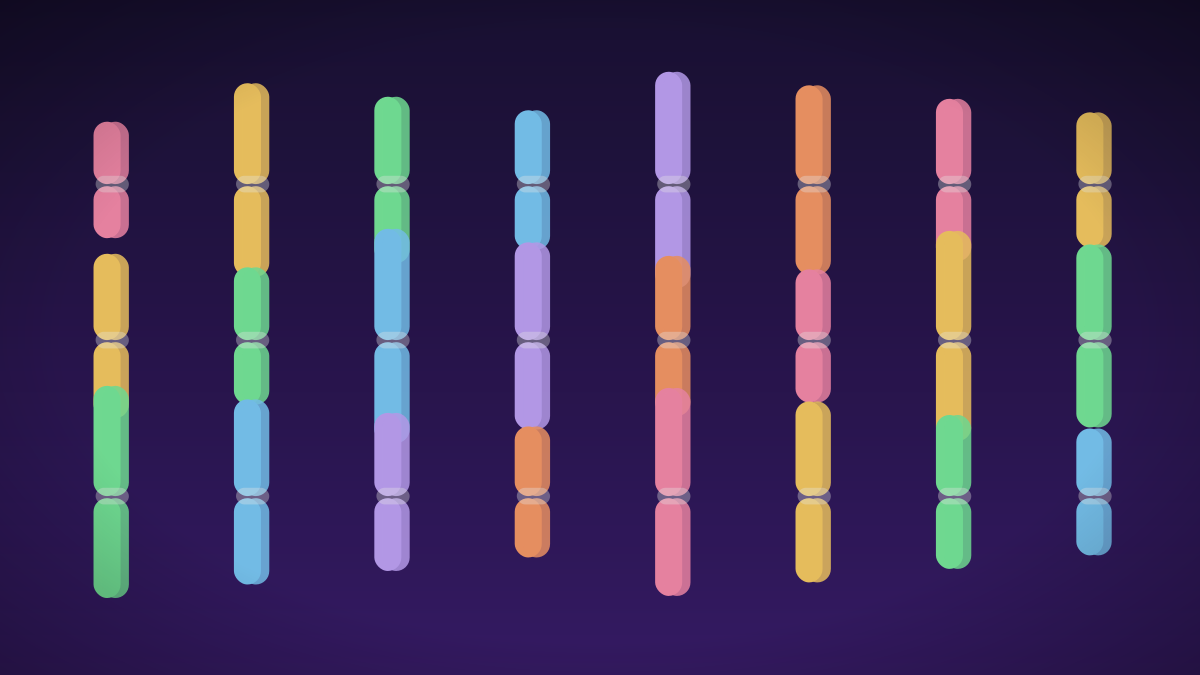
What Is a Genome, and What Was the Human Genome Project?
A genome is an organism's complete set of DNA instructions. What that means and how large the human genome is.
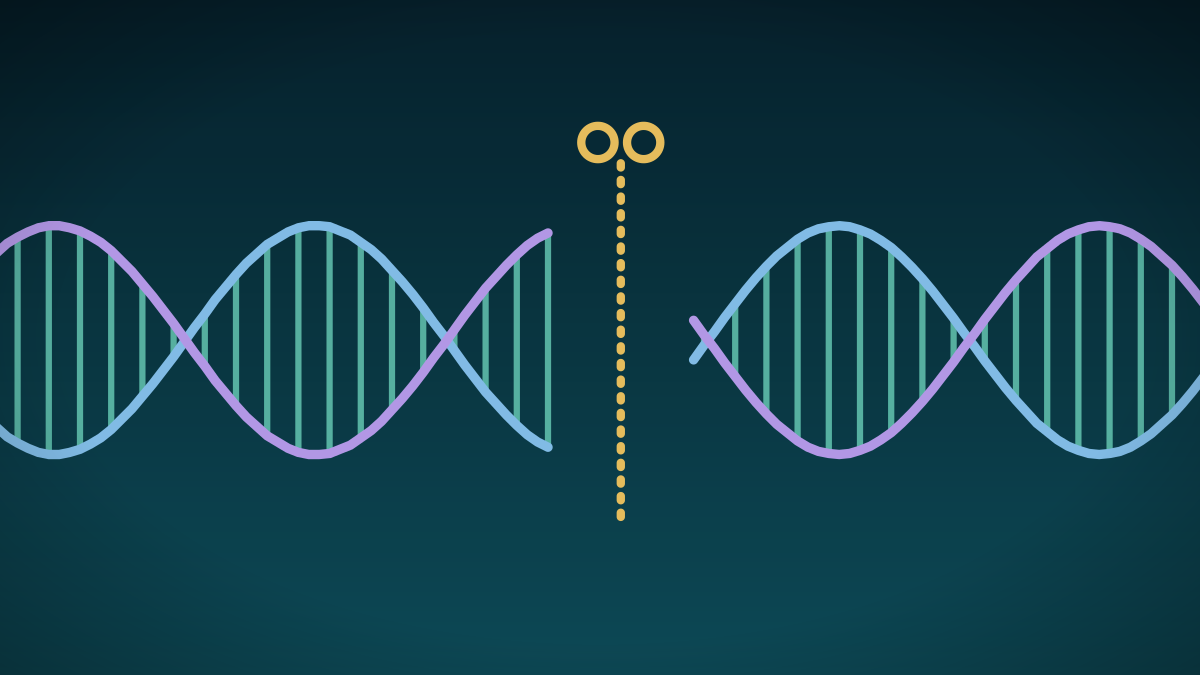
What Is CRISPR? The Gene-Editing Tool Borrowed From Bacteria
CRISPR-Cas9 lets scientists cut DNA at chosen spots using a guide RNA and a Cas9 enzyme, adapted from a bacterial defense system. Health agencies describe its first approved therapy and the debate over editing eggs, sperm and embryos.
Outnumbered? The Microbes That Live On and In the Human Body
Bacteria, fungi, viruses and other microbes live on skin and in the gut, and researchers have spent years mapping them. Here is what major health agencies say about them.
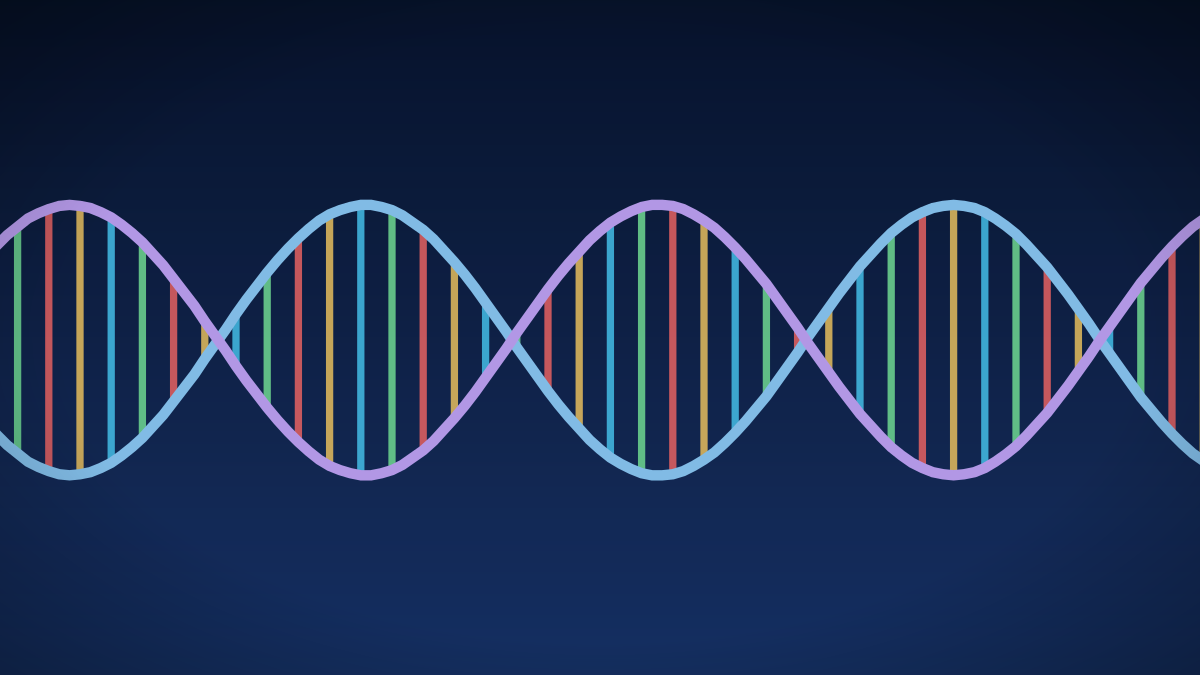
What Is DNA? The Molecule That Carries Your Instructions
DNA is the molecule that carries genetic information. A short guide to its structure and how its letters pair.
References
- NIH NHGRI. Human Genome Project. Accessed October 7, 2026.
- NIH NHGRI. Genomics (Talking Glossary). Accessed October 7, 2026.
- NIH NHGRI. Genomic Data Science Fact Sheet. Accessed October 7, 2026.
- NIH NHGRI. ENCODE Users Guide. Accessed October 7, 2026.
- PLoS Biology (via PubMed Central). The Human Microbiome Project: A Community Resource for the Healthy Human Microbiome. 2012. Accessed October 7, 2026.
- NIH NHGRI. Recombinant DNA (Talking Glossary). Accessed October 7, 2026.
- NIH NHGRI. Cloning Fact Sheet. Accessed October 7, 2026.
- MedlinePlus Genetics. Direct-to-consumer genetic testing. Accessed October 7, 2026.
- MedlinePlus Genetics. What is gene therapy?. 2022. Accessed October 7, 2026.
- World Health Organization. Food, genetically modified (questions and answers). Accessed October 7, 2026.
- MedlinePlus Genetics. What is a gene?. Accessed October 7, 2026.
These lessons follow the content areas listed in the British Columbia curriculum. They are study material written for this site and are not an official document. The official curriculum is the authority on what each course requires. Lessons are general education, not medical advice.